
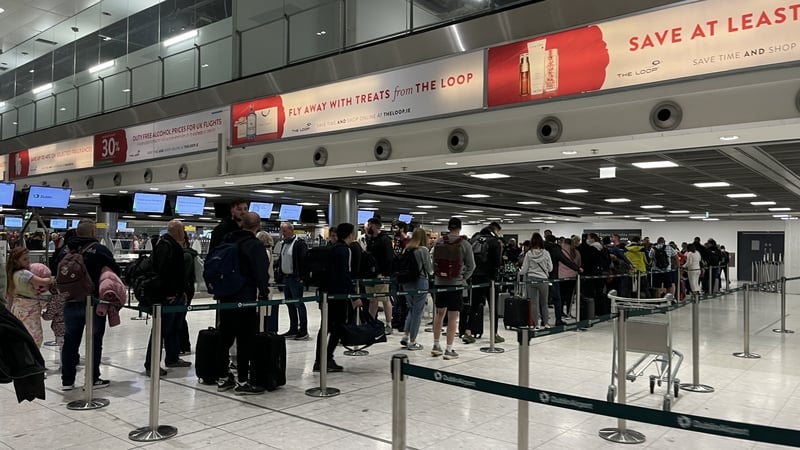
Analysis: While the act to increase the cap has been signed into law, Europe’s top court could still, in theory, cause the airport to change course
On paper, the Dublin Airport passenger cap shemozzle is over. The Dublin Airport (Passenger Capacity) Act 2026 has passed the Oireachtas and been signed into law by President Catherine Connolly, giving the Minister for Transport power to scrap the 32-million-passenger limit that’s constrained the airport since 2007. On 5 August, DAA formally asked the minister to raise that limit to 40 million, the submission actually required before any change can happen.
However, nothing changes immediately. The airport is already well past the old limit and still climbing, but Europe’s top court could still, in theory, cause the plan to change course. This is less a resolution than a very well-organised stalemate.
What actually happened in Europe that changed things?
Back in February, an adviser to the Court of Justice of the EU (CJEU) delivered an opinion nobody in the industry particularly wanted to hear: that the 32 million passenger cap is legally sound and can be treated as a legitimate operating constraint when Dublin’s landing and take-off slots are handed out. That’s close to the opposite of what Ryanair, Aer Lingus and the US carriers behind the original case were banking on.
We need your consent to load this rte-player contentWe use rte-player to manage extra content that can set cookies on your device and collect data about your activity. Please review their details and accept them to load the content.Manage Preferences
From RTÉ Radio 1’s Drivetime, Minister for Transport Darragh O’Brien on the decision to lift the Dublin Airport passenger cap
The final CJEU ruling, expected within months, isn’t bound by that opinion – advocate general opinions and final judgments do part ways sometimes – but it’s the direction the wind is currently blowing. It’s a decent explanation for why the Government moved quickly to legislate rather than sit back and wait for Luxembourg.
Doesn’t the new law just end this straight away?
Passing a law and actually changing a planning condition are two different jobs, and the second one is slow on purpose. DAA’s submission asks for the limit to go to 40 million rather than disappear altogether – a more cautious ask than scrapping it outright, and probably a smarter one politically.
Either way, before the Minister can sign anything, An Coimisiún Pleanála has to carry out environmental and appropriate assessments, followed by a public consultation that can run for up to 28 weeks. An order can actually only be signed once that’s done. In practice, the cap could remain the technical legal position at Dublin Airport well into next year, DAA’s own request notwithstanding.
We need your consent to load this rte-player contentWe use rte-player to manage extra content that can set cookies on your device and collect data about your activity. Please review their details and accept them to load the content.Manage Preferences
From RTÉ Archives, Conor Hunt reports for RTÉ News in 2016 on plans for a second runway at Dublin Airport to meet rising passenger numbers
What’s actually happening at the airport in the meantime?
Cap or no cap, passengers are flying through the airport regardless. Enforcement has effectively had no teeth since the High Court stayed it while the case sat with Europe, and traffic has climbed accordingly. The airport overshot the old limit by around 4 million passengers last year alone, and DAA says numbers are still rising. Former DAA chief executive Kenny Jacobs described it as a ‘zombie cap’ – technically still on the statute books, but unable to actually stop anything. That’s an odd place for a piece of planning law to sit: unenforceable in practice, unresolved in principle, and now with a specific replacement number – 40 million – sitting in front of the minister waiting on a near seven-month process.
My own reading is that the political system has essentially placed a bet on a court case it doesn’t fully control. DAA’s decision to ask for a 40 million limit rather than seek an open-ended removal looks like an attempt to hedge that bet, giving the minister a defensible, evidence-backed number rather than a blank cheque.
It’s a sensible move. But the Act still commits Ireland to removing the cap through domestic legislation, and the CJEU could yet rule in a way that upholds the underlying planning condition regardless of anything the Oireachtas has passed. If that happens, the Government is left holding a law that promises something Europe’s own courts say it can’t deliver – an awkward spot, and one that’s easy to lose sight of amid the relief that the bill finally passed.
We need your consent to load this rte-player contentWe use rte-player to manage extra content that can set cookies on your device and collect data about your activity. Please review their details and accept them to load the content.Manage Preferences
From RTÉ Radio 1’s Morning Ireland, will airlines pass on planned reduced passenger charges to customers?
Does any of this actually matter to someone booking a flight?
Not for now. Since the cap has no working enforcement mechanism right now, flights are going ahead regardless of where the legal argument stands. The real exposure is further out. Through the lobby group Airlines for America, US airlines have already complained to the US Department of Transportation that the cap breaches the EU-US Open Skies Agreement. This has raised the prospect of American retaliation against Irish carriers’ access to US airports if the CJEU ultimately sides with the cap.
That’s the scenario that would actually touch passengers directly – fewer transatlantic options, not through anything happening at Dublin Airport itself, but through a trade dispute playing out an ocean away.
For now, the honest summary is that almost nothing has actually been resolved. The law says the cap is going. The airport is already operating as if it’s gone – and the court that will have the final word on whether any of that is legal hasn’t spoken yet.
Follow RTÉ Brainstorm on WhatsApp and Instagram for more stories and updates
The views expressed here are those of the author and do not represent or reflect the views of RTÉ