
More needs to be done to change the mindset when it comes to the circular economy in Ireland, according to the Minister for Higher and Further Education.
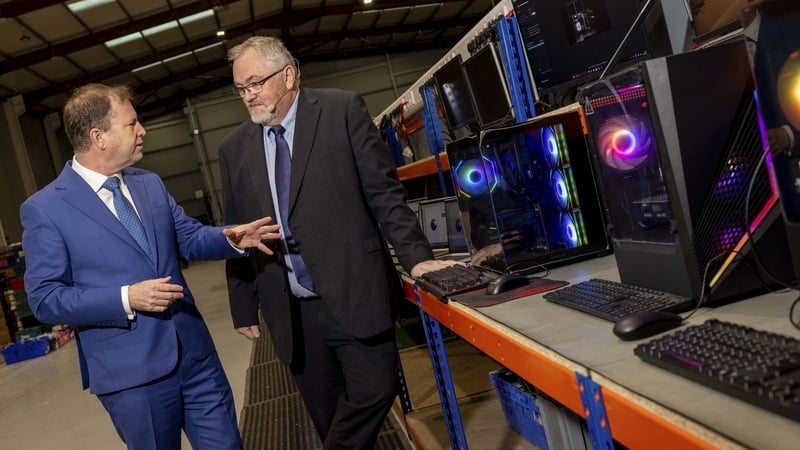
Minister for Higher and Further Education, Research, Innovation and Science James Lawless was speaking at the opening of Green IT, a new ICT refurbishment facility in Naas, Co Kildare.
The company, which was established in 2013, has already refurbished and returned more than 500,000 computers and ICT devices to circulation.
The highly specialised operation sees devices undergo technical assessment, secure data erasure, component replacement, as well as computer dismantling and rebuilding.
Keyboard restoration and re-skinning, cosmetic refurbishment, respraying casings, 3D printing of replacement parts and comprehensive quality testing are also part of the operation.
“There is a huge opportunity here, both environmentally and commercially,” said Managing Director of Green IT Martin Reddy.
“We are taking technology that still has enormous value, restoring it and putting it back to work.
“That is good for the environment, good for the economy and good for the people who need affordable access to technology,” he said.
Mr Lawless said historically Ireland has underperformed when compared with other EU states.
However, he said efforts are being made to address that.
“The circular economy is good for the economy, it’s good for the environment and it’s common sense,” he said.
The minister said there needs to be a culture and mindset shift amongst consumers.
“The disposable economy has been a thing and I think there’s a culture and mindset shift that we need to take on board.
“Part of the way we’re doing that is the Office of Government Procurement has now endorsed Green IT and the company were awarded the contract for repurposed or remanufactured laptops.
“I think that’s leading by example,” he added.
Director of Circular Economy Innovation with Irish Manufacturing Research Dr Geraldine Brennan said buying a refurbished or a remanufactured product is not a quality or performance compromise.
“Ultimately, you are getting a product that is guaranteed to perform like a new product, whilst reducing environmental emissions and saving money,” she said.
The Government’s new circular economy strategy aims to reduce Ireland’s circularity gap from 98% to 88% by 2030.
Published last February, it is aimed at reducing exposure to resource price shocks and supply chain risks.
Professor in Electronic Engineering at University of Limerick Colin Fitzpatrick said that is something consumers need to consider.
“IT devices contain a host of critical raw materials,” said Prof Fitzpatrick.
“These materials are not collected currently through recycling, so the only way that you can keep them in use is through remanufacturing,” he added.


