Analysis: With apps now delivering your groceries as well as takeaways, a EU work directive is set to determine who the platforms must treat as employees
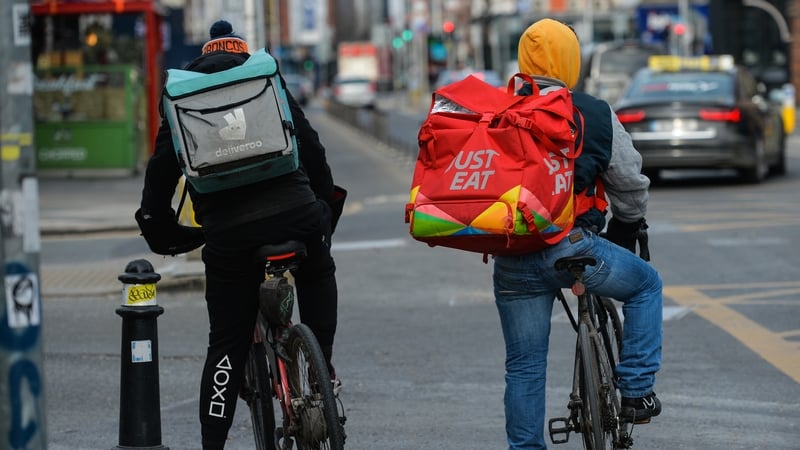
Delivery apps are no longer just about takeaway. Groceries made up 18% of Deliveroo’s gross transaction value in the first half of 2025, up from 15% a year earlier, and the platform added Marks & Spencer and a delivery service for Tesco over the same period to its roster in Ireland. Aldi has begun a UK trial in which Deliveroo riders, the couriers who deliver orders for the app, do the shopping as well as the delivery. Deliveroo founder Will Shu has said that groceries could eventually overtake takeaway on the platform.
Groceries and takeaways alike are still mostly collected and delivered by riders, but the rules governing their employment status will change next month. Under the EU Platform Work Directive, a rider will be presumed to be an employee if the app directs and controls their work, unless the platform can prove otherwise, and under Article 5 that means showing the relationship is not employment as Irish law defines it.
In response to a query for this article, the Department of Enterprise, Tourism and Employment said it will apply the directive through regulations, known as statutory instruments, rather than a bill, and that draft regulations are with the Office of the Parliamentary Counsel and are expected to be published before the 2 December deadline. Those regulations will affect what delivery costs restaurants, shops and customers, and who does the work.
We need your consent to load this rte-player contentWe use rte-player to manage extra content that can set cookies on your device and collect data about your activity. Please review their details and accept them to load the content.Manage Preferences
From RTÉ Radio 1’s Today with David McCullagh, Catie McLeod from Guardian Australia and Denis Sheridan from SIPTU on how Australia has rewritten the rules for delivery drivers
What will platforms have to prove?
Ireland already has a test for deciding who is an employee. In Revenue Commissioners v Karshan (Midlands) Ltd in October 2023, the Supreme Court told decision makers to look at how work is carried out rather than how a contract describes it, and found that a pizza franchise’s delivery drivers were employees even though their contracts gave them a limited right to send a substitute.
A platform rebutting the presumption of employment is likely to point to the flexibility of app work, and platforms already argue that riders choose their own hours, turn down work without penalty and work for competitors. Article 4 of the Directive requires that flexibility to be weighed against the facts of how the work is actually done, including the use of automated systems to monitor riders and make decisions about their work, regardless of whether the rider’s contract describes them as self-employed.
Some of the changes platforms are making for their own reasons could weaken that argument. Some delivery contracts allow riders to send someone else to do the work in their place, which is one of the strongest grounds for saying the work is not personal to the rider, but it has also created a market in rented accounts.
We need your consent to load this rte-player contentWe use rte-player to manage extra content that can set cookies on your device and collect data about your activity. Please review their details and accept them to load the content.Manage Preferences
From RTÉ Radio 1’s This Week, why your takeaway is going to cost more – even after July VAT cut
Platforms have since applied their substitution rules more strictly, and the more closely a platform checks who is doing the work, the harder it becomes to argue that anyone else could do the job. Grocery picking raises the same question.
What does this mean for restaurants?
Restaurants already pay delivery platforms commissions of up to 35 per cent while working on margins of 3 to 5 per cent. If the presumption of employment makes each delivery more expensive, that cost could be passed on to restaurants through higher commissions, or to customers through higher fees and longer waits as riders take several orders at once.
A platform with a large owner can absorb the extra cost for longer than an independent restaurant, and Deliveroo’s chief executive has said that it can spend money on keeping prices down for customers since its takeover by DoorDash.
Some restaurants arrange delivery without the large platforms, booking freelance drivers by the shift through an Irish staffing app that lets restaurants pay drivers by the hour, rate them and track their location. Under the presumption, it is unclear whether the app, the restaurant or neither would be treated as the employer in that arrangement.
We need your consent to load this rte-player contentWe use rte-player to manage extra content that can set cookies on your device and collect data about your activity. Please review their details and accept them to load the content.Manage Preferences
From RTÉ Brainstorm, what’s happening to Irish restaurants?
Groceries and drones
Grocery orders also help platforms keep riders busy in the quiet hours between lunch and dinner, and some supermarkets, such as Germany’s REWE, now deliver through three competing platforms at once. Higher labour costs on each delivery are also easier to absorb when a grocery order is worth more than a takeaway.
Platforms are also trialling drones and robots. Deliveroo began trialling drone delivery in Dublin in 2025 at its standard commission, until its drone partner, which had been refused planning permission for Dublin hubs over noise concerns, paused its Irish operations in June. In October, Deliveroo began robot deliveries in London.
Deliveroo has said the robots are not about replacing riders, since enough of them to cover the Friday night rush would sit unused for the rest of the week. Drones and robots may take on some short trips, but riders will still deliver most orders at the evening peak that restaurants rely on, and the presumption of employment applies to them.
We need your consent to load this rte-player contentWe use rte-player to manage extra content that can set cookies on your device and collect data about your activity. Please review their details and accept them to load the content.Manage Preferences
From RTÉ Brainstorm, can I stop drone delivery companies flying over my property?
The choices Ireland has to make
With the 2 December deadline coming down the tracks, the Department has said that the presumption will apply where facts indicate direction and control, but not which facts. Employment law researcher Dr David Mangan of Maynooth University suggests Ireland’s existing employment law may not be enough on its own to meet the directive’s requirements.
If the regulations list the signs of control that trigger the presumption, riders will find it easier to show that it applies to them. The Directive does not apply the presumption to tax or social welfare cases unless a country chooses to, although Karshan itself began as a Revenue case and platforms already report delivery workers’ earnings to Revenue. The regulations will also need to say who the employer is when a rider is supplied through a subcontractor, a fleet company or a staffing app.
Follow RTÉ Brainstorm on WhatsApp and Instagram for more stories and updates
The views expressed here are those of the author and do not represent or reflect the views of RTÉ