
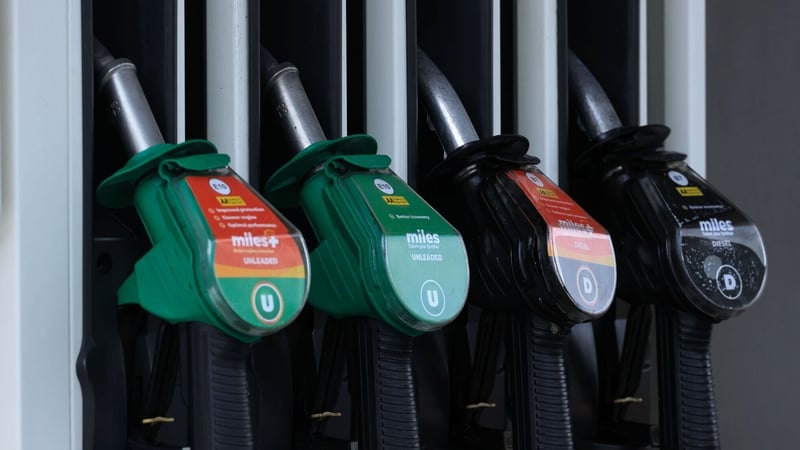
Diesel prices have continued their upward trend during September and October, surpassing €2.10 per litre this month.
According to the latest estimates from AA, the national average reached €2.14 in October, a 24% increase compared to February this year.
The cost of fuel, which is crucial for logistics and farming, as well as for millions of private motorists, has soared globally.
Diesel margins, or the “crack spread” – which measures how much money refineries make from selling a barrel of diesel compared with the price of crude oil – have also reached record levels.
There is a cost in turning “something useless into something useful”, Dr Paul Deane, Senior Lecturer at the University College Cork, explained. “That is essentially what we call crack spreads or refinery spreads. That reflects the amount of money that the refinery gets for converting oil into a useful product.”
Back in February, refineries earned around $32 per barrel of diesel. In September, this margin rose to $107.

Disruptions to refining capacity in Russia and the Middle East, as well as China’s limited exports throughout the year, have contributed to the global deficit of diesel.
In the US, prices jumped 70% since the start of the US-Iran war.
Ahead of US midterm elections, President Trump launched an effort to ease pressure on US farmers and hauliers.
Earlier this month, he pushed EU nations to release their strategic reserves, resulting in G7 nations vowing to put 100 million barrels of diesel on the market.
Most recently, he announced a deal with the Kremlin – much to the disapproval of Ukraine’s western allies.
Can the US-Russia deal ease global diesel prices?
According to that agreement, Russia is expected to supply 300,000 tonnes of diesel to US and international markets, followed by larger releases in November and December.
However, that is less than one day’s supply for the US transport sector alone, according to the US Energy Information Administration.
“The numbers are incredibly small,” Dr Deane told RTÉ News. He believes the move won’t make any material impact on global diesel prices in the short term.
“Just for context, Ireland uses roughly 3 million tonnes of diesel a year. We’re a small country in a huge global market. So, 300,000 tonnes coming immediately from Russia is just a small drop in the ocean.”
Dr Deane said that if higher volumes of Russian releases arrive during the winter, that could move the dial.
“But that’s a huge if. We’re talking about a promise from two administrations (US and Russia) that have a really poor track record and following through with promises.”
Questions remain over whether Russia has enough capacity to deliver the volumes, considering the damage done to key facilities by Ukrainian strikes.
European leaders criticised the deal.
German Chancellor Friedrich Merz said the sanctions on Russia must be “tightened”.
Some US lawmakers were also against the move, arguing that it was time to apply more sanctions on the Kremlin, not lift them.
Ukraine’s President Volodymyr Zelensky said the agreement will not help with diesel prices but “would embolden Moscow’s attacks on Ukraine and cost more lives.”
Kremlin spokesperson Dmitriy Peskov called European criticism “cynical”, given that Europe continued to buy some Russian oil and gas.
What has been sending global diesel prices to record levels?
Indeed, according to the calculations by the think tank Centre for Research on Energy and Clean Air, European countries bought €238 billion worth of Russian fossil fuels since 2022.
However, diesel imports have decreased dramatically. The market share of Russian diesel in the EU has fallen from 50% in 2022 to about 1% now.
Ireland does not import Russian diesel directly, but shifts in global supply affect the entire market.
The International Energy Agency estimated that Ukraine’s campaign of deep drone strikes reduced Russia’s refining capacities by around 30% this year.
Russia, one of the world’s leading suppliers of diesel, has 32 major refineries. Roughly half of them have been hit by Ukraine this year.

The crisis became particularly acute for Russian consumers over the summer, with shortages leading to long queues at forecourts.
That resulted in Russia banning diesel exports, with the lifting of the ban postponed until the end of October.
Ukraine’s leader defended the attacks a response to Russian strikes, which “must be forced to end its war”.
Donald Trump has blamed Kyiv for soaring diesel prices.
However, many analysts argue that the US-Iran war is equally to blame.
Refineries in the Middle East have suffered damage, while the closure of the Strait of Hormuz has restricted fuel exports from the region.
Last year, Europe received 41% of its diesel from the Middle East.
From March to August this year, the Middle East exported roughly 800,000 barrels of diesel per day – which is only half of last year’s volumes.
China is another key supplier of diesel to the world.
After months-long ban on exports, Bejing reopened its refined oil products tap and released more diesel and jet fuel than a year earlier.
This could potentially bring some relief to the tight diesel market.
Are high diesel prices to stay?
Global policymakers and analysts warn that diesel supplies are likely to remain tight through the winter and into 2027.
The US Energy Information Administration expects diesel inventories to stay depleted.
That poses risks to global fuel balance, according to Dr Deane, with strategic reserves designed to act as a buffer.
“Strategic reserves are there for a worst-case scenario when there is really no other option available to a country,” he said.
Dr Deane believes that only the end to both wars could calm the fuel markets and possibly bring diesel prices down.
“In the short term, everything else is just putting a patch on a problem that just won’t go away,” he added.


