
Updated / Tuesday, 13 Oct 2026 14:56
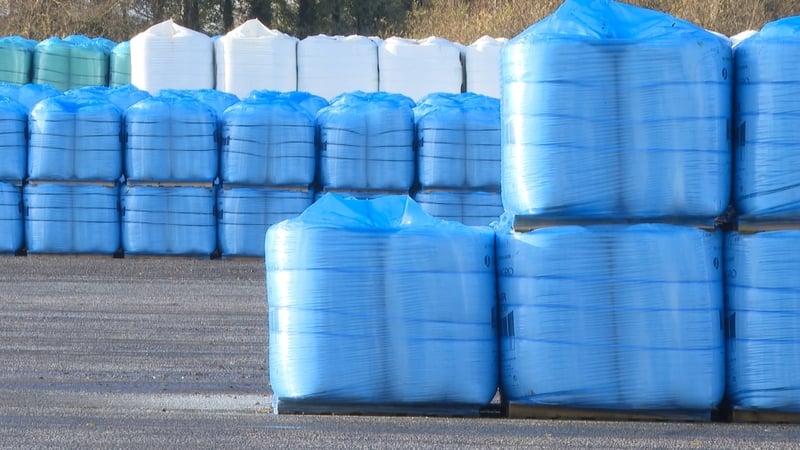
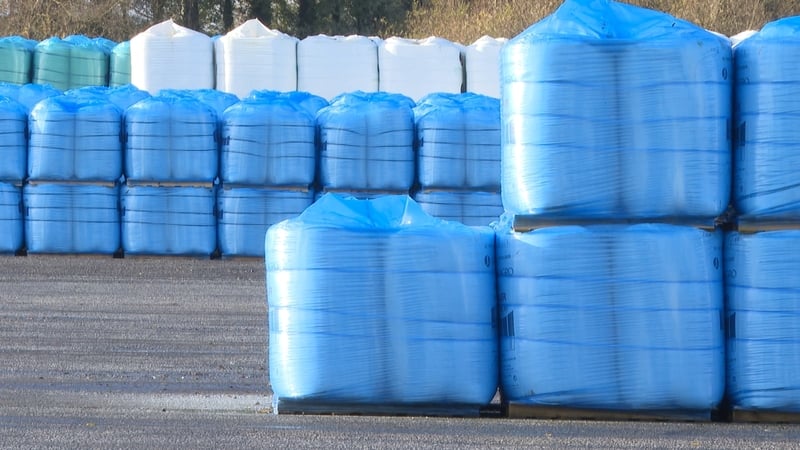
The Department of Agriculture has published additional detail on how €46.2 million in fertiliser supports, announced in the Budget, will be distributed to farmers facing severe input cost spikes caused by the conflict in the Middle East.
The funding combines Ireland’s €15.38m allocation from the EU Fertiliser Exceptional Aid package with the maximum allowable national top-up of 200% or €30.8m.
The scheme will use existing data on purchases of fertiliser held on the National Fertiliser Database (NFD) for the 2025 fertiliser year (15 September 2024 to 14 September 2025) to identify farmers most impacted by higher input costs, to define eligibility and to calculate payments.
An extract of data from the database will be taken on 23 October, with the amount of fertiliser per farmer recorded at this time determining eligibility and used for calculating payments.
Farmers and the merchants they sourced their fertiliser from are advised “they must ensure all purchasing record data for 2025 fertiliser year on the NFD is fully accurate and up to date ahead of that deadline”.
In order to be eligible, farmers must have submitted valid applications for the Basic Income Support for Sustainability (BISS) scheme in 2026 and be registered on the National Fertiliser Database as a Fertiliser End User (FEU).
The department said “by taking this approach, farmers will not have to apply to avail of support under the scheme,” adding that the payments will be made before the end of the year.
Minister for Agriculture Martin Heydon said “by using data already held by the department on the National Fertiliser Database and Basic Income Support Scheme records, the scheme will remove any extra administrative burden on farmers.
“This data is a good representation of the group of farmers most impacted by higher input costs specifically fertiliser costs and the payments made under this scheme will be a valuable liquidity support which can assist them dealing with these increased on-farm costs.”
The minimum tonnage of chemical fertiliser eligible for payment under the scheme is 2.5 tonnes, and the maximum tonnage for which support will be granted will be up to 100 tonnes.
The rate will be €40/tonne and the minimum payment under the scheme will be €100.
Mr Heydon said he set a minimum level of fertiliser eligible for the scheme at 2.5 tonnes “to ensure payments are received by the maximum number of farmers most impacted by higher fertiliser costs and within the maximum available budget for the scheme of €46.2 million”.
In relation to new entrants and young farmers who do not have a record of fertiliser purchases in 2025, as they may only have commenced farming in 2026, the department said that for those who have submitted a BISS application this year their fertiliser purchase records for the 2026 fertiliser year will be used to calculate payment.
The minister added that he is “also aware that some horticultural producers who use significant amounts of fertiliser in their business may not submit applications for BISS, so the eligibility requirement for them to receive payment under the scheme is to have, for 2026, a Department of Agriculture, Food and the Marine – Plant Health Registration Number or Horticulture Food Registration Number”.
€31m extension to fuel scheme for farmers
The Department of Agriculture has also confirmed a €31m extension to the Fuel Income Support Scheme (FISS) for farmers, farm contractors, fishermen and women, and the horticulture sector – which was also announced in the Budget.
The scheme, introduced in May in response to nationwide protests over the soaring cost of fuel, allows those eligible to recoup 20 cent on each litre of green diesel they use in the course of their work.
It initially covered the months of March up to the end of July but will now run until December.
€62m remains unspent under the fuel-support initiative, and half of that figure (€31m) will go towards a fertiliser support package, with the remaining €31m made available for the scheme.
It is understood that the €100 minimum claim threshold remains – however, any farmers, contractors, etc. can add any usage from earlier this year that was under the threshold to usage between August and December for the purpose of claiming financial support under the fuel scheme.
More stories on