Scientists advise ‘zero catch’ for cod in 2027 amid warning of collapsing stocks
Updated / Friday, 9 Oct 2026 16:33

Getty
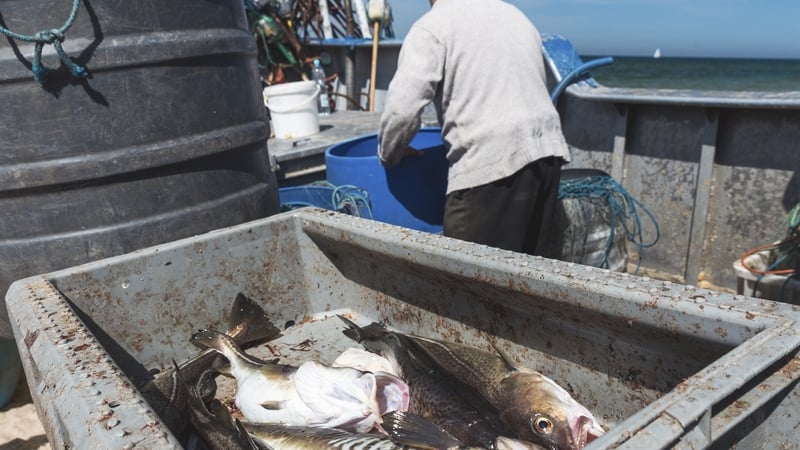
Scientists have again advised that there should be “zero” fishing of cod next year across vast swathes of sea around the UK amid growing concerns over the collapse of fish stocks.
The International Council for the Exploration of the Sea (Ices), which gives advice on maximum catches that would allow fish stocks to continue to be fished sustainably has released its latest recommendations.
It advised “zero catch” quotas be set in 2027 for all cod stocks in the “Northern shelf” – an area covering the English Channel, North Sea up to Norway and the west of Scotland.
Cod populations in these waters face serious declines after years of overfishing combined with the growing impacts of climate change.
Fishing quotas for the North Sea are set annually in political negotiations between the EU and coastal countries in the region, including the UK and Norway, with talks for next year’s limits currently taking place across October and November.
However, allowed catches are frequently set above the levels in the scientific advice.
For 2026, the majority of all quotas negotiated by the UK were not set in line with scientific recommendations, according to an official assessment by the UK government’s Centre for Environment, Fisheries and Aquaculture Science (Cefas) released in April.
Last year, Ices similarly recommended a zero catch limit for 2026 for all cod stocks in the Northern Shelf.
But the UK, EU and Norway ultimately agreed the total allowable catch at 14,034 tonnes for the year – though it represented a 44% reduction on the previous year.

In June, Ices also recommended a zero catch limit for cod in the Irish Sea, western English Channel and southern Celtic Seas for 2027.
Hugo Tagholm, executive director of campaign group Oceana UK, said: “For yet another year, experts have issued a red alert over the severe risk of collapse of UK cod stocks.
“Scientists point to dangerously low numbers of breeding adults in the North Sea, and waters that have been robbed of young fish.
“In the English Channel, there are barely any cod at all.
“Year on year, our Government knew the limits, yet it ignored them. Year on year, they continued to play into the hands of a few wealthy corporations.
“These industrial titans are asset-stripping our seas for profit, and leaving nature-friendly fishers without livelihoods or a future.”
Read more:
Donegal inshore fishermen warn livelihood is on a tight line
Standalone marine dept ‘fundamental’ to sector’s survival – report
Fishermen call for EU trade sanctions against overfishing nations
A group of 29 scientists from universities across the UK and abroad have also called on the UK government to set catch limits in line with the scientific advice to safeguard fish populations, coastal communities and ocean wildlife.
The letter, sent to UK Environment Secretary Angela Eagle, said the UK is among the “key contributors to setting total allowable catches above scientific advice”.
“If scientific advice continues to go unheeded, this runs a serious risk of permanently harming these fisheries and the economies of coastal communities across the UK,” it read.
Callum Roberts, professor of marine conservation at Exeter University, said: “For years ministers have set excessive quotas which have led to decline, collapse and economic hardship for the industry.
“You can’t negotiate with nature on how many fish are produced. You have to work with nature’s limits.”