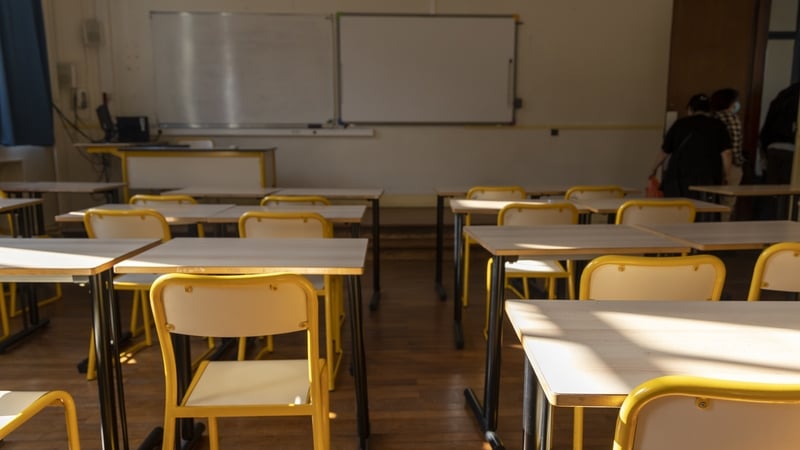
Primary school teachers, who are members of the INTO, are to begin industrial action next month over delays in agreeing a new public sector pay deal.
The action will initially take the form of a work-to-rule from 5 October.
INTO members will also join with fellow public sector workers in a proposed nationwide strike on Wednesday 14 October.
The INTO said that from 5 October, its members in primary and special schools will not work beyond their contracted daily teaching hours and until further notice will withdraw co-operation with additional hours including those introduced under the Croke Park Agreement.
99.5% of members who voted in a ballot backed industrial action.
The ballot had a turnout of 57.5%.
The INTO has become the latest public sector union to back industrial action.
It has accused the Government of failing to make a meaningful offer on pay.
The previous public sector pay deal expired on 30 June, and formal talks have yet to begin on a successor agreement.
The Department of Public Expenditure said it is disappointing that unions have not taken the opportunity to engage in recent weeks.
“It is important that both sides return to the table to work towards a public service pay agreement,” a spokesperson said.
“Meaningful progress can only be achieved where both parties are open to constructive and sustained engagement, without preconditions on either side,” it added.
Teachers ‘enraged’ at lack of Govt negotiation
INTO General Secretary John Boyle has described the decision of primary teachers to vote in favour of begin industrial action over delays in agreeing a new public sector pay deal as “a wakeup call for Government”.
Speaking on RTÉ’s Drivetime, he said teachers who voted in favour of industrial action were “enraged” that the Government has not come to the negotiation table yet.
“This is a momentous decision, and it needs to be a wakeup call for Government.
“This Government has refused even to phone the negotiators, and the public service, with regards to a pay deal for the last 80 days.
“They allowed the previous agreement to run out and like any other worker in the country or people driving home, our members are suffering, struggling from all the huge cost increases,” he said.
Mr Boyle added that it was a “very big decision and not taken lightly”.
“The teachers who went to the ballot box this week, they had been enraged for longer than this impasse over public service pay.
“They have been watching those children being let down by this Government in the largest classes in Europe, with a shambolic approach to special education and so on and so forth,” Mr Boyle said.
Govt willing to engage with unions – Burke
Minister for Enterprise Peter Burke has said that the Government are willing to engage with unions, but that the unions wanted to ballot their members first.
“Let’s be very clear on this. We have about 70,000 more people working in our public service over the last five years,” he said on RTÉ’s Drivetime.
“The bill has gone from €12 billion to €34 billion in 2026, which is very significant.
“The previous public pay agreement, which has finished now, we really went forward with over 17.3% of an increase for those in the lowest wages.
“We want to work and support through the next agreement.”
Mr Burke said that the Department of Public Expenditure was ready to “work and negotiate”.
“I know Minister (Jack) Chambers stands ready and his department to work and negotiate and critically, we’ve learned how important a cohesive working environment and have all the sectors around the table is and what it means to driving forward our economy.
“We stand ready to work with the unions to do that and deliver a strong sustainable public service agreement that will succeed the previous,” he added.