
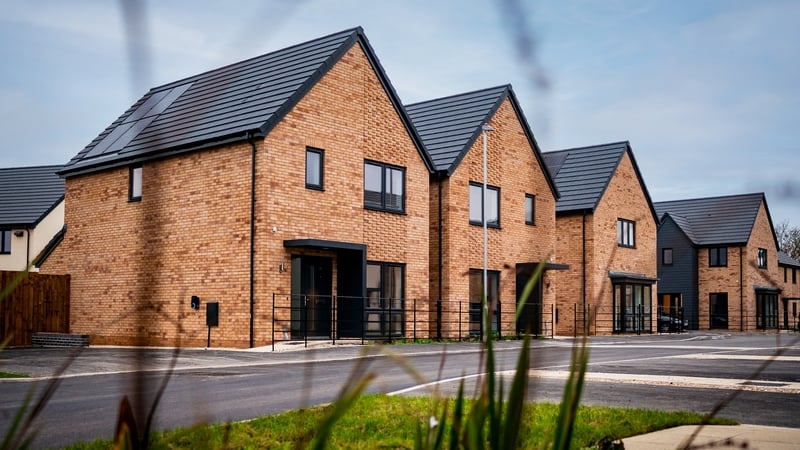
Analysis: Research shows every step up the Building Energy Rating scale can boost a home’s sale price by an average of 2.7%
By Lala Rukh, Atlantic Technological University
Every step up the Building Energy Rating 15-point A1-to-G scale boosts a home’s sale price by an average of 2.7%. This mandatory certificate for every home for sale or rent translates into real money: roughly €270 for every €10,000 of the property’s price. For a €400,000 home, moving up just one grade adds over €10,800 to its value.
Researchers examined nearly 50,000 homes sold across Ireland in 2023 and 2024, focusing on actual sale prices rather than the asking prices. That choice matters: the premium shrinks to 2.3% when measured by asking price alone so earlier studies (based on listed price) underestimated the true value of a good rating. It also shows that owners who upgrade before selling capture a hidden financial boost that listing prices never reflect. This financial boost has grown in recent years as buyers become much more aware of the importance of BER.
The SEAI researchers then compared these value gains against the actual cost of the renovations. Looking at a typical upgrade through one of the SEAI’s One Stop Shops, the work generally added more to the home’s value than it cost to complete. State grants covered roughly a third of the final bill and that is before counting a single euro saved on future heating costs. The sale price isn’t the only financial perk, either. Most lenders now offer cheaper ‘green mortgages’ with lower interest rates for homes rated B or better.
We need your consent to load this rte-player contentWe use rte-player to manage extra content that can set cookies on your device and collect data about your activity. Please review their details and accept them to load the content.Manage Preferences
From RTÉ Radio 1’s Drivetime, what is the point of BER ratings?
Location of the house changes the financial payoff. Rural homes see the biggest boost, gaining almost 5% in value for every energy grade they improve. Dublin sits lower at just 1.8% likely because buyers in a squeezed market prioritise space and location, but since Dublin property is so expensive, that small percentage often translates to a much larger cash sum.
Property type matters too. While houses generally gain more per step, apartments see a massive 9% value jump just for hitting an A-rating. Put simply, the cheapest properties get the biggest percentage boost. It is assumed that energy renovations aren’t worth the cost outside major cities, but the evidence proves the exact opposite.
There is a twist in the timing. The rating scale all those homes were measured on no longer exists. Europe’s building rules now say every EU country must grade buildings on one shared A-to-G scale. A rating will mean the same thing in Cork as in Copenhagen, and Ireland got there before anyone else. Since May 2026, a new Irish BER uses eight bands instead of 15 and existing certificates stay valid for ten years. So, nothing changes overnight. What has changed is how much the certificate tells you. The new version shows the home’s energy use for a year, its emissions and its share of renewables. It carries a QR code too, linking to upgrade advice for the home.
We need your consent to load this rte-player contentWe use rte-player to manage extra content that can set cookies on your device and collect data about your activity. Please review their details and accept them to load the content.Manage Preferences
From RTÉ Radio 1’s Today with David McCullagh, Ciaran Byrne and Brian McIntyre from the SEAI answer all your questions about retrofitting
This is where my research comes in. Energy ratings reflect how a house was designed for a ‘standard’ family, but real life is messier. My work analyses years of sensor data from Irish social housing, and it shows how far reality drifts from the label: two homes with the exact same rating can feel entirely different. One stays warm and dry, while the other runs cold and damp. Thankfully, new rules finally recognise this gap and trying to humanise the scale. Soon, a top-grade building must meet actual indoor conditions for temperature, humidity, and fresh air. Ireland is still finalising the details, but how a home actually treats its residents is becoming the new standard.
More changes are coming. First is the ‘renovation passport’ a step-by-step upgrade plan to ensure home improvements happen in the right order, rather than piecemeal. Another is the Smart Readiness Indicator (SRI), which scores how cleverly a building manages energy. Can it run the heating when electricity is cheap and green? Can it store energy for later, or ease off when the grid is strained? While this scoring starts with large buildings, new home energy certificates already track this flexibility.
However these tools only work if people understand them. With old and new grading systems overlapping across Europe, even eager buyers could get lost. To actually make a difference, renovation passports, and SRI must be as simple to read as a basic letter grade.
We need your consent to load this rte-player contentWe use rte-player to manage extra content that can set cookies on your device and collect data about your activity. Please review their details and accept them to load the content.Manage Preferences
From RTÉ Radio 1’s Today with Claire Byrne, Barry McDonald from the Real Estate Alliance property group on house prices and BER ratings
The money is already moving to match the rules. State grants no longer support new standalone oil or gas boilers. Instead, homes are assessed for efficient heat pumps first. If you refuse a system that meets the new rules, your grant for other works could stall.
At the top of the new scale, an A0 rating leaves absolutely no room for fossil fuels, and new builds must soon be solar-ready from day one. Anyone planning an upgrade should follow this clear order, insulate first, upgrade heating, then add solar.
Research shows the property market actively rewards this climb. The system is finally paying for where our homes are going, rather than where they have been. That is worth a thought before the next viewing, or the next grant form, or the next quote for solar panel.
Follow RTÉ Brainstorm on WhatsApp and Instagram for more stories and updates
Lala Rukh is a postdoctoral researcher in the Research, Innovation and Engagement unit at Atlantic Technological University.
The views expressed here are those of the author and do not represent or reflect the views of RTÉ