Updated / Monday, 31 Aug 2026 19:41

Getty
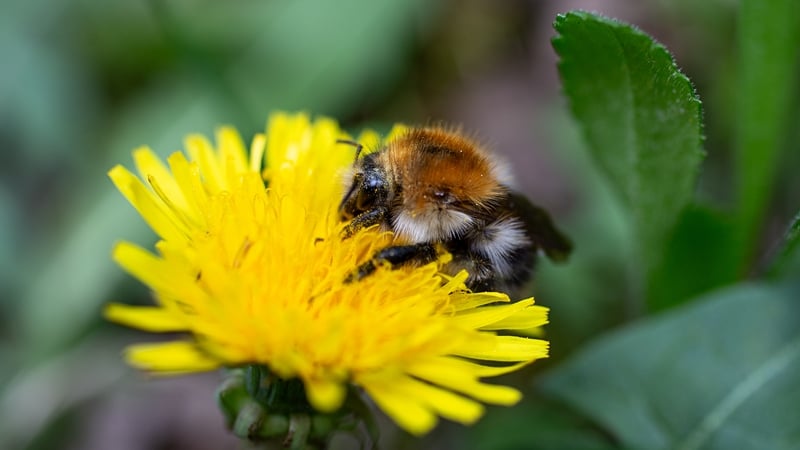
Beekeepers have welcomed a change in European Union product labelling laws that now require that the exact country of origin for honey be clearly labelled for consumers.
The directive came into effect on 14 June and requires Irish honey producers to list the places where its honey blends come from and the percentages it is made up of.
Honey products already on the shelves following the directives’ passing were not affected.
Before the new directive producers could label their product as being of “EU and Non-EU blends”.
Beekeepers say the new law brings more clarity for consumers.
The new labels on honey products in shops showing consumers the exact country of origin of the product will give people choice, Paul O’Brien, founder of the Irish Bee Foundation told RTÉ’s Drivetime.
He said that beekeepers across Europe have been struggling with ‘honey fraud’ for many years and have been lobbying on the issue of labelling.
“At long last the customer has a choice,” he said.
He said that now that the law has changed, he hopes this will be a turning point for the future of beekeeping in Ireland.
Listen: Beekeepers welcome the change to EU product labelling laws
We need your consent to load this rte-player contentWe use rte-player to manage extra content that can set cookies on your device and collect data about your activity. Please review their details and accept them to load the content.Manage Preferences
He said that the price point is too low for beekeepers producing honey here, who have been struggling to compete with shops selling products not of Irish origin.
He said that the next step now is to get the Irish consumer to start to support honey as an Irish product, so beekeepers can make a sustainable living from producing the product.

Andrew Shinnick, CEO of Blackwater Honey in Cork welcomed the new law, saying that it is “good for transparency and good for consumers”.
Speaking on RTÉ’s News at One, he said that his company only produces Irish honey.
However, most honey sold in the Irish market prominently comes from Asia, South America and Central America.
“Ireland simply does not produce enough honey to satisfy the amount consumed here.
Listen: Andrew Shinnick gives an insight into the Irish honey market
We need your consent to load this rte-player contentWe use rte-player to manage extra content that can set cookies on your device and collect data about your activity. Please review their details and accept them to load the content.Manage Preferences
“Imports have a major role in supplying the market. Imported honey can also be sourced at a scale and price which small Irish beekeepers cannot realistically compete with.
“My issue is not with imports, my issue is transparency. If the honey comes from China, Spain or Argentina, consumers should see that clearly and decide what they want to buy,” he said.
Darina Allen, chef and founder of Ballymaloe Cookery School in Cork said that the labelling change was “long overdue”, saying that Irish honey is a “really gourmet product”.
She added that it costs a lot to produce honey and if the consumer is paying just €2 or €3 euro for honey in the shop, that this should already raise suspicions about its origin.
Prices for Irish honey products could be starting at €7.50-€8.50 a jar, she added.
She suggested that consumers try and find out what beekeepers are local to their area and buy their products.