
Updated / Monday, 24 Aug 2026 12:38
New figures from the Central Statisticis Office show that the country’s electricity grid supply grew by 3.5% to 35,884 GWh last year compared with a supply of 34,684 GWh in 2024.
The CSO noted that the increase in supply largely came from increases in net imports of electricity.
Net imports of electricity reached 6,130 GWh last year, which made up 17% of grid supply.
The CSO said that net imports of electricity rose by 21% in 2025 compared with 2024, and soared by 87% compared with 2023.
Generated electricity, which provided 82% of grid supply in 2025, has remained relatively flat over the past couple of years.
A total of 29,335 GWh of electricity was generated last year, little changed from the electricity generation of 29,267 GWh in 2024, and a small decrease of 1% compared with 2023.
Half of generated electricity came from renewable sources last year, however on a daily basis there was a large variation in the renewable share.
The highest renewable generation share in 2025 was 86% on 23 February, while the lowest was 11% on 20 January, largely due to differences in wind generation.
Today’s CSO figures reveal different trends seen in generation from renewable and non-renewable sources.
Today’s figures show that gas, which is non-renewable, was the largest generation source last year, responsible for 47% of generated electricity.
Gas generated 13,918 GWh of electricity last year, down 1% compared with 14,036 GWh in 2024.
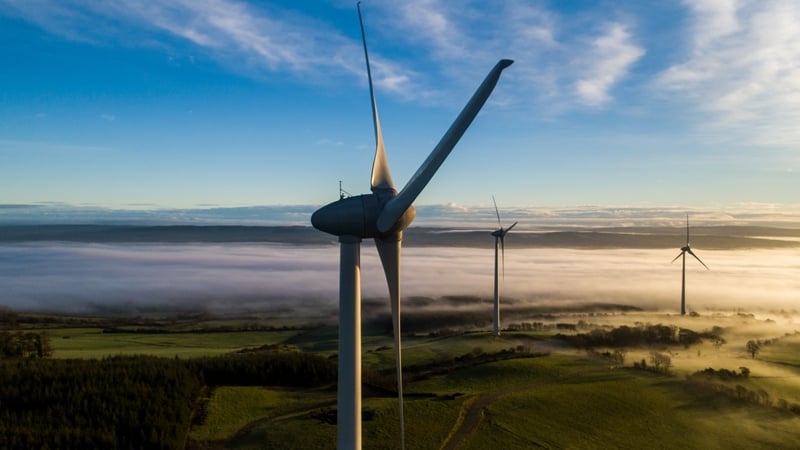
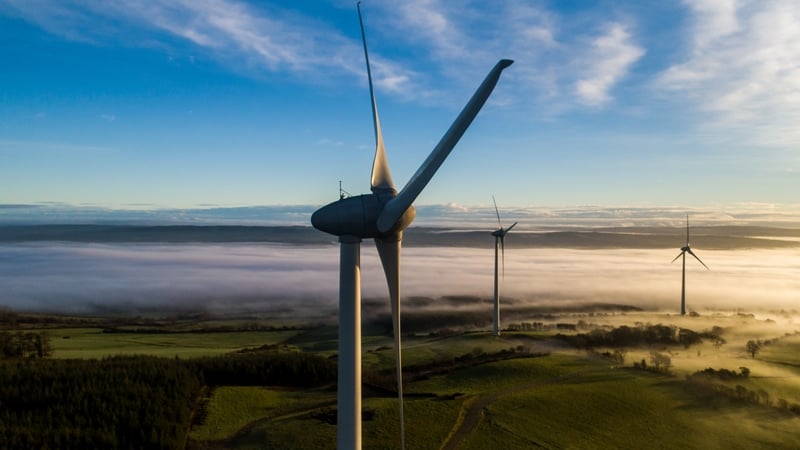
Generation from wind, which is the second largest electricity generation source, and the largest renewable source, was 11,782 GWh in 2025 – a 3% increase over 2024.
Meanwhile, solar generation rose sharply in the past couple of years. A total of 1,101 GWh of electricity was generated by grid-scale solar farms last year, a 51% increase on 2024.

Overall grid-scale solar farms made up 4% of generated electricity last, the CSO noted.
But electricity generation from coal fired power stations showed a significant decrease in 2025, with 453 GWh generated. This marked a 52% slump from 2024 after Ireland stopped all generation of electricity from coal in June of last year.

Today’s CSO figures also showed that December had the highest monthly average daily electricity supply at 108 GWh last year, while May had the lowest average daily electricity supply to the grid at 90 GWh.
The electricity supply source also shows seasonal variation, the CSO said.
A higher share of electricity is generated from wind in winter than in summer, due to typically higher mean wind speeds.
The CSO noted that February had the highest monthly share of electricity supply from wind at 49% of total supply, while May had the lowest at 22%.
But May had the highest amount of solar electricity generation in 2025 with a daily average of 5.66 GWh.
There is also a consistent daily pattern to electricity demand, with a peak in the evening and a low point in the early morning.
Last year the peak monthly average supply time was 5pm to 6pm in November when average supply was 5.26 GWh.
The lowest average monthly supply was between 4am and 5am in June at 3.26 GWh.