
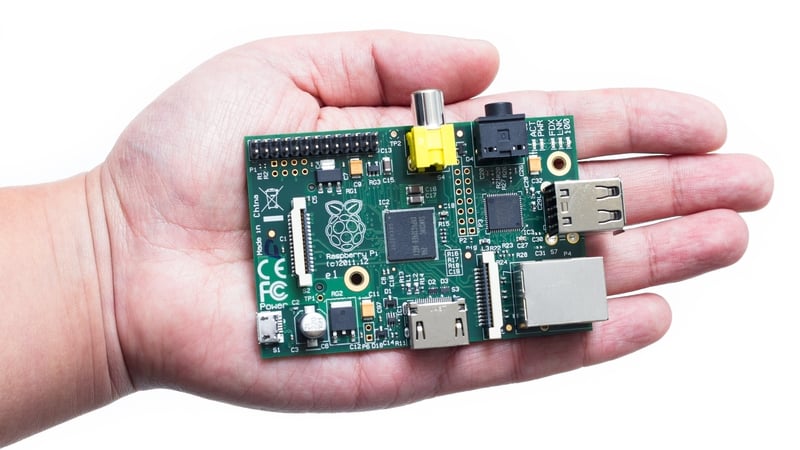
Analysis: The tiny computer was an affordable and flexible gateway into computing which showed the hidden world inside the tech children use every day
By Andy Caomhánach, University of Galway
The first line of code that a child writes is rarely important. It might make a character move across a screen. It might turn on a light. It might display a message saying “Hello World”. Technically, it may be simple, but something much bigger has happened for the child who wrote it. They have realised that they can tell a computer what to do. They are no longer just a user of technology, but have become a creator. They made this happen.
For more than a decade, a small computer called the Raspberry Pi has helped make that happen for millions of children around the world. A tiny computer roughly the size of a credit card, it can be connected to a screen, keyboard and mouse. Unlike many modern devices that are designed mainly for consuming content, it encourages people to explore what happens behind the screen. Children can write programmes, create games, build electronic projects and learn how computers actually work.
From Fireship, the Raspberry Pi explained in 100 seconds
The idea behind the Raspberry Pi was simply to make computing accessible and affordable. A decade ago, a child could begin learning computer science with a device that cost less than a school textbook. Early models such as the Raspberry Pi 3 and Raspberry Pi Zero were available for around €10 to €50.
That price was both attractive and transformative. It meant that a school could buy multiple devices and a teacher could encourage experimentation. It meant that a child’s curiosity about technology did not have to depend on their family being able to afford expensive equipment.
In Ireland, Raspberry Pi devices became a valuable tool for introducing children to programming, electronics and computer science and helped change the conversation around technology education. Instead of ‘how do we teach children to use computers?’, it was ‘how do we help children understand and create them?’
We need your consent to load this rte-player contentWe use rte-player to manage extra content that can set cookies on your device and collect data about your activity. Please review their details and accept them to load the content.Manage Preferences
Ó RTÉ Raidió na Gaeltachta’s Barrscéalta, Andy Caomhanach ag caint faoi an Raspberry Pi
But that affordable gateway into computing is now under pressure. The price of Raspberry Pi products has increased significantly due to wider changes in the technology industry, particularly the rising cost and demand for memory chips.
The rapid growth of artificial intelligence has created enormous demand for computing infrastructure. AI systems require vast amounts of processing power and memory, putting pressure on the global supply chain. The irony is difficult to ignore.
The technology revolution that is creating the computers of the future is also making some of the tools used to teach children about computers more expensive. The Raspberry Pi 500+, an all-in-one computer designed to provide a complete desktop experience, highlights this change. A machine purchased from an Irish reseller for approximately €215 in late 2025 is now selling for more than €400.
We need your consent to load this rte-player contentWe use rte-player to manage extra content that can set cookies on your device and collect data about your activity. Please review their details and accept them to load the content.Manage Preferences
From RTÉ Radio 1’s Morning Ireland, how ‘vibe coding’ became the 2025 Word of the Year
For a single buyer, that is a significant increase, but for a school trying to put computing equipment into the hands of dozens of children, it could change what is possible.
Raspberry Pi founder and CEO Eben Upton has explained that the increases are not simply a decision to raise prices. He has pointed to unprecedented increases in memory costs, particularly LPDDR4 memory, as demand from AI infrastructure places pressure on supply.
However, the situation is particularly interesting because of where Raspberry Pi began. The Raspberry Pi Foundation was established in 2008 as an educational charity with a clear mission: to encourage young people to learn about computing by making affordable programmable computers available.
We need your consent to load this rte-player contentWe use rte-player to manage extra content that can set cookies on your device and collect data about your activity. Please review their details and accept them to load the content.Manage Preferences
From RTÉ Lyric FM’s Culture File, Raspberry Pi co-founder Eben Upton on the benefits of cheap computing
The original vision was not about creating another technology company, but about putting inexpensive computers into the hands of children who wanted to explore. Since then, Raspberry Pi has grown into a global technology organisation. The hardware has become more powerful, the user base has expanded and Raspberry Pi Ltd became a publicly listed company in 2024.
The Raspberry Pi Foundation continues to focus on education, but the organisation now exists alongside the realities of a global technology market – one where companies must deal with rising costs, competition and commercial pressures.
That creates a difficult balance. How does a company continue to make computing accessible when the cost of computing itself is increasing? For educators, the concern is not simply about one particular device but about access. A Raspberry Pi allowed children to experiment in a way that many modern devices do not. They could make mistakes, break things, rebuild and learn.
From Newegg Studios, the top 5 Raspberry Pi DIY projects of all time
That process matters. A child who learns to code is not simply learning a technical skill. They are learning problem-solving, creativity and confidence. They are learning that technology is not something created only by experts in distant companies. It is something they can shape.
This issue comes at an important moment for Ireland. A new Science, Technology, Engineering and Maths (STEM) curriculum is being introduced across primary schools, aiming to give children greater exposure to computational thinking, coding and digital skills. But a curriculum requires more than a document, it requires opportunity. If access to computing becomes increasingly expensive, there is a risk that some children will have more opportunities to explore technology than others.
The Raspberry Pi helped narrow that gap. Its open-source ecosystem also mattered. Students could experiment with different operating systems, programming languages and tools without being tied to one commercial platform. For Ireland, there was an additional benefit: technology learning could take place in an environment that supported Irish-language computing.It reinforced an important message – technology belongs to everyone.
We need your consent to load this rte-player contentWe use rte-player to manage extra content that can set cookies on your device and collect data about your activity. Please review their details and accept them to load the content.Manage Preferences
From RTÉ Six One News, almost 4,000 female students to explore STEM careers at RDS
That does not mean Raspberry Pi is the only solution. Platforms such as BBC Micro:bit, refurbished computers and Chromebooks continue to provide valuable educational opportunities, but Raspberry Pi occupied a special place because it combined affordability, flexibility and the ability to reveal the hidden world inside the technology children use every day.
The biggest risk is not that a particular computer becomes more expensive. The bigger risk is that a child somewhere loses the chance to discover that they love computing because the first step became too difficult to reach.
The children learning to code today are the people who will build tomorrow’s technology. The question is whether we can ensure they all get the chance to begin. Because every great technological journey starts with something very small: a screen, a keyboard, a few lines of code and a child discovering ‘I made this happen.’
Follow RTÉ Brainstorm on WhatsApp and Instagram for more stories and updates
Andy Caomhánach is a Lecturer in Information Technology at the University of Galway
The views expressed here are those of the author and do not represent or reflect the views of RTÉ