
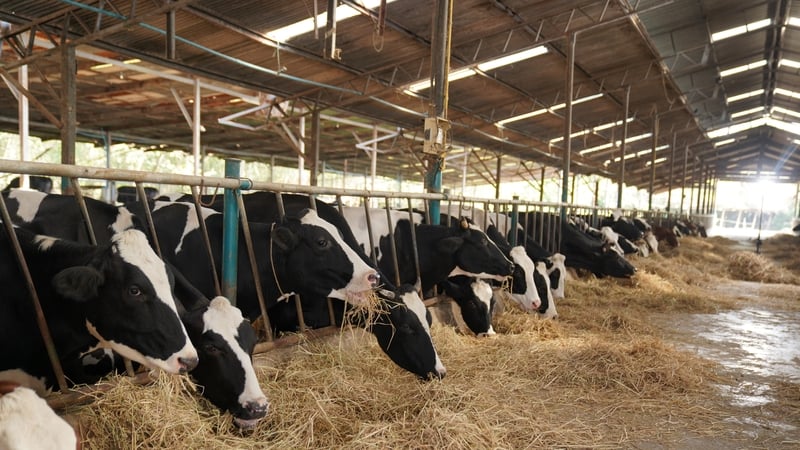
Farming groups are calling for urgent supports from the Government over the impact of high temperatures on farmers’ livelihoods.
The lack of rainfall and poor growing conditions mean that many farmers are already using up much of their winter feed, while crop growers say this year’s yields are being diminished by low soil moisture.
Irish Farmers Association President Francie Gorman has been visiting areas of the country worst hit.
A Status Yellow heat warning remains in place for Leinster and Co Tipperary until tomorrow morning.
Temperatures could exceed 27C during the day and 15C at night, according to Met Éireann, with highs of 30C seen in some areas of the country yesterday.
IFA Farm Business Chair and dairy farmer Bill O’Keefe said the lack of rain is having adverse effects on his farm.
Speaking on RTÉ’s News at One, he said: “We’re farming in Co Kilkenny and conditions are extremely dry and have been since early July, late June really
“The last decent bit of rain we got was the 19 June, which kept us going for most of the rest of that month but that really warm, hot weather at the end of June and early July has dried up the farm completely at this stage.”
He said he depends on grass for feeding his cattle, but “grass growth is non-existent, there’s no grass on the farm, so we’re having to fully feed cows with silage and extra bought-in concentrates at the moment, which is very expensive.”
We need your consent to load this rte-player contentWe use rte-player to manage extra content that can set cookies on your device and collect data about your activity. Please review their details and accept them to load the content.Manage Preferences
Mr O’Keefe said that those costs were running at around €1,000 a day.
“Grass would normally be fine, we might feed cows two or three kilos of concentrate feeds to give them a boost in production and keep them healthy and keep them moving forward well through the year,” he said.
“But at the moment we’d be feeding eight kilos of meal and eight kilos of concentrate and full silage. We’re feeding 10 bales of silage a day.
Mr O’Keefe said that the weather was also leading to a drop in production and output.
“Unfortunately we saw the same in 2018 when we had very dry weather, we had to do a lot of feeding,” he said.
“Production isn’t as good from that conserved feed from that silage as it would be from fresh green grazed grass.
“Production dips back a bit as well, so we have a loss in output there. It’s a significant hit on the income side and on the expenditure side, unfortunately, this year.”