
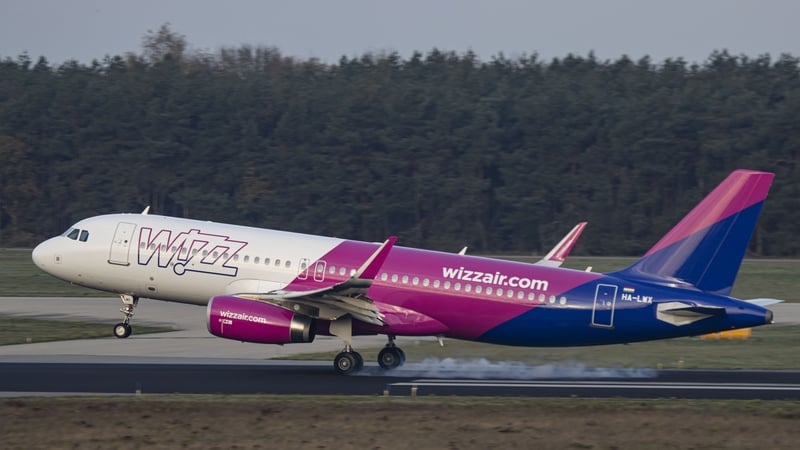
Budget airline Wizz Air said it expects revenue per seat to fall in the second quarter, as the Iran war has driven up fuel costs it has been forced to absorb, but it will stick to plans to grow capacity.
The company’s results echo the strain flagged by rival Ryanair, and expose a widening split in European aviation where full-service flag carriers have been more resilient to the war than budget operators whose business model relies on offering cheap fares.
Shares in Wizz Air fell more than 5% in early trade.
But Wizz Air chief executive Jozsef Varadi said the airline would grow capacity as previously planned and target passenger growth, despite the reduced revenues.
“We will very carefully manage the capacity growth that we have in front of us. But we know that this is a challenge for the next probably nine months, and after that we will get it down to a lot more palatable levels,” Varadi told Reuters.
Airlines including Air France-KLM, Lufthansa and Aer Lingus and British Airways owner IAG have either cut capacity or kept it flat to deal with the costs associated with the US-Israeli war with Iran.
Wizz Air reported a first-quarter operating loss of €183.3m as it was unable to pass on rising fuel costs to its core customers who demand cheap seats.
Wizz Air said second-quarter revenue per available seat kilometre would fall by a low single-digit percentage year-on-year, even as it guided for seat capacity growth of up to high-twenties percentage.
“The need to digest high levels of capacity growth should place pressure on profitability this year, both for Wizz and for other airlines competing on its routes,” Bernstein analyst Alex Irving said in a note.
Flag carriers, such as Air France-KLM, Lufthansa and IAG, have been cushioned by affluent travellers benefiting from a stock-market “wealth effect,” who are willing to pay for premium cabins.
Demand has also risen for direct Europe-Asia routes that serve the Gulf, although the rise in jet fuel has affected even the airlines in Europe that were well hedged against price rises.
Wizz Air has some protection against any further fuel market volatility.
It has hedged 76% of its full-year jet fuel needs using zero-cost collars – instruments that cap its exposure at $826 per metric ton but also prevent it from benefiting should prices fall below a floor of $759.
The company, whose balance sheet analysts have flagged as among the sector’s most exposed, has said it has ample liquidity to ride out the turbulence.
“We have clear building blocks to come to cost leadership against everyone else in the industry globally and in particular in Europe,” Varadi said.