
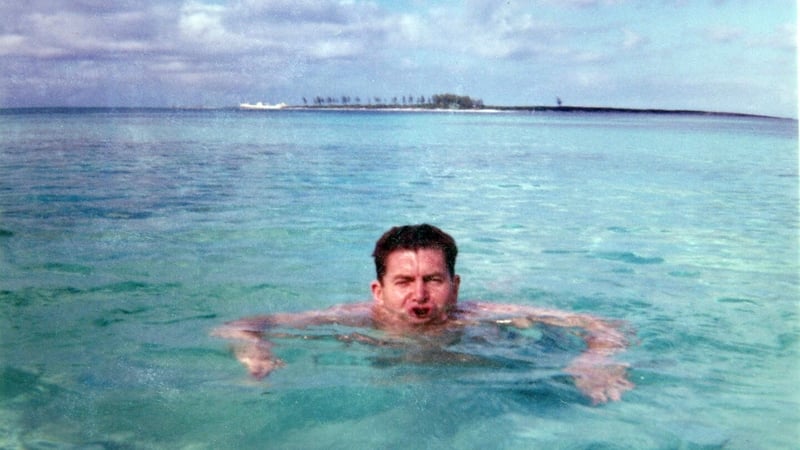
Updated / Thursday, 6 Aug 2026 11:00

Analysis: A new film tells the little-known story of the pioneering venue owner and colourful music promoter whose business empire spanned the globe
Here’s a question to consider – and it says a lot about national values. When Irish people go out for the night: (i) should they dance domestic dances under the close supervision of priests and holy men or (ii) should they be allowed to dance to well-known local and international names in venues operated as businesses? If you chose option (ii) you might have Bill Fuller to thank. And, like most Irish people, you’ve probably never heard his name.
When Ireland achieved independence, politicians turned their attention to what it meant to be Irish. How could Ireland keep its traditional values in a rapidly changing world? A large part of this national public discussion focused on the threat from abroad. The Catholic hierarchy wanted to safeguard the country from anything that could undermine the moral order. The Church was very worried about communism, ‘immoral’ films and rock ‘n’ roll.
We need your consent to load this rte-player contentWe use rte-player to manage extra content that can set cookies on your device and collect data about your activity. Please review their details and accept them to load the content.Manage Preferences
From RTÉ Brainstorm, the story of 3 wild Irish lives, including a profile of Bill Fuller by Michael Mary Murphy
But one of the biggest challenges to the Catholic hierarchy didn’t come from Moscow or Memphis but from the mountains of Co Kerry. When the Catholic hierarchy and members of the Irish judiciary were preaching against the ‘evils’ of jazz music, Fuller was bringing prominent jazz musicians and rock ‘n’ roll acts, including Stan Kenton, to perform in Ireland.
Almost single-handedly, Fuller undermined the Catholic hierarchy’s ban on dancing during Lent. While the dancehalls of rural Ireland stood silent for 40 days, Fuller invited Irish musicians to tour his venues in Britian and the US. The diaspora came, and, away from the censoring authority of the Church, they danced.

Fuller presented Nina Simone and Billie Holiday in prestigious New York concert halls. Famously, he struck a deal with the US concert promoter Bill Graham and Fuller’s Carousel Ballroom in San Francisco was reimagined as the Fillmore West, home to the psychedelic rock movement and a foundation stone of the live US music industry. And if that was’t enough, the Kerryman brought the Wolfe Tones to Raheny, to his Old Shieling venue.
I first heard of Bill Fuller when I was going to see post-punk bands in Dublin in the early 1980s. Thanks to him I got to see bands like the Virgin Prunes, Echo and the Bunnymen, The Teardrop Explodes, The Comsat Angels, The Fall, Theatre of Hate, The Wedding Present, The Pogues, Big Audio Dynamite and New Model Army play in his venue McGonagle’s (formerly the Crystal Ballroon). Later, the same venue became the place to see US hardcore and British doom metal bands like Fugazi, Victim’s Family, Suicidal Tendencies and Hellbastard. Political rap pioneers Public Enemy’s first Irish public performance was in the South Anne Street club.

Before this, if you wanted to see up-and-coming new bands, London was the place to be. The Electric Ballroom in Camden Town was host to the following acts during 1978-79: Thin Lizzy, Stiff Little Fingers, The Damned, The Police, Sham 69, XTC, The Human League, The Specials, Madness, Gang of Four, Adam and the Ants, Joy Division and Talking Heads with special guest, U2.
It came as a shock to me that these cool clubs in Dublin and London were owned by the same man, namely Bill Fuller. Both McGonagles and The Electric Ballroom had lives before they became places to see punk, post-punk, metal, indie, hardcore, reggae and rave gigs. McGonagles, originally the Crystal Ballroom and the subject of songs by Something Happens and U2, was a place where a generation of Dubliners came to dance and socialise. Similarly, the Electric Ballroom had previously been called the Buffalo Club when it was opened by Fuller in the 1930s.
Trailer for Have You Never Heard of Bill Fuller? film
Fuller had taken the boat to England to work in construction. He was an enterprising young emigrant, and he soon had his own demolition and building firm. But he was frustrated by the lack of opportunities for the newly-arrived Irish to socialise in a country that didn’t always welcome them. The young Irish earned their money doing dirty, dangerous and demanding jobs. Fuller felt they deserved a place to dance and chat and mix, and he welcomed them in the Buffalo Club. From there, this canny Kerryman built an empire of dancehalls on both sides of the Atlantic.
The first film about his life, Have You Never Heard of Bill Fuller?, by David Burke, created a stir when it was shown at the recent Dublin Film Festival. It addresses two key interrelated questions: who was Bill Fuller and who were we, the Irish people? It has been well documented how the Catholic Church, and its many allies, maintained control over key aspects of Irish life. But less has been revealed about the people who stood up to this authority, and enabled a more modern, open country.

At the national level, our live music entertainment industry has evolved to the current situation where most superstars include Ireland on their world tours. Indeed, there is a public uproar if any of them skip the country on those tours.
That is a huge change from the 1935 Public Dance Halls Act when judges who never visited your venue could tell you what type of dances were allowed. They could tell you who was allowed to go to your music event. Frequently, anyone who lived more than three miles from the venue was barred. That said, there is no historical evidence that the clergy operated a dynamic ticketing model, so not everything has improved. For good or bad, the success of the modern live music industry in Ireland owes a great deal to the pioneering enterprise of our friend from Finogue, Co Kerry.
Have You Never Heard of Bill Fuller? opens at the IFI in Dublin on 7 August. The film will screen around Ireland in September and October
Declaration of interest: Brainstorm editor Jim Carroll is one of executive producers of this film.
Follow RTÉ Brainstorm on WhatsApp and Instagram for more stories and updates
The views expressed here are those of the author and do not represent or reflect the views of RTÉ