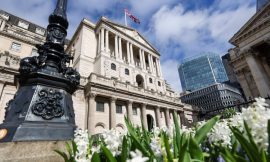

It is all about central banks next week and interest rate-setters as distant as Tokyo, Washington and London will only grow more nervous as war escalation in the Middle East puts oil prices back to $100.
As if that is not enough, US tariffs are also back on the worry list for markets fretting about war-driven inflation and growth risks.
1 – Double trouble
How much oil and gas is coming out of the Middle East is the most important near-term question, and investors now have two energy shipping chokepoints to watch.
Houthi attacks could make off-limits the Bab el-Mandeb strait, which links the Indian Ocean to the Red Sea and eventually the already-squeezed Strait of Hormuz.
That prospect sent Brent crude through $100 a barrel on Thursday for the first time since May. European gas prices just touched their highest since March.
A US-Iran peace deal looks elusive, but news about the Gulf is not the only thing investors will be looking for when they refresh Truth Social.
The US on Friday imposed new tariffs of 10% and 12.5% on goods from 60 trading partners, including the European Union and China, adding to market uncertainty.
2 – Fed, earnings test
A US Federal Reserve meeting and a slew of corporate earnings reports headlined by technology giants are setting US markets up for a busy week.
The Fed is widely expected to hold rates steady on Wednesday in its second meeting under new chair Kevin Warsh.

Warsh has shunned offering guidance but vowed to bring the inflation rate down to target, so uncertainty remains high as interest rate rises might be in order at some point.
Recent US consumer and producer price data that were cooler than market participants expected helped calm rate-hike bets, but a resurgence in oil prices means traders are raising their bets again.
Meanwhile, earnings reports from Apple, Microsoft and Amazon are due as investors count on a strong quarter for US corporate profit and focus on AI spending trends.
Expect more scrutiny after hyperscaler Alphabet’s shares tanked as it faced investor questions about its cash flow and higher capital spending plans this week.
3 – In the doldrums
The Bank of Japan meets on Friday, with much riding on policymakers to deliver a hawkish message that could haul the yen away from a four-decade low against the US dollar.
A well-telegraphed rate hike last month, $73 billion worth of currency intervention nor hope of money returning home have done much to lift the yen, which recently weakened beyond 163 a dollar for the first time since 1986.

Sources told Reuters that some in the Bank of Japan see scope to raise rates at a faster pace than the dominant market view of twice a year if price pressure from a weak yen and rising energy costs persist.
Ahead of Friday’s policy decision, Tokyo’s July inflation figures are also due, though market participants do not expect the data to alter the Bank of Japan outcome.
4 – What’s the hurry?
The Bank of England has, unlike the European Central Bank or Bank of Japan, so far resisted the urge from some policymakers to hike rates in the face of oil-driven price pressure. It is widely expected to do so again on Thursday.
Markets anticipate at least one interest rate increase this year as the rate of inflation picks up again, but signs of jobs market weakness indicate the Bank of Engand could adopt a more dovish tone.
Rate-setters meet just days after Prime Minister Andy Burnham entered Downing Street promising to reshape Britain.
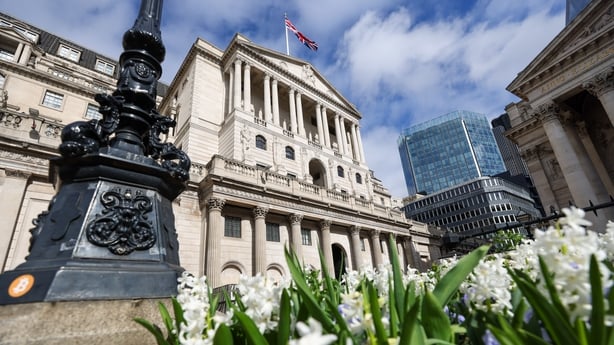
In the post-policy-meeting briefing, Bank of England chief Andrew Bailey is likely to be pressed on his thoughts on what Burnham’s agenda means for monetary policy. Economists estimate an early decision to cut tax on electricity would slow inflation by 0.1 percentage points.
New finance minister John Healey, meanwhile, will also be scrutinised as watchful bond markets assess whether he will be friend or foe.
5 – Europe’s earnings deluge
It is Europe’s busiest week of this earnings season with 40% of STOXX 600 companies reporting, according to Barclays.
The line-up includes LVMH, AstraZeneca, Shell, Airbus, UBS and Aer Lingus owner IAG.
Irish companies due to report half year results next week include Kerry Group, AIB, Bank of Ireland and PTSB.
Second-quarter profit in Europe is set to increase by 17.3% when combining the results of companies that have already reported with estimates for those pending.
That would mark the fastest growth rate since the fourth quarter of 2022. But that is driven mostly by energy given surging oil prices. Exclude them and LSEG I/B/E/S expects a more modest 7.2%.
Flash euro zone inflation and growth readings meanwhile could go some way to deciding whether the European Central Bank will raise interest rates again this year, after it left policy unchanged on Thursday following June’s hike.