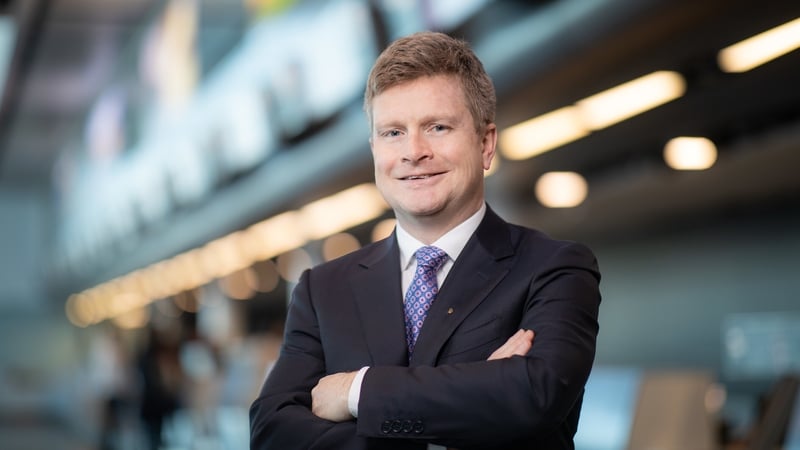
New British Prime Minister Andy Burnham should reduce taxes on aviation to enable the industry to remain competitive, the boss of British Airways said.
Sean Doyle, the airline’s chief executive, told a gathering of the sector’s leaders that the new Prime Minister must “recognise our value”.
Speaking at the Farnborough Airshow in Hampshire, Mr Doyle said: “We have very, very high taxation burdens, whether it’s APD (air passenger duty), whether it’s airport charges”.
“If you want this sector of the economy to continue to grow and to add to the core objective of growth, you’ve got to make sure that we reduce the taxation burden because at the minute it’s higher than most other markets that we operate in,” he added.
The airline boss urged ministers to “understand the value of what we do”, stating that the UK has the third biggest aviation network in the world, which he attributed to “the innovation and the competitiveness” of the companies involved.
“They would be my two big asks: recognise our value and understand that we need to be competitive, and think about that when you think about any policy decision,” he said.
British Airways is owned by IAG, which also owns Aer Lingus.
The biennial show is usually opened by the prime minister of the day, but neither Keir Starmer nor Mr Burnham attended this morning.
There is speculation Mr Burnham may visit the five-day show later this week.
Mr Doyle warned that British Airways’ ambition of achieving net zero for carbon emissions by 2050 is “in jeopardy” unless production of sustainable aviation fuel (Saf) – a lower-carbon jet fuel – is ramped up.
“Policy isn’t triggering the supply side to the extent we need,” he said.
“We’re not an energy company. We’re not an airframe manufacturer. We fly (the planes),” he said.
“We’ve got to make sure that policy triggers the supply side and triggers the investment in research in new technologies to meet some of the mandates that we’re beholden to,” he added.
By law, Saf must make up at least 3.6% of all jet fuel used in flights from UK airports this year.
The percentage will rise annually, reaching 10% in 2030 and 22% in 2040.