
Local councils and Airbnb have begun sharing data to identify the illegal subletting of social homes on the short-term rental platform.
The scheme, coordinated by the Cabinet Office’s fraud team, external, allows councils to cross-check social housing records against Airbnb listings in an effort to tackle what the government calls “social housing fraud.”
It is suspected nearly 6,000 social homes in England are illegally sublet on short-term rental platforms, according to the Tenancy Fraud Forum, a not-for profit organisation.
Early results suggest 470 cases of social housing fraud have been identified so far across participating local authorities, with offenders facing penalties including eviction, fines and up to two years in prison.
However, some campaign groups say tackling illegal subletting will have “very little impact on the acute housing crisis.”
According to the Cabinet Office, whether a tenant can sublet a room depends on the terms of their individual tenancy agreement and may require the council’s permission, but subletting an entire social housing property is an offence.
Fraudsters could include people who have more than one home or are living abroad.
The government estimates on average, each case costs taxpayers around £78,300 – a figure which could include paying for temporary accommodation for genuine applicants, the legal costs to recover property, and rent foregone during the void period between tenancies.
Geraldine Girardi has lived in a mixed-tenure Notting Hill Genesis block in King’s Cross for 26 years. A leaseholder and member of the Social Housing Action Campaign, she believes one social housing flat has been illegally sublet as short-term accommodation.
“Recently there’s been lots of people coming and going with suitcases. They’re not residents of the building.”
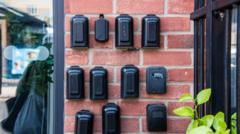
She said residents had repeatedly found lockboxes attached to the building, which – – although can be used by housing associations or to help let carers into the building – are frequently removed and relocated to avoid being seen.
“It’s really obvious someone’s trying to avoid detection.”
Girardi said the constant turnover of visitors has led to damage of communal area carpets, doors and entrances.
“Sometimes groups of six or eight people stay in a one-bedroom flat, and we’re the ones paying through our service charges to repair the damage.
“This is public money being abused. It’s good that it’s being tackled, but it’s a huge piece of work.”
She stressed that when she contacted Airbnb about the listing, they were helpful.
David Harvey from Westminster City Council said the authority believes 3,000 of the borough’s 13,000 Airbnb listings are illegally sublet, some of which could be identified as social homes.
He said all council tenancy and lease agreements prohibit short-term letting, and added that Westminster had 7,500 households on its waiting list for social housing.
“We want to free up those Airbnbs to be social homes again,” he said.
Harvey described the new data-sharing arrangement as “just the tip of the iceberg”, and council officers had to “play detectives” by searching for lock boxes and speaking to neighbours to uncover suspected fraud.
More than 1.3 million households in England are currently on waiting lists for a social home, a rise of 10% in the past two years. Over 300,000 of those are in London.
The social housing action campaign said these homes “should be exclusively held for those in urgent need of housing, but the Cabinet Office’s focus on the tiny proportion that are rented out as short term lets is a calculated distraction.
“Even though this happens on such a negligible scale, it really makes very little impact on the acute housing crisis.”
Cabinet Office Minister Satvir Kaur said “This isn’t an either/or.
“One in 20 social homes potentially are being used fraudulently. It’s right and proper that we find those homes and use them for those who truly need them.”
She added: “£39 billion is also being invested into a new social and affordable homes programme, with an ambition to deliver around 300,000 new homes over the programme’s lifetime”.
The Cabinet Office and the Public Sector Fraud authority said the data-sharing initiative was expected “to return hundreds of properties to genuine families in its first year” as councils could confiscate illegally-let flats and reallocate to someone on the social housing waiting list.