Politics has certain universal traits.
You campaign in poetry, and govern in prose.
You occasionally over-promise and sometimes under-deliver.
And, if a situation is causing more short-term problems than it’s worth, you do what all political experts do and kick the can as far down the road as possible, hoping by the time it reappears, tempers will have cooled.
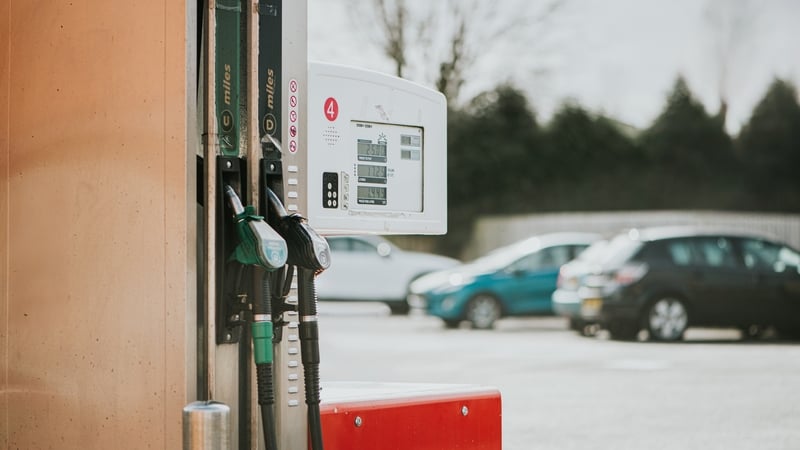
Such is life right now for the Government when it comes to fuel prices.
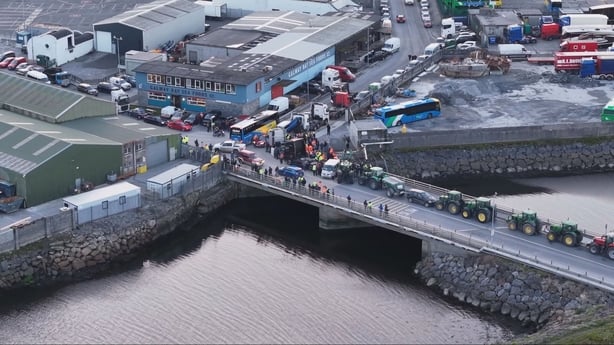
Three months ago, the Coalition faced a wave of protests by hauliers, farmers and other groups over surging fuel and energy prices, and their related excise duty costs.

The situation, which garnered significant national and international attention, had as much to do with the US-Iran conflict in the Strait of Hormuz as anything ministers in Ireland could realistically resolve.
But its pinch point was that prices were rocketing in this country, leading to anger on the streets, protests, blockades, threats of sending in the army, a no confidence motion in the Government, and the loss of Michael Healy-Rae from the ministerial benches.
That scenario was taken out of the headlines when Taoiseach Micheál Martin and Tánaiste Simon Harris sought to dampen the flames by postponing any rise in excise duty on fuel until the end of July, as part of a combined supports package of €700 million.
In the months since, a road of diplomacy has been travelled, both in relation to the specific issue at home and the root of the problem abroad.
But, with this week’s confirmation of a phased re-introduction of excise duty increases in the final months of this year, that kicked-away can – and the potential political problems it represents – is now firmly back in view.
This week’s development
The announcements this week involved both a continuation of the existing short-term solution, and a rowing-back on that same solution later in the year.
For the Government at least, it is the most sensible way to resolve the situation for everyone involved.
Under plans agreed by the Cabinet last Tuesday, the Coalition extended existing excise cost reductions on petrol and diesel until 1 September, costing an extra €270m.
It means the existing excise duty cut of 27 cent on a litre of petrol and 32 cent on a litre of diesel, which was due to end on 31 July, will now continue for another month.
Phased unwinding as ‘number of benefits’, says Harris
However, from the start of September, these supports will slowly come to an end, with a phased restoration of the full excise duty on fuel prices being gradually re-introduced by December.
For petrol, this includes a 9 cent increase per litre on 1 September, an 8 cent increase per litre on 1 October, an 5 cent increase per litre on 1 November, and a 5 cent increase per litre on 1 December.
For diesel it involves a 10 cent increase per litre on 1 September, an 8 cent increase per litre on 1 October, a 7 cent increase per litre on 1 November, and a final 7 cent increase per litre on 1 December.
In both cases, this means the originally flagged full costs will be entirely restored, with the situation under regular review in case the wider global fuel access difficulties re-emerge.
Announcing the plans, the Taoiseach said the phased full cost return is about ensuring hauliers, farmers and other groups are not hit with a “cliff edge” sudden removal of the current supports, and can instead slowly plan for the changed circumstances.
He added that the return of original costs will take place over a phased basis as while the situation in the Strait of Hormuz is now calmer, a “volatility” remains in place that should not be overlooked.
The Tánaiste echoed the remarks, saying the plan gives the Government “a chance to pass on the reductions we’re now seeing in the commodity markets”.

Both also hinted at measures in the upcoming budget which could help to reduce pressures on families, including what the Taoiseach described as pressures “on the income side, the social protection side”.
For the Coalition, the return of full excise duty fuel costs on a phased basis is a sensible next step which should be seen as pragmatically addressing April’s immediate stand-off, the wider problems in the world, and what new supports could be on offer in October’s budget.
In other words, not so much kicking the can down the road, as placing it safely out of the way for now before it is sensibly dealt with later.
The Opposition, however, is not so sure.
Fuel for Opposition criticism
“If the Government makes any attempt to do this, if it tries to implement any increases later this year, they will have people back on the streets protesting,” warned Independent Ireland TD and Oireachtas budgetary oversight committee chair Richard O’Donoghue.
He said he believes that while the decision in April not to impose additional excise duty costs was welcome, regardless of the Coalition’s view, the underlying difficulties causing the situation have not gone away.
Instead, he said, they will return in late autumn when hauliers and others are “at their low time”.
“The wheel has to go around, we have to look at everybody’s needs, and what I would like is a cap on excise duty costs up to a certain amount, and then after that amount you pay the price on the fuel,” Mr O’Donoghue said.
He added he believes the only reason the Government has extended the current supports until September is to reduce the risk of “trouble” at the start of Ireland’s EU Presidency.

Sinn Féin’s Pearse Doherty agreed, saying he believes Government is simply trying to “kick the can down the road”, and that despite the Coalition’s belief that by the time excise duty costs increase overall fuel costs will have fallen further, this is not guaranteed.
“The Government in response to the outrage over the cost of excise on petrol and diesel has decided to kick the can down the road, they’ve made a decision that before the end of the year they will have increased the price of diesel by 34 cent,” he told the Dáil on Tuesday.
“Everybody knows what they’re paying at the pumps at the minute, so it will push the price of diesel well above €2, it is simply unacceptable at a time when so many people are feeling the pinch and this cannot go ahead,” he said.
For Aontú leader Peadar Tóibín, the difficulty is that Ireland “is an excessively expensive country for energy”, saying this remains the “key” and so far unresolved issue which led to April’s protests.
He added his party will “oppose” any move to “jack up excise on petrol and diesel in September”, regardless of the gradual increase plan.
And that criticism was echoed by Labour too, with the party’s finance spokesperson Ged Nash saying any increase in excise duty costs must be balanced out by “targeted energy credits and other supports for middle and low-income working households” – a remark Labour is likely to zone in on in the coming weeks due to those hinted at budget promises from the Government.
An upcoming problem
Criticism from the Opposition is likely to divide opinion, as some will support their view that any increase in costs – gradual or not – is unsustainable in a cost-of-living crisis, while others will believe the tax intake from excise duty fuel price rises is needed to fund other equally important Government measures, and potential budget supports.
For political analysts like Gerard Howlin, that wider ongoing disagreement is exactly the problem the Coalition has yet to address, as while the Government was smart to delay matters during the white heat of April, the central point in the dispute is still waiting to re-appear just down the road.
“Every Government does a bit of tactical manoeuvring because sometimes you need to move sideways to move forward.
“But knee-jerking economically isn’t a good policy, particularly when the Government doesn’t exactly have the strongest support [in opinion polls] right now,” Mr Howlin suggested.
While the issues involved are not identical, Mr Howlin said recent examples such as the temporary Covid-19 pandemic evictions ban and the provision of energy credits highlight the difficulty the Government could face in the final months of this year.
In both instances, the Coalition’s help was initially welcomed, before a wave of criticism from those affected when they were eventually removed.
For Mr Howlin, it’s a problem Fianna Fáil and Fine Gael are certain to face when diesel and petrol excise duty costs rise from September, regardless of what argument is put forward for the phasing-in of the changes.
“It [delaying a difficult solution] is done [by various governments], but it’s very seldom a good idea because most politicians see the difficulty they are building up, so why do it to yourself.
“They [the Coalition] may get lucky in the sense there may be a feeling the [fuel] protesters over-played their hand in April and maybe there is more support for Government on this now than before, but that’s not guaranteed.”
All fuel for the fire when the energy prices and excise duty costs debate flames get fanned again from September.