Updated / Friday, 3 Jul 2026 12:23

Analysis: The emergence of these festivals and rock shows was motivated by a growing youth culture and the arrival of astute music promoters
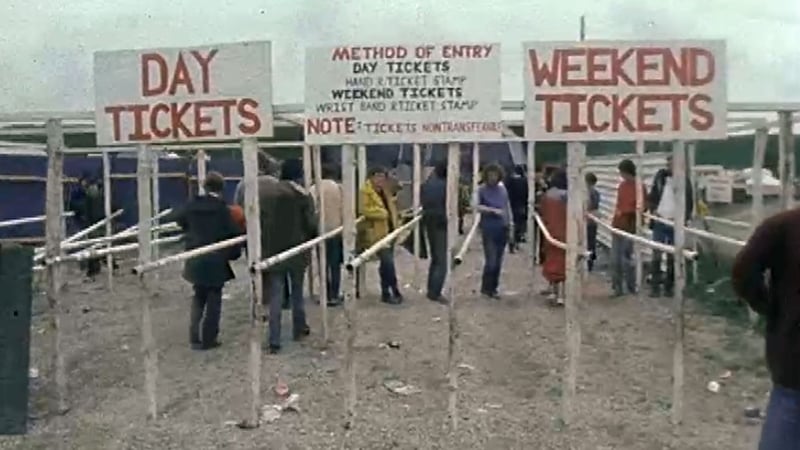
The very first Macroom Mountain Dew Festival took place in that Co Cork town in June 1976. It is widely credited as Ireland’s first commercially successful major outdoor rock festival and set the template for everything that followed. Over the next decade, a range of Woodstock-esque festivals came on stream.
The emergence of these contemporary music festivals and rock spectacles was motivated by a growing youth culture and emergence of Irish music promoters connected with international music movements. During the late 1970s and early 1980s, Ireland faced high unemployment and the geopolitical tension of the Troubles in Northern Ireland. Irish youth were desperately seeking release.

Ireland’s first outdoor rock festival had taken place at Richmond Park in Dublin in 1970. Headlined by British band Mungo Jerry, the event also featured an emerging Thin Lizzy. Organisers had taken their cues from festivals in Woodstock and the Isle of Wight, yet the event in Inchicore drew fewer than 1,500 attendees and was a commercial failure
What it did do, however, was establish a blueprint for the Macroom Mountain Dew Festival six years later. This was the brainchild of Macroom publican and funeral director John Martin Fitz-Gerald and local business people. The festival (named “Mountain Dew” as an homage to the region’s rebellious poitín-making tradition) drew 20,000 attendees at its peak to a town with a population of 3,000.
Áine O’Connor reports for RTÉ’s Summerhouse show from the Mountain Dew festival in Macroom, Co Cork in 1981
When national promoters refused to get involved because they considered it too much of a financial risk, Rory Gallagher and his brother and manager Donal, agreed to headline in 1977. To advertise the event, the Macroom festival committee extended a mock invitation to Ugandan dictator Idi Amin, devised by organiser John O’Callaghan and published in the Evening Echo, that attracted global media exposure. The 1981 festival featured the Undertones, Elvis Costello, The Pretenders and Paul Brady.
The Mountain Dew ended after a disappointing loss-making two-day event in the grounds of Coolcower House in 1982, headlined by Phil Lynott playing solo. Looking back, Macroom Mountain Dew featured legendary performances by Van Morrison, Marianne Faithfull, Elvis Costello, Horslips and The Dubliners. It became a life-changing introduction to live rock and roll for a new generation, including 15-year-old David Evans, U2’s the Edge.
We need your consent to load this rte-player contentWe use rte-player to manage extra content that can set cookies on your device and collect data about your activity. Please review their details and accept them to load the content.Manage Preferences
From RTÉ Archives, Andrew Kelly reports for RTÉ News from the fifth Boys of Ballisodare Festival in 1981 where acts included Chuck Berry and Stockton’s Wing
Soon, other festivals got in on the act. Inspired by Irish folk and traditional music, brothers Kevin and Philip Flynn established the Boys of Ballisodare festival from 1977 to 1982. While they began as a small all-Irish trad festival, the brothers were influenced by the counterculture and expansive sounds of American rock. They expanded their Sligo site and secured international acts of the era like Chuck Berry, Don Everly and Donovan. Their festival is widely considered the blueprint for the “tented village” music festival in Ireland.
Occasion at the Castle was an open-air music festival held in the summers of 1981 and 1982 which drew up to 13,000 fans to Castlbar, Co Mayo and featured iconic performances from acts like Madness, Ian Drury and the Blockheads, Kate and Anna McGarrigle, Loudon Wainwright III, Clannad and the Boomtown Rats, who had successfully played Leixlip Castle in 1980. The band had planned to play Leopardstown Racecourse, but this gig was cancelled following licensing issues and they moved to Leixlip Castle instead.
We need your consent to load this rte-player contentWe use rte-player to manage extra content that can set cookies on your device and collect data about your activity. Please review their details and accept them to load the content.Manage Preferences
From RTÉ Brainstorm, when Ireland said no to nuclear power in Co Wexford
Despite international acts being hesitant to travel to the North, Aiken Promotions, founded in Belfast by Jim Aiken in 1961, brought acts like Bruce Springsteen, Bob Dylan and Queen to Ireland. On his return to Slane, Co Meath in 1976, Henry Mount Charles set about reviving the economic fortunes of his family home by staging huge outdoor gigs in the grounds. Thin Lizzy, with support from U2, played the first show in 1981, followed by the Rolling Stones in 1982. Meanwhile, large-scale events, such as the Phoenix Park racecourse show in 1983 with U2, Simple Minds and the Eurythmics, proved Ireland could support world-class rock productions.
Festivals also merged music with political activism. The Carnsore Point festivals galvanised the massive anti-nuclear movement in Ireland from 1978 to 1981 and rallies and concerts featured a legendary line-up of Irish artists, including Christy Moore, Clannad, and U2. Environmental activists transitioned their efforts towards non-consumerist, alternative ways of living, organic farming, and supporting the nascent Green Party/Comhaontas Glas. Decades later, the events are remembered as examples of people-powered resistance in Ireland.
We need your consent to load this rte-player contentWe use rte-player to manage extra content that can set cookies on your device and collect data about your activity. Please review their details and accept them to load the content.Manage Preferences
From RTÉ Archives, Michael Walsh visits Lisdoonvarna for Ireland’s Eye two weeks after the 1983 festival where locals are unhappy about the violence, vandalism, drink and drug taking at the event
The Lisdoonvarna Festival in Co. Clare (1978-1983) is the defining example of the era’s fusion of traditional Irish music, folk, and Celtic rock and became immortalised in the song Lisdoonvarna by Christy Moore. But a combination of tragic drownings, increasing violence and gate-crashing incidents caused organisers to pull the plug, bringing this pioneering chapter of Irish festivals to a close in 1983.
The 1976 to 1983 era laid the vital groundwork for subsequent massive Irish festivals, serving as the bridge between localised traditional events and the global mega-concerts that define today’s Irish music scene. Iconic groups like Thin Lizzy, U2, and The Chieftains anchored these line-ups, graduating from small festivals to international stardom. It shifted the industry from showbands to homegrown rock-and-roll, laying the groundwork for Ireland to make a permanent mark on the global music stage.
Follow RTÉ Brainstorm on WhatsApp and Instagram for more stories and updates
The views expressed here are those of the author and do not represent or reflect the views of RTÉ