Public sector unions are to meet to prepare for potential industrial action ballots over what they have described as the failure to establish a basis for talks on a new public service pay agreement.
The last public sector pay deal officially expired this week and formal talks have yet to begin on a successor agreement.
The previous deal ran from 1 January 2024 to 30 June 2026 and provided for pay increases of up to 10.25% over the course of the two-and-a-half-year period.
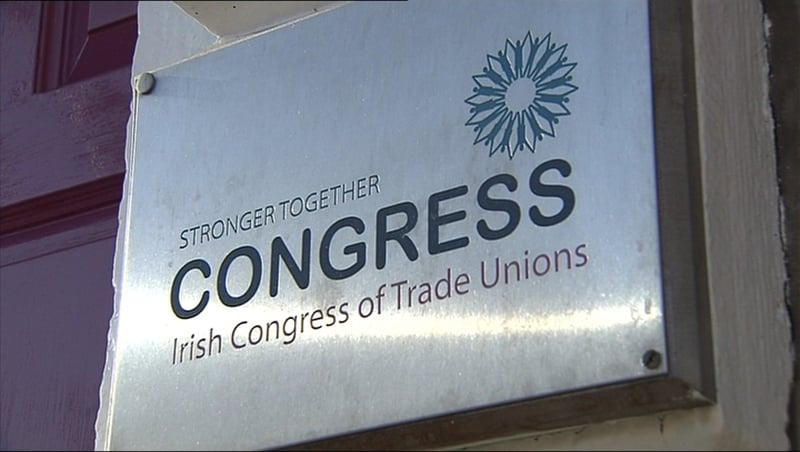
The Public Services Committee of the Irish Congress of Trade Unions (ICTU) said today that its 19 affiliated unions will now begin the process of consulting members, with industrial action ballots expected to follow in the coming weeks.
“Unions advised Government officials that they did not believe there was a viable basis for opening formal negotiations, as Government had not set out a sufficiently clear and credible approach to pay and living standards at the outset of the process,” according to a union statement.
Unions said they had argued that a pay increase is required to cover the period from July to December this year.
“While no specific claim has been tabled, unions noted that inflation was running at 3.6% in May, more than wiping out the benefit of the 1% increases paid in February and June,” the unions said.
On Wednesday, Minister for Public Expenditure Jack Chambers said he wants to reach an agreement on public-sector pay but not an any cost.
He added that there shouldn’t be preconditions set in the context of building consensus towards a new pay deal.
Chair of the Public Services Committee and Fórsa General Secretary Kevin Callinan said the decision to prepare industrial action ballots reflects the seriousness of the situation facing public service workers.
“The Minister has said that everything is on the table and has attempted to characterise the union position as setting preconditions,” Mr Callinan said.
“That does not reflect our experience of the exploratory talks.”
“What unions are seeking is clarity on pay before entering a wider process, because public servants have already seen pay fall significantly behind prices in recent years.”
“There remains a pathway to engagement, but it must start with a serious and substantive approach to pay and living standards if it is to have any prospect of success.”
“Important issues, including local bargaining, remote working, housing and artificial intelligence, also need to be addressed. Above all, designing a credible approach to pay is paramount if progress is to be achieved,” he added.
INTO General Secretary John Boyle said teachers required a fair and sustainable pay framework.
“Our members need a deal that reflects the real pressures they are facing. Cost of living remains a central concern, and that has an effect on the recruitment and retention of teachers, especially those in the early stages of their careers,” Mr Boyle said.
SIPTU General Secretary John King said protections for public services must form part of any agreement.
“Workers are clear that pay must be addressed, but also that public services must be protected. That includes strong safeguards against outsourcing, a commitment to investment in the services communities rely on, and agreement on the management of AI in the public service is absolutely necessary,” Mr King said.
INMO General Secretary Phil Ní Sheaghdha said nurses and midwives required both fair pay and safe working conditions.
“Safe staffing remains a critical issue for our members. Any future agreement must support safe, sustainable services while also addressing the cost-of-living pressures facing healthcare workers,” she said.
Minister for Public Expenditure Jack Chambers said the threat of industrial action is “unnecessary”.
“It is unnecessary to be threatening strike action when we have a government willing to engage, willing to have a successor pay agreement and willing to accommodate it in the context of Budget 2027,” Mr Chambers said.
“We’ve always said our door is open to engagement and we would be hoping that union leaders can recommence discussions with officials in our department,” he added.
A spokesperson for the Department of Public Expenditure said the Government remains available for engagement with ICTU and other representative associations on all matters.
“It is only through engagement that agreement can be reached,” the Department said.