Analysis: As small and medium-sized business founders hit retirement age, succession is fast becoming a national economic issue
When Ireland discusses the implications of an ageing population, the conversation usually focuses on pensions, healthcare and housing. Yet there is another consequence of demographic change that receives far less attention. What happens when thousands of Irish business owners reach retirement age?
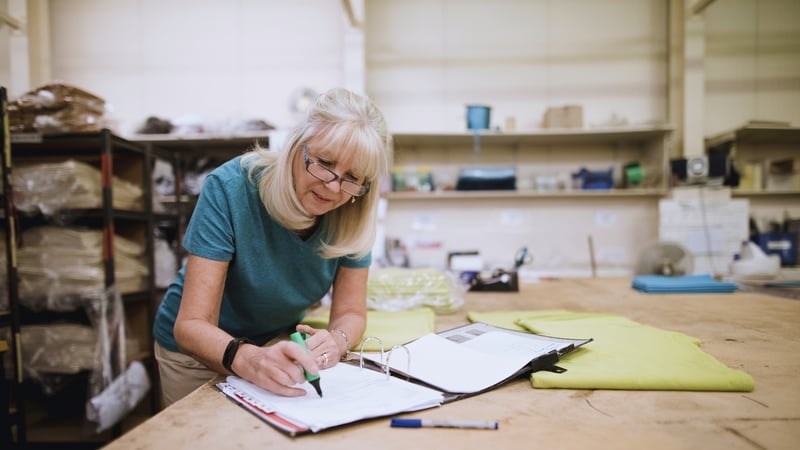
Across the country, many small and medium-sized enterprises have been built over decades by founders who are now approaching retirement. For some, the next generation will take over. For many others, there is no obvious successor. As a result, Ireland faces a largely overlooked challenge. Who will own Irish businesses when their founders step aside? The answer matters not just for those business owners, but for employees, local communities and the wider economy.
An ageing business community
While policymakers have begun planning for the implications of the silver tsunami for healthcare and pensions, far less attention has been paid to business ownership. Yet many of the entrepreneurs who founded businesses during the economic transformations of the 1980s, 1990s and early 2000s are now approaching retirement, and succession planning is becoming an urgent issue. The challenge is not simply keeping businesses operating. It is determining who owns them next.
We need your consent to load this rte-player contentWe use rte-player to manage extra content that can set cookies on your device and collect data about your activity. Please review their details and accept them to load the content.Manage Preferences
From RTÉ Radio 1’s The Business, should the wealthy retire older?
SMEs employ people, train workers, support local suppliers and contribute to the tax base. In many towns and communities, they act as anchors of economic activity. When succession fails, viable businesses can close. When businesses are sold, ownership frequently moves elsewhere. Decision-making, profits and future investment may follow. Ownership influences where wealth is created and where it ultimately ends up.
Ireland’s indigenous business challenge
The succession debate arrives at a time when Ireland is already questioning the strength of its indigenous business sector. While Ireland performs strongly in supporting start-ups, tecent analysis from PwC argues that it continues to struggle to scale indigenous firms into large global businesses. The Economic and Social Research Institute has also highlighted the risks associated with Ireland’s heavy dependence on multinational corporations. While foreign direct investment remains enormously valuable to the Irish economy, the ESRI points out that strengthening domestically owned firms would improve economic resilience, broaden the tax base and raise living standards.
A report commissioned by Stripe founders Patrick and John Collison similarly warned that Ireland’s productivity performance is heavily dependent on foreign-owned firms and that future growth will increasingly need to come from a stronger indigenous business sector. Succession planning is not simply about retirement. It is part of a larger question about the future ownership and resilience of the Irish economy.
We need your consent to load this rte-player contentWe use rte-player to manage extra content that can set cookies on your device and collect data about your activity. Please review their details and accept them to load the content.Manage Preferences
From RTÉ Radio 1’s News At One, new retirement age rights for employees come into effect
The default outcome: selling out
Many retiring business owners face a relatively narrow range of options. Some businesses are passed to family members. Others are sold to competitors, multinational corporations or private equity-backed buyers. In some cases, businesses simply close because no successor can be found.
None of these outcomes are necessarily negative. Foreign investment has played a critical role in Ireland’s economic success and private equity can provide valuable capital and expertise. Indeed, Ireland has become an increasingly attractive destination for private equity investment and cross-border acquisitions.
Giving workers a bigger stake
Such transactions raise an important question: if Ireland wants to strengthen indigenous enterprise, should public policy pay greater attention to preserving local ownership when founders retire? One of the most striking features of modern economies is that many of the largest wealth gains come not from wages, but from ownership. When employees at successful technology companies receive profit share, shares or share options, they participate directly in the value they help create. Recent reports of substantial share-based windfalls for workers at multinational technology firms illustrate how transformative this can be.
We need your consent to load this rte-player contentWe use rte-player to manage extra content that can set cookies on your device and collect data about your activity. Please review their details and accept them to load the content.Manage Preferences
From RTÉ Brainstorm, why micro-retirement has become a new workplace trend for Gen Z & millennials
Yet relatively few employees in Irish-owned businesses enjoy similar opportunities. This is where alternative ownership models deserve greater attention. Employee ownership trusts provide ways for business owners to exit while allowing ownership to remain connected to employees and communities. The UK has embraced employee ownership trusts since 2014 where more than 2,000 companies have transitioned to employee ownership under the model, with research indicating benefits including higher productivity, improved employee engagement and greater business resilience.
But unlike the UK, Ireland’s tax system remains far less supportive of such structures. Ireland’s first example emerged in 2024 when Dublin-based digital marketing agency Wolfgang Digital transitioned towards employee ownership. A review that year, commissioned by the Department of Finance and conducted by Indecon consultants concluded that Ireland’s current tax framework discourages Employee Ownership Trusts and recommended reforms to align Irish treatment more closely with the UK model.
Paradoxical examples have occurred such as Seetec, where the UK parent company is employee owned and goes to significant expense to ensure Irish employees can benefit in a similar way to UK-based employees. Employee ownership will not be suitable for every business. Nor should it replace traditional succession routes. But it highlights a broader principle: ownership transition can be designed to benefit more than just buyers and sellers.
We need your consent to load this rte-player contentWe use rte-player to manage extra content that can set cookies on your device and collect data about your activity. Please review their details and accept them to load the content.Manage Preferences
From RTÉ Radio 1’s The Business, succession planning for your business
Unlike a trade sale, an Employee Ownership Trust allows founders to step back while preserving local ownership, company culture and employee livelihoods. UK evidence suggests these legacy and stewardship considerations are often more important to founders than the tax benefits themselves.
A strategic opportunity
Ireland’s demographic transition presents significant challenges. It also presents opportunities. Thousands of business owners will make succession decisions over the next decade. Those decisions will shape who owns businesses, where wealth accumulates and how resilient local economies become.
The country rightly spends considerable time asking where the next generation of indigenous multinationals will come from. An equally important question may be who will own the businesses we already have. As Ireland’s founders approach retirement, succession is no longer just a private concern. It is becoming a national economic issue.
Follow RTÉ Brainstorm on WhatsApp and Instagram for more stories and updates
The views expressed here are those of the author and do not represent or reflect the views of RTÉ