
The Food Safety Authority of Ireland (FSAI) has issued new guidance to food businesses on how to comply with stricter EU food-safety legal limits for the control of listeria monocytogenes in ready-to-eat foods.
The new rules, which apply from today, will oblige food businesses to have robust food-safety controls in place to ensure compliance with the more stringent limit for listeria.
This limit applies to ready-to-eat foods able to support the growth of listeria, when placed on the market and throughout their shelf life.
Testing against the stricter limit requires the use of a more sensitive microbiological test method that is able to detect listeria at low levels, if it is present in food.
The FSAI has advised this “could mean that in the coming months consumers might see more food businesses recalling ready-to-eat foods due to the presence of listeria monocytogenes”.
Listeria is a bacterium that is primarily transmitted through contaminated food and can lead to a serious illness in humans known as listeriosis.
Vulnerable people, including pregnant women, infants, older adults, and people with weakened immune systems are at a higher risk of developing severe illness.
FSAI Chief Executive Greg Dempsey said listeria “continues to be a significant concern across Europe, due to the severity of illness it can cause in vulnerable populations”.
While the European Union, and Ireland as a member state, operate one of the most robust food-safety systems in the world, it remains vital to continuously improve food-safety legislation to safeguard consumer health”.
“The new rules will effectively raise the microbiological standards expected of food businesses and better protect public health,” Mr Demspey said.
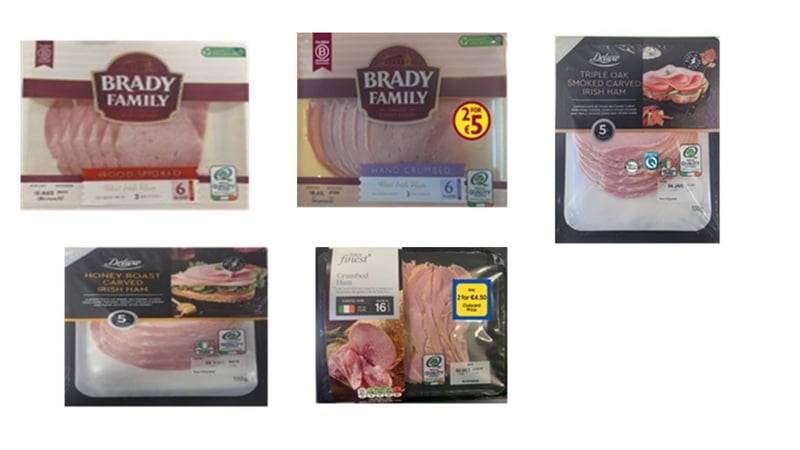
The new guidance comes as a number of batches of cooked ham have been recalled from retail outlets due to the possible presence of listeria monocytogenes.
The hams are from the Brady Family, Tesco Finest and Lidl’s Deluxe ranges.
Retailers have been asked to remove the implicated batches from sale and display recall notices at point-of-sale while consumers have been advised not to consume the impacted products