
Updated / Thursday, 25 Jun 2026 16:35

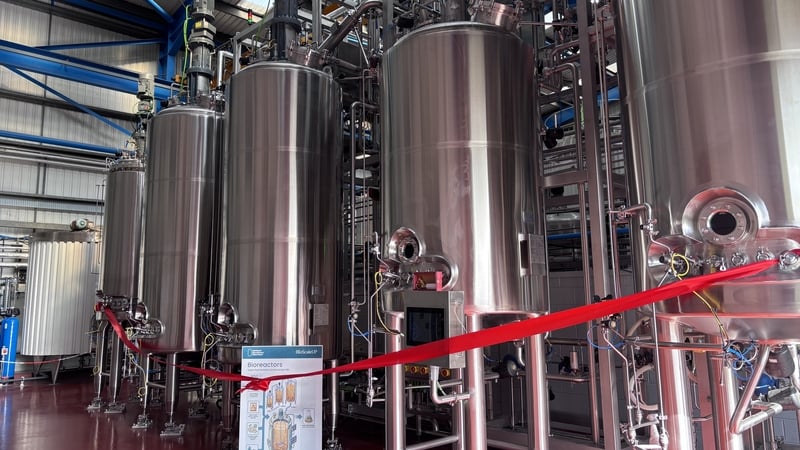
An old zinc mine in Lisheen, Co Tipperary, has been given a new purpose as the home of Ireland’s first National Biorefinery Pilot Plant.
The facility is designed to help businesses turn waste, and natural materials from agriculture and industry, into useful products such as renewable energy, chemicals and new materials as part of the bioeconomy.
Backed by almost €10 million in state and EU funding, the plant will allow companies to test new ideas before investing in large-scale production.
It is the first dedicated open-access pilot biorefinery facility for start-ups, SMEs and researchers in the country.
Minister for Agriculture, Martin Heydon launched the National Biorefinery Pilot Plant and the BioScaleUp project at the National Bioeconomy Campus in Lisheen today.
“What businesses can’t do is invest in really expensive equipment and infrastructure like this,” he said, “so what the state is doing, supported by Europe, is putting the physical infrastructure here on a pilot basis so that Irish companies can come in and use this facility to get proof of concept around the products that they were trying to develop.”
Clonmel-based business, Medite Smartply manufactures wood into furniture, kitchens and wall panels.
It plans to use the waste water from its operations to generate biogas and bioplastics at the biorefinery.

“It really gives us the opportunity to develop, test and scale, and see if our waste water stream can develop into something of value,” said Rory Rice of Medite Smartply. “It could create a big impact for the business in terms of cost savings but also reducing our carbon footprint and emissions.”
The facility will help companies move ideas from the lab to real-world production, creating new opportunities for the bioeconomy sector.
“This is living proof of what the bioeconomy is,” Minister Heydon said. “Bioeconomy has been a very abstract concept, but ultimately it’s about identifying something that costs companies money to get rid of and now saying it has a new role, it’s circular, we can get a value for it and that will increase the value back to our farmers, to our fisher men and women, and to our rural and coastal communities.”
The Government hopes projects like this can create new economic opportunities while supporting the transition to a more circular economy.
More stories on