
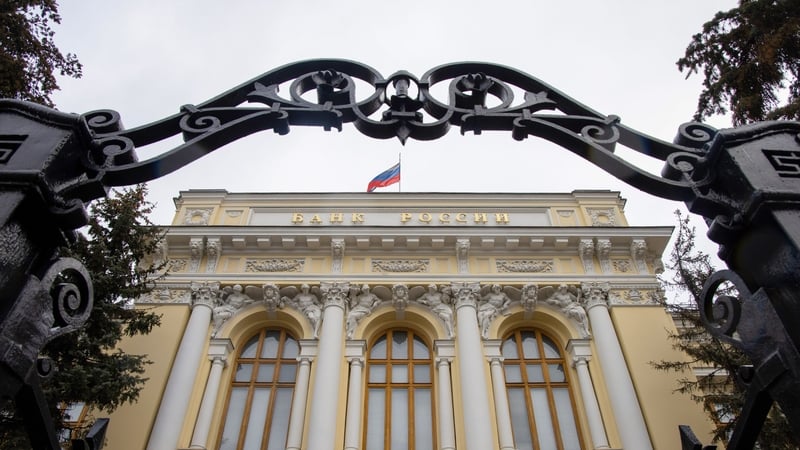
Russia’s central bank has today cut its benchmark interest rate to 14.25% from 14.5%, less than analysts expected, and signalled a more cautious approach to further monetary policy easing as the Ukraine war takes a growing toll on Moscow’s finances.
In the first quarter, the Russian economy contracted for the first time in three years as non-military sectors struggled under the weight of high borrowing costs and labour shortages.
“Economic growth continues at a moderate pace after a temporary decline at the beginning of the year,” the bank said in a statement.
It has signalled that rates might remain elevated for longer due to higher budget spending over the course of the next three years than previously expected.
“The persistence of structural primary budget deficits until 2029 may require tighter monetary policy than stipulated by the baseline scenario,” the central bank said.
Russia’s budget deficit, which resulted from the Ukraine war, widened to nearly $80 billion in the first five months of this year, exceeding the level planned for all of 2026 by 60%.
Analysts on average expected a larger cut of the benchmark rate to 14%, according to a consensus compiled by business outlet RBC.
Russia’s business lobby had urged the regulator yesterday to lower the rate to 13.5% to avoid having the economy “freeze” completely.
The central bank jacked interest rates to two-decade highs in 2024 as huge military spending on the Ukraine war sent inflation soaring.
Since last year, it has been modestly cutting the rate as the economy shows signs of losing steam.
But the high borrowing costs have hit businesses across the board, with large companies laying off staff and asking for state aid., while some smaller businesses have had to close.
At Russia’s flagship economic forum in Saint Petersburg earlier this month, President Vladimir Putin denied that the economy had “collapsed”, saying it had simply “descended to the same level” as euro zone countries.