
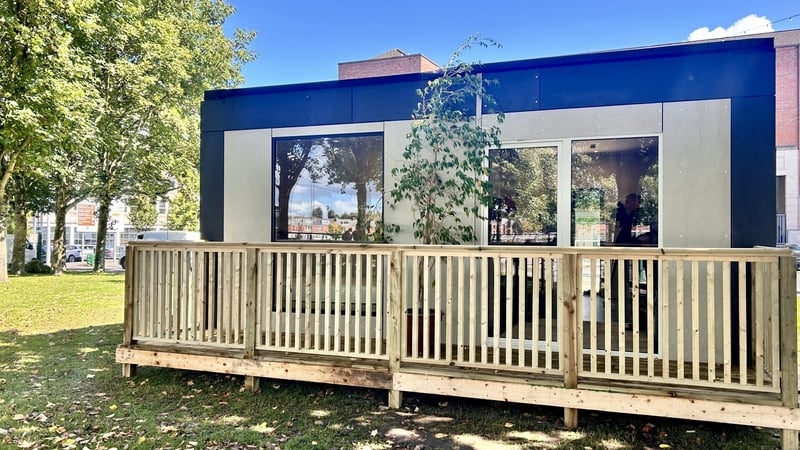
Revenue has confirmed that homeowners who build modular homes in their back garden will be liable to pay a separate Local Property Tax on that home.
The confirmation followed a query, put to Revenue, by Genevieve McGuirk, the chief executive of the Institute of Professional Auctioneers and Valuers.
She explained that people who have a main residence and a separate dwelling were currently liable to pay a property tax on that second residence, but it was not clear up to now whether that applied to modular homes, which under new regulations are due to be exempt from planning permission.
The proposal to grant planning exemptions for modular homes of up to 45sq/m in back gardens was brought to the Cabinet last month as part of a government bid to help ease the housing crisis and new regulations could be brought in, possibly before the Dáil summer recess.
Genevieve McGuirk told the Today with David McCullagh radio programme, that there would not currently be many people who had such a home in their back garden and such homes would have had to have received planning permission in the past.
As a separate residence that is permanently attached to the ground, such homes would be liable for the Local Property Tax.
The dwelling would also have to have sanitary facilities and basic cooking facilities, water and an electricity supply, be structurally sound and habitable, in order to be considered a home, she said.
The Institute of Professional Auctioneers and Valuers said such a property would have to be valued in its own right and receive its own property ID and Eircode.
They say the LPT would have to be paid, even if the building was unoccupied.
An application has to be made for an Eircode, before the property can be registered with Revenue.
The Revenue Commissioners confirmed that a modular home on the grounds of a property, which is permanently attached to the ground and is suitable for use as a separate dwelling in its own right, may incur a separate LPT charge.
In a statement it said that Section 2A of the LPT Act provided that a “residential property” meant “any building which is in use as, or is suitable for use as, a dwelling.”
Under the Act, the word building includes “a structure or erection of any kind and of any materials, or any part of that structure or erection, but excludes a structure that is not permanently attached to the ground”.
Part of a building or a structure permanently attached to the ground and that is “immoveable can be a residential property in its own right, and a building can contain a number of different residential properties for the purposes of LPT”.
Revenue added that many property owners have garages, greenhouses and other structures on the site of their home, which should be included when the property owners are making a true assessment of the correct value of the property.
It said that the LPT is a self-assessed tax and the treatment for LPT purposes will depend on the application of the legislation to the facts and circumstances of each case.