
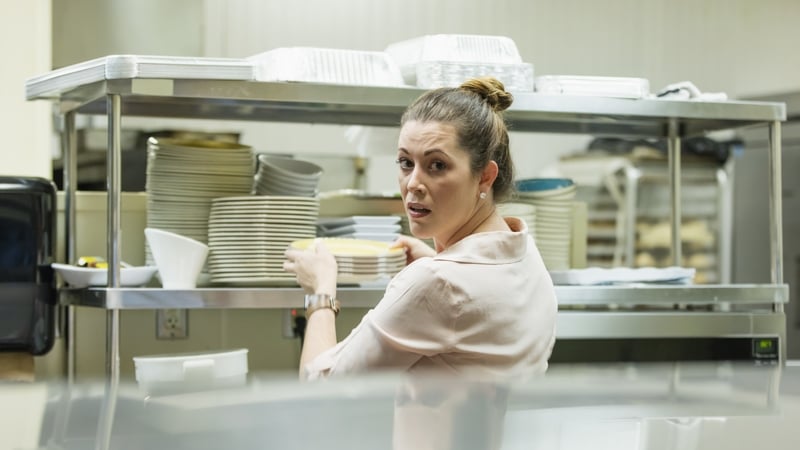
Analysis: Researchers heard from 736 people about their experiences working in Irish restaurants, hotels, cafes and other hospitality settings
By Deirdre Curran, University of Galway
Hospitality is largely a face-to-face service, relying on the skill, effort and care of workers. Data on workers’ experiences has been very limited to date, but new research offers a unique snapshot of life as a hospitality worker in Ireland today. Drawing on responses from 736 hospitality workers across Ireland, it’s the largest independent survey of worker perspectives in the sector to date.
Highlighting workers’ experiences and perspectives could lead to meaningful progress for the benefit of all hospitality stakeholders. Here are five key insights from the project.
Welcome signs of positivity and improvement
A previous study entitled Inside Out Hospitality was published by the author in 2021. While there are signs of improvement, much still needs to be done. On the positive side, 95% of respondents ‘care about being useful and productive in their jobs’, and 91% felt they had ‘the skills to do their job with confidence’. 74% felt their job was secure, and 74% cared about their organisation being profitable.
We need your consent to load this rte-player contentWe use rte-player to manage extra content that can set cookies on your device and collect data about your activity. Please review their details and accept them to load the content.Manage Preferences
From RTÉ Radio 1’s Today with David McCullagh, Dr Deirdre Curran on the changing culture of tipping in cafes and restaurants in Ireland
Respondents provided a long list of factors that attract them into the sector such as accessibility, flexibility, personal interest/passion for the work, and the social and interpersonal dimensions of the work. Some 73% of respondents ‘enjoy their work environment’ and 72% see themselves ‘continually improving on the job’.
Hospitality remains a challenging sector
The report acknowledges both the important contribution to the economy, and the increasing pressures on employers of the hospitality sector in Ireland. Hospitality and tourism employ one in 10 of all workers in Ireland (approx. 260,000). Challenges such as rising costs for food, energy and labour and increasing rent and rates have been well documented in the media.
Results reveal high levels of worker skill, pride and commitment alongside worrying levels of burnout, Ill-treatment and breaches of basic employment rights. The work can be physically and psychologically demanding. 71% of respondents feel ‘used up at the end of the workday’, 64% feel ‘emotionally drained by the work’ and 66% feel tired when they get up in the morning and have to face another day on the job. Many hospitality workers are clearly giving more to the employment relationship than they are getting in return.
We need your consent to load this rte-player contentWe use rte-player to manage extra content that can set cookies on your device and collect data about your activity. Please review their details and accept them to load the content.Manage Preferences
From RTÉ Brainstorm, the hospitality crisis: what’s happening to Irish restaurants?
Levels of worker ill-treatment remain high
While down from 2021, the numbers relating to witnessing or experiencing bullying or harassment are stll high with 53% of respondants saying they have witnessed bullying or harassment, while 38% have experienced it. The most common perpetrators of bullying and harassment (37%) were those in positions of power, namely supervisor/manager/owner. 41% of those who had experienced bullying or harassment had experienced verbal abuse, 22% psychological abuse, and 9% racial abuse, all of which likely contribute to unsatisfactorily high levels of employee turnover.
Respondents were asked the reasons for their intention to leave the job if they planned to do so in the next 12 months. This pointed to a range of factors that could be addressed to improve retention including poor management/culture, low pay/financial insecurity and lack of growth/recognition. Those most likely to perpetrate ill-treatment are those in management positions and customers. Of those ill-treated, they were likely or unlikely to report in equal numbers
Hospitality workers need more of a voice
We need to find ways to give voice to our hospitality workers, both within establishments and beyond through trade unions and relevant government platforms. Hospitality workers know what’s wrong and they have creative ideas on how to make it right, if only they were asked.
We need your consent to load this rte-player contentWe use rte-player to manage extra content that can set cookies on your device and collect data about your activity. Please review their details and accept them to load the content.Manage Preferences
From RTÉ Radio 1’s today with David McCullagh, why restaurants are finding it so hard to train chefs
In this study, one in four respondents disagreed with the statement ‘I feel welcome to voice my opinions/concerns about work without fear of repercussions’. Some 13% of respondents were trade union members, with 43% of those who were not members stating they would consider joining, and 57% that they would not. Reasons were provided and are arranged by theme in the report. There is a clear message for trade unions that this is a sector of workers that needs stronger representation.
Next steps
The research report concludes with a set of practical recommendations for positive change. Some of them echo undelivered recommendations of a 2022 Joint Oireachtas Committee on Tourism, Culture, Arts, Sport and Media report. This includes the establishment of an independent oversight body, a national and mandatory code of conduct and efforts to ensure that the voice of workers is equally represented alongside those of employers and their representative groups. Further targeted research is required to examine the complex issues here, both positive and negative.
Other recommendations include a move toward the ‘living wage’ where feasible, particularly given the cost-of-living pressures on workers. Additional work benefits such as pay progression, non-pay benefits, and personal development opportunities could be used to distinguish those workers seeking a career in the industry from those passing through.
The research team for The lived experience of hospitality workers in Ireland: A 2025 snapshot are Dr. Deirdre Curran (project lead, University of Galway), Kevin Ward (Technological University of the Shannon), Dr. Maeve O’Sullivan (University of Galway), Dr. Áine Ní Léime (University of Galway), Dr. Anastasia Kulichyova (Queens University Belfast) and Olaiwola Ogunpaimo (University of Galway).
Follow RTÉ Brainstorm on WhatsApp and Instagram for more stories and updates
Dr Deirdre Curran is a lecturer in Management at the J.E. Cairnes School of Business & Economics at the University of Galway
The views expressed here are those of the author and do not represent or reflect the views of RTÉ