
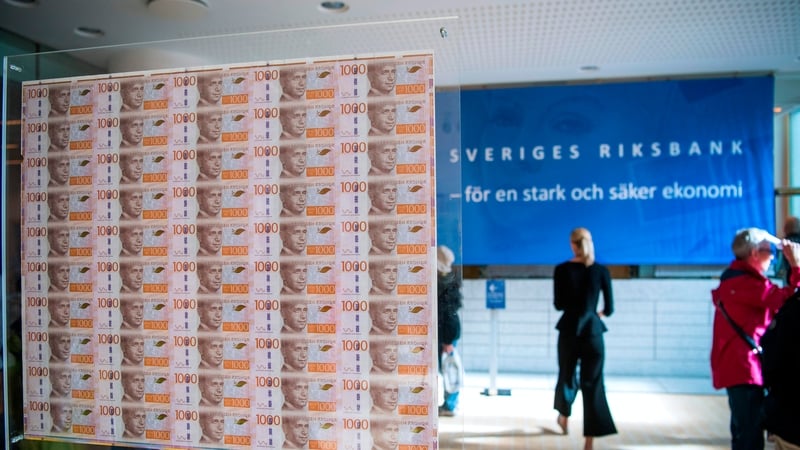
Sweden’s central bank kept its key rate unchanged at 1.75% as expected today and said that while the risk of higher inflation had increased somewhat due to the war in the Middle East, it could wait on developments before adjusting its policy.
The Riksbank has been in wait-and-see mode since cutting interest rates by a quarter percentage point in September last year. However, while the policy stance has not changed, the economic context has.
After overshooting the 2% target last year, underlying inflation was the lowest in 30 years in April at 0.0%. Part of that was due to a temporary cut in VAT on food, but a stronger crown and modest wage agreements have also played a role.
Low inflation makes Sweden an outlier in Europe.
Sweden’s first quarter economic growth was also weak and the Riksbank said the current benign conditions meant it did not need to hurry into rate hikes despite worries the Middle East will push up prices ahead.
“There is scope to wait until there is a clearer picture of the effects of the war and the supply shocks it entails,” the central bank said in a statement.
Analysts in a Reuters poll had been unanimous in expecting no change in the policy rate this time.
The median forecast in the poll was for a rate hike at the start of 2027, though markets see a chance of policy tightening by end of the year.
Uncertainty is high, however, not least about how long the war will last and how much and when its impact will be felt on growth and inflation.
“If the war were assessed to have large effects on the global economy and lead to a broad and persistent upturn in inflation, the Riksbank would need to raise the policy rate,” the central bank said.
“The range of potential outcomes for what can happen going forward is wide and the Riksbank is monitoring developments closely,” it said.
Meanwhile, Norway’s central bank today raised its policy interest rate by 25 basis points to 4.25%, moving sooner than analysts had expected, to quell inflation pressure driven by strong wage growth and high energy costs.