Analysis: While people might not like the plastic bottle and can return scheme, it’s a rare example of an environmental policy that we’ve got right
In the latest Climate Change Performance Index Ireland fell four places to 37th out of 64 countries and our performance rating dropped to ‘low’. This independent evaluation of countries collectively responsible for over 90% of global greenhouse gas emissions noted that our progress on climate action is “nowhere near sufficient for ensuring compliance with national and EU commitments”.
This scathing assessment was published just one week after the Deposit Return Scheme (DRS) for plastic bottles and cans was back in the headlines, following the publication of the accounts of the not-for-profit operator, Re-Turn. Reports that income of €330 million was forecast by 2031 reignited debate about whether the scheme was necessary and fit for purpose.
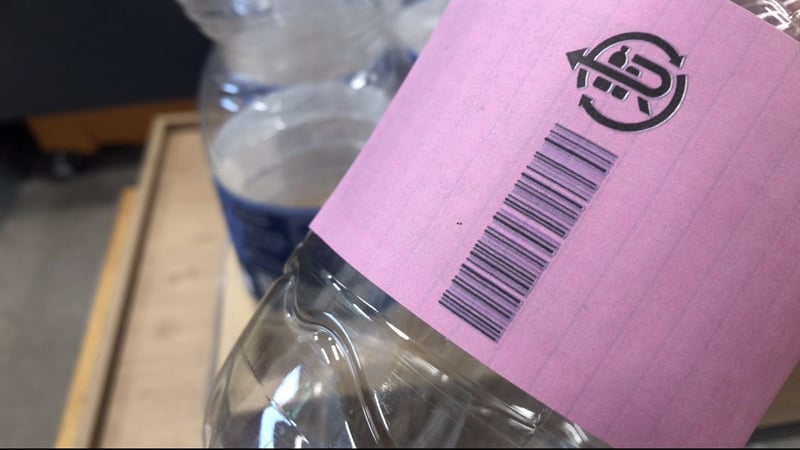
While there are reasonable frustrations about some aspects of the scheme, many of the arguments against it are typical of the delay tactics and “whataboutery” that have stalled and reversed climate progress in Ireland. People might not like the scheme, but it is a rare example of an environmental policy that we’ve got right.
We need your consent to load this rte-player contentWe use rte-player to manage extra content that can set cookies on your device and collect data about your activity. Please review their details and accept them to load the content.Manage Preferences
From RTÉ Radio 1’s Drivetime, should we keep the Deposit Return Scheme? With Dr. Emma Howard from TU Dublin and Ken O’Flynn, Independent Ireland TD for Cork North-Central
Climate action requires behavioural change, but people tend to be subject to status quo bias, where they prefer things to stay the same and dislike change. When policies are proposed or enacted, we often focus on the negatives, such as the inconvenience or costs, rather than the positive impacts of a policy. For this reason, both policy makers and voters prefer ‘carrot’ climate policies (like subsidies) that incentivise pro-environmental behaviour, rather than ‘stick’ policies (like taxes) that penalise environmentally damaging behaviour.
The problem is that subsidies are less effective than taxes for two main reasons. First, people are typically loss averse, feeling the loss of a tax more than they value the gain of an equivalent amount in the form of a subsidy. Second, taxes signal that a behaviour is undesirable, shifting the social norm as a result.
Conversely, a subsidy can be perceived as a reward for a behaviour, giving the impression that it is voluntary rather than required. The deposit return scheme acts as a tax at point of sale, whereby an additional cost is added, but is cost neutral if the consumer recycles as the money is repaid. In this way the scheme effectively merges the carrot with the stick, resulting in significant behavioural change.
We need your consent to load this rte-player contentWe use rte-player to manage extra content that can set cookies on your device and collect data about your activity. Please review their details and accept them to load the content.Manage Preferences
From RTÉ Radio 1’s Today with David McCullagh, 3 billion bottles and cans processed through Re-turn scheme but ‘bin scavenging’ remains an issue
Prior to implementing the scheme, recycling rates of single-use plastic bottles here was just 49%. The latest figures from Re-Turn estimate that the total recycling rate is now over 90%, with 78% of containers recycled through the scheme. Evidence from schemes across the EU shows that these systems are both effective and efficient, significantly reducing litter by up to 60% and increasing the circularity of packaging.
Waste generation is increasing in Ireland, but recycling rates for many materials have remained stagnant. The Environmental Protection Agency has warned that we are unlikely to make our 2030 recycling targets for most materials. However, the introduction of the deposit return scheme resulted in increases in recycling rates and we have already met the 90% rate outlined in the EU single use plastics directive.
While unclaimed deposits made headlines recently, these are falling as people change their behaviour. In the first year of operation the total amount unclaimed over 11 months was €66.7m, falling to €60m in the first full year of operating, and is forecast to fall even further to €48.8m this year with an expected 80% of deposits reclaimed.
We need your consent to load this rte-player contentWe use rte-player to manage extra content that can set cookies on your device and collect data about your activity. Please review their details and accept them to load the content.Manage Preferences
From RTÉ Brainstorm, 5 things our deposit return scheme can learn from other countries
The company breaks even at a reclaim rate of 90%, a point they estimate will be reached by 2029. Therefore, rather than ‘raking in taxpayers’ money’, as some politicians have framed it, these unclaimed deposits act as a tax that will help fund the scheme after recycling rates increase past the break-even point. Given that long established schemes such as in Germany achieve recycling rates of around 98%, the only reform needed will be a change in how the scheme is funded once the cash reserves run out.
Although some point to problems accessing return machines for particular groups – such as the elderly, or those in rural areas without transport – some important points tend to be overlooked. The cost of the deposit remains very small – just 15 cent on a can and 25 cent on a bottle. Drinking two cans every day and throwing them in the bin will cost you €2.10 a week, less than the price of a cup of coffee.
While the scheme should make every effort to ensure broad coverage and ease of access across the country, the fact remains that the products covered by the scheme are not necessities. All dairy products are exempt from the scheme, for example, and other products such as fruit juice can be bought in containers outside of its remit. Water is of course an essential good, but most of us have safe clean drinking water in our homes. For those that don’t, the larger bottles over three litres are also exempt from the scheme. Increasingly, water fountains are provided in public places to allow people carry and refill their own water bottles to avoid the deposit fee.
We need your consent to load this rte-player contentWe use rte-player to manage extra content that can set cookies on your device and collect data about your activity. Please review their details and accept them to load the content.Manage Preferences
From RTÉ Radio 1’s Drivetime, Janet Horner, Green Councillor for Dublin North Inner City and Dublin City Council CEORichard Shakespeare on the cost of the return scheme
Those who take issue paying the fee on bottles of water at Dublin Airport before flying out on holidays might be glad to know that there are free drinking water stations in both terminals. If you bring your own bottle, you can save not just the deposit but the full cost of the purchase. With environmental action there is a hierarchy of impact in order of reduce, reuse and recycle. If the scheme reduces the number of cans of coke or beer that people buy, that is a first best outcome.
Of course, it it true that the scheme is annoying. It takes time and effort, machines are sometimes out of order, there is always a queue and storing bottles and cans at home can be a pain. But the scheme is less than three years old and some of these problems at least are fixable. Last month, 25 bulk machines were rolled out and nine more are expected this year.
The positive spin on the forecast €330 million income is that this provides funds for investing in improvements. Recycling this way is inconvenient, but look where the convenience of throwaway culture has gotten us. We might not want the scheme, but if the government tries sometimes, we get what we need.
Follow RTÉ Brainstorm on WhatsApp and Instagram for more stories and updates
The views expressed here are those of the author and do not represent or reflect the views of RTÉ