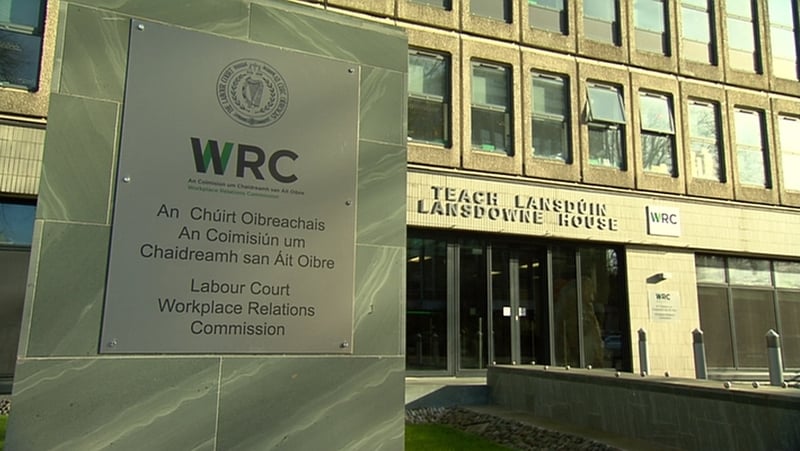
Lawyers acting for the estate of a nurse who died two and a half years ago have sought an order reinstating his employment to a few weeks before he was found dead at home.
The late Paul Wilkie lost his job of 10 years at the Alzheimer’s Society of Ireland on 8 May 2024, having failed to respond to attempts by management to contact him while he was out sick with liver disease, the Workplace Relations Commission has been told.
He was found dead around seven weeks later, when gardaí forced entry to his home, his son told the WRC. It was estimated Mr Wilkie had died a fortnight earlier, he said.
Mr Wilkie’s son, Paul Francis Wilkie, was giving evidence on a complaint raised on behalf of his late father under the Unfair Dismissals Act 1977 against his ex-employer.
Counsel for the estate of the deceased, Eoin Morris BL, said in a legal submission that a death-in-service benefit worth two years’ salary would have been paid to Mr Wilkie’s family by the charity’s insurers if not for the alleged unfair dismissal seven weeks earlier.
The charity’s stance is that Mr Wilkie abandoned his €44,500-a-year job as a nurse at a day centre for dementia patients in south Dublin by failing to keep in contact with his employer while out sick.
Mr Morris, appearing instructed by Crushell & Co, said an order for either reinstatement or re-engagement was being sought on behalf of Mr Wilkie with a view to claiming the death-in-service benefit for his estate.
Mr Wilkie jnr’s evidence was that he had “serious questions” about the deceased’s employment situation after receiving his personal papers. He had travelled to Dublin from Scotland to settle his father’s affairs and arrange his funeral in July 2024.
“He wasn’t well, he wasn’t in any fit state to talk to his son or daughter; he was really, really not well, hence he died,” Mr Wilkie said of his father.
He said the Alzheimer’s Society was “palming him off” when he asked about his father’s death-in-service benefit and pension, calling those he was dealing with by phone “kind of dismissive”.
It was November when the charity confirmed that its insurer would not pay out the death-in-service benefit to Mr Wilkie snr’s estate, Mr Morris said.
Mr Wilkie jnr said: “I’d asked them; they delayed the response.”
The hearing was told Mr Wilkie was absent on certified sick leave from September 2023 to early February 2024, when an occupational health report issued.
This said Mr Wilkie was “fit to engage” with his employer and noted that he was “motivated to return to work” but deferred deciding he was fit for work until he was seen by a neurologist, it was submitted on behalf of the complainant.
Emma Hart, a HR officer for the charity, confirmed that she noted concerns raised by Mr Wilkie’s line manager in October about his personal presentation in August 2023.
There was also a written warning to Mr Wilkie on 29 September 2023 for his failure to complete some mandatory training courses, she said.
Mr Wilkie stopped sending in medical certificates after the occupational health report on 2 February, though by then his entitlement to paid sick leave had run out, the tribunal heard.
She said she had attempted to contact Mr Wilkie by phone, email and post multiple times between February and May 2024, but to no avail.
She, the HR director, and another witness, HR manager Claire Kennedy, were present when a decision was taken to issue a final letter to Mr Wilkie on 8 May 2024, she said.
“As I have not heard from you, we have no choice but to conclude you have decided to resign,” Mr Morris said, quoting from the letter in cross-examining Ms Hart.
“But you said you dismissed him?” he asked.
Ms Hart said: “It would have been under what we’d call an ‘AWOL’ process that may not be contained in the disciplinary process,” she said.
“It’s not written down,” she added.
“Had he reached out and engaged, we would have worked with him,” Ms Kennedy said in her evidence.
Stephen O’Sullivan BL, instructed by TP Robinson Solicitors for the respondent, put it to Ms Kennedy that the claimant’s legal team had argued they “knew the man was unwell” and that it was “unfair” to end his employment.
“In black and white, fair enough, but we’d tried to reach out and the onus was on Paul to engage with his employer,” she said.
“Was Mr Wilkie dismissed?” Mr Morris asked her in cross-examination.
“From memory, Mr Wilkie went AWOL [absent without leave]. We followed the AWOL process and assumed he abandoned his role. Termination is the word I would normally use,” she said.
In a closing submission, Mr Morris said his client was “not here for compensation”.
“We are looking for either reinstatement or re-engagement for the purposes of saving that [death in service] benefit for the benefit of the estate,” he said.
The reinstatement order would “naturally come to an end on the date of death”, he added.
“The problem with reinstatement is that Mr Wilkie is no longer with us, so I don’t think that’s a runner,” Mr O’Sullivan said.
Adjudication officer John Harraghy closed the hearing and is expected to give his decision in writing in due course.