
Analysis: This week’s tech problems on Ukrainian battlefields highlights the central role played by a US internet company in a European war
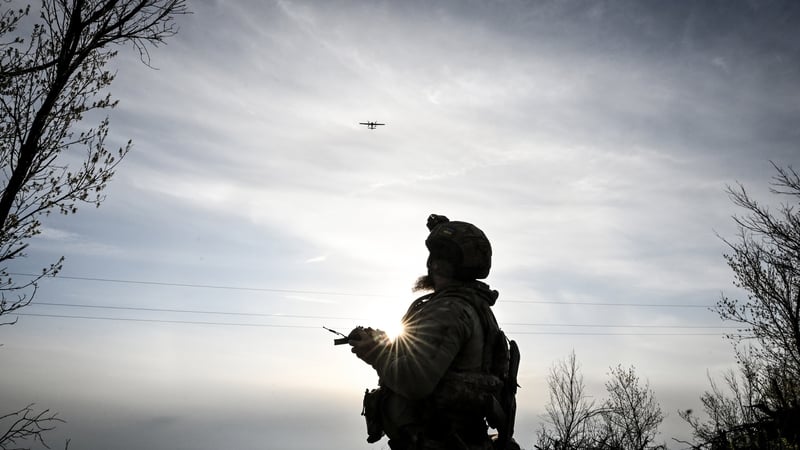
Imagine being a Ukrainian soldier operating a drone to intercept an incoming Russian attack. The drone is airborne, the target is approaching and the connection suddenly disappears. Not because the Russians have shot it down or destroyed a communications tower, but because the technology keeping it connected has been restricted.
That is the kind of problem Ukrainian forces reported this week after unexpected restrictions affected Starlink, SpaceX’s military satellite communications service. Drones travelling above approximately 160 kilometres per hour reportedly lost connectivity, disrupting military operations, including missions to intercept Russian drones.
From PBS News Hour, how Starlink disruptions affected Ukraine’s battlefield operations
It raises an extraordinary question: how did an internet company become so important to the outcome of a European war? When Russia launched its full-scale invasion of Ukraine in February 2022, communications infrastructure quickly became a target. Mobile networks, internet connections and other essential services faced destruction, power outages and cyber attacks. Ukraine needed a way to keep communicating even when conventional infrastructure was damaged.
Enter Starlink. Developed by Elon Musk’s SpaceX, Starlink provides internet connectivity through thousands of satellites orbiting relatively close to Earth. Instead of relying entirely on underground cables or mobile phone towers, users can connect through portable satellite terminals. Think of it as broadband that can operate in places where the usual infrastructure has been destroyed. For Ukraine, this proved invaluable. Starlink helped maintain communications between military units, supported emergency services and allowed information to move across a fragmented battlefield.
We need your consent to load this rte-player contentWe use rte-player to manage extra content that can set cookies on your device and collect data about your activity. Please review their details and accept them to load the content.Manage Preferences
From RTÉ Radio 1’s Morning Ireland in March 2025, RTÉ Business reporter Adam Maguire on the role played by Starlink in Ukraine war
But its importance extends far beyond keeping soldiers online. We tend to imagine military power in terms of tanks, missiles and fighter jets. Yet modern warfare increasingly depends on something less visible: information. Consider a reconnaissance drone identifying enemy positions. The images it captures must reach commanders, who assess the situation and coordinate a response. Other units then need instructions, sometimes within seconds, and the effectiveness of that process depends on reliable communications. Starlink helps to provide those connections. Certain Ukrainian drones also use satellite communications for remote control, allowing them to operate beyond the range of conventional radio systems.
Of coursea, not every drone of course depends on Starlink, and some operate autonomously. Nevertheless, satellite connectivity has become an important component of Ukraine’s military operations. A sophisticated drone becomes considerably less useful when it cannot communicate with its operator.
This week’s disruption has exposed an uncomfortable reality about Ukraine’s reliance on commercial technology. The restrictions reportedly affected Starshield, SpaceX’s military-oriented satellite service. Unlike commercial Starlink, Starshield is designed for government and military applications, including secure communications. Musk has said that Starshield’s operational restrictions are determined by the US military. Ukrainian officials, meanwhile, reported receiving no advance warning of the changes.
From France 24, David Galbreath, Professor of War and Technology at the University of Bath, on trhe fallout from Starlink’s restrictions in Ukraine
The timing has also raised questions. The restrictions emerged amid deteriorating relations between Washington and Kyiv over Ukrainian attacks on Russian oil infrastructure. Ukrainian officials suspect the restrictions may have been intended to exert political pressure, although American officials have denied administration involvement. There is another intriguing coincidence as Ukrainian drones struck a Russian data centre operated by Yandex days earlier, causing a fire and forcing operations to be suspended. The attack demonstrated how vulnerable digital infrastructure has become during the conflict (Reuters, 2026b).
There is no established evidence connecting that attack to the satellite restrictions. Nevertheless, the developments reveal two sides of the same problem. Ukraine has demonstrated how physical attacks can disrupt an adversary’s digital infrastructure. Simultaneously, its own military operations have been affected by restrictions on technology supplied from abroad.
There is a paradox here. Starlink has made Ukraine’s communications more resilient by reducing dependence on vulnerable ground infrastructure. Yet reliance on a small number of satellite providers introduces another form of vulnerability, and switching providers is not straightforward. European alternatives, including Eutelsat OneWeb, exist, but replacing established satellite communications requires compatible equipment, sufficient coverage and considerable investment. Restrictions can also serve legitimate purposes, including preventing hostile or unauthorised use. The question is not simply whether they should exist, but who controls them and what safeguards protect those who depend on the service.
From DW News, is Ukraine too dependent on Elon Musk’s Starlink tech?
For decades, military strategists have worried about an enemy destroying the infrastructure on which their forces depend. Ukraine’s experience reveals a different vulnerability: critical technology does not necessarily have to be destroyed to become unavailable. A satellite can remain perfectly operational, a drone can be ready to fly, and a soldier can be prepared for battle. Yet a decision made thousands of kilometres away can still determine whether the technology works.
The uncomfortable question for Ukraine – and increasingly for every military relying on commercial technology – is no longer simply whether its weapons are powerful enough. It is if someone else can decide when they stop working.
Follow RTÉ Brainstorm on WhatsApp and Instagram for more stories and updates
The views expressed here are those of the author and do not represent or reflect the views of RTÉ