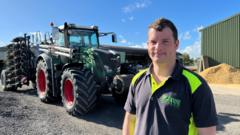
The Cotswolds was badly hit by the drought, leaving grazing pastures brown and without any nutrition for the cows. So like many farmers, the Godwins had to open their sileage planned for the winter and buy in feed to boost their cows diets.
“Altogether it cost us around £100,000,” Godwin explains. “We also had a drop in production yields, that’s around £20,000.
“On top of that, cows suffered more lameness, lower fertility, more mastitis. They really did not enjoy the heat.”
The family spent £15,000 installing new sprinkler systems and huge fans to cool the cattle in their sheds when they sheltered from the heat outside. All vital for animal welfare, but more costs to the business.
Even the normally lush fields of Somerset withered in the heat. Tom Kimber’s family have farmed near Charlton Musgrove in south Somerset, in the heart of England’s most productive grazing land. They run 250 dairy cows on their own grass, cutting sileage for the winter months.
By September, they would normally have three large clamps of sileage ready for winter. This year, they have only cut two, and had to raid one throughout July and August, to make up for the lack of grass.
But sadly, Tom Kimber is getting used to what was once freak weather.
“This is the fourth drought in eight years now, so you barely financially get over the last one and you’re hit with another one. It’s becoming far more frequent, these events.
“It’s incredibly difficult this constant lurching between one extreme to the other, that’s what keeps you awake at night.”
Others are trying to farm in a more nature friendly way. Planting mixed grasses which cope better with drought. More trees to provide shade, older varieties of cereals that withstand heat better.
All these cost money, and there are government schemes to support them. But when the latest round of financing opened, it was overwhelmed.
A year’s worth of government grants, more than £250m, was handed out in under six hours in an online scramble “reminiscent of Glastonbury ticket sales”, as Wiltshire farmer Tom Collins put it.
“It just shows how desperate farmers are,” he adds.
“It’s so hard to make a living from food people fall over themselves to get these environmental grants, and then they’re swallowed up in no time. It’s so unfair.”
A spokesperson for the Department of Environment, Food and Rural Affairs says: “In anticipation of high demand, ministers decided to allocate an additional £20m to the fund, on top the £50m announced by the prime minister in August, so that we could fund as many agreements as possible.”
Farming Minister Stephen Morgan adds that the Sustainable Farming Incentive had been designed to be simpler to apply for and that farmers had “responded in force”.
Tom Kimber was one of those who missed out. He went online to apply for an extension of an environmental scheme his farm was already running.
“We plant a mix of different grasses that cope better in the drought,” he explains. “But they cost more, so we need the grant.”
A glitch in the Defra computer system left him locked out of the website for hours. When he got back in, the money had all gone.
Farming, he says, is not easy at the moment.
“When you’re being squeezed from both ends, the milk price is 10p litre below the cost of production, and costs are going up all the time.
“You’re just forever hoping for a better day, but hope doesn’t keep you in business.”