

Updated / Friday, 4 Sep 2026 12:09

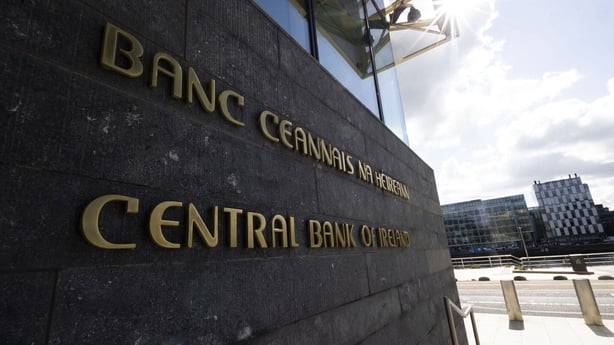
New figures from the Central Bank show that the total value of fraudulent payments reported by payment service providers here increased by 27.2% to over €179m last year.
The Central Bank’s annual Payment Fraud Statistics show that fraud affects about one in 10,000 payment transactions and while the number of fraud transactions rose only marginally, there was a significant increase in the payment value.
Today’s report shows that the average value of fraudulent payments varies according to the payment methods used. Despite a lower fraud rate, cheques recorded the highest average fraud value at €9,741, while credit transfers recorded the second-highest average fraud value at €2,412 last year.
Payments made using E-money institutions ranked third with a notable spike from €692 in 2024 to €1,427 in 2025.
The Central Bank report also noted that authorised push payment fraud – where fraudsters gain trust by using social engineering to deceive consumers into authorising payments – now accounts for 45%of total fraud by value (€74.86m), up from its share of 35.2% in 2024.
This fraud type was particularly prevalent in credit transfers last year, representing 67.2% of all credit transfer fraud, up from 45.6% in 2024.
Meanwhile, cross-border payments dominate payment fraud and accounted for 69.8% of the total fraudulent payment value, amounting to €124.89m, and an increase of 6.3 percentage points from 2024.
Deputy Governor for Consumer and Investor Protection Colm Kincaid said that financial frauds and scams continue to be a key area of concern for the Central Bank of Ireland, as it is for regulators and law enforcement agencies all over the world.
“As we see criminals become ever more sophisticated in their approach, all actors in the system from financial firms to technology companies need to continue to improve their systems and controls to reduce the likelihood of these frauds occurring,” the Deputy Governor said.
“Where fraud does occur, firms need to provide appropriate and timely support to affected consumers. The Central Bank has work underway with the firms we regulate to improve customer service for fraud cases,” he said.
He also encouraged anyone who falls victim to fraud to contact their financial service provider immediately.
“We know from our research published earlier this year that 38% of fraud victims never report their experience to their financial service provider or any authority,” he noted.
“Fraud victims who report their experience are more likely to recover their money. By taking these steps and reporting fraud promptly, you protect yourself and help your financial service provider identify fraud patterns to protect other consumers,” he added.
Commenting on the Central Bank report, Michael Kavanagh, CEO of the Compliance Institute, said it is further evidence of how pervasive a threat payment fraud has become.
He said that hackers and cybercriminals are continuously improving their practices, constantly finding new ways of stealing material and outsmarting even the most advanced of security systems.
“The growing sophistication of fraudsters means scams have become harder to spot, and therefore easier to fall for. Fraudsters are able to use technology to identify and target people as well as to extract the information they need to steal from someone,” he stated.
He also said that AI is now being increasingly used by scammers in their attempts to defraud people, with fraudsters using the technology to impersonate banks, family members and even well-known public figures.
“Aa recent survey by the Compliance Institute found that seven in 10 compliance professionals in Irish financial organisations rank AI-enabled impersonation scams, including voice cloning, deepfake video, and fake identity use, as the single biggest scam threat facing consumers in 2026,” he noted.