
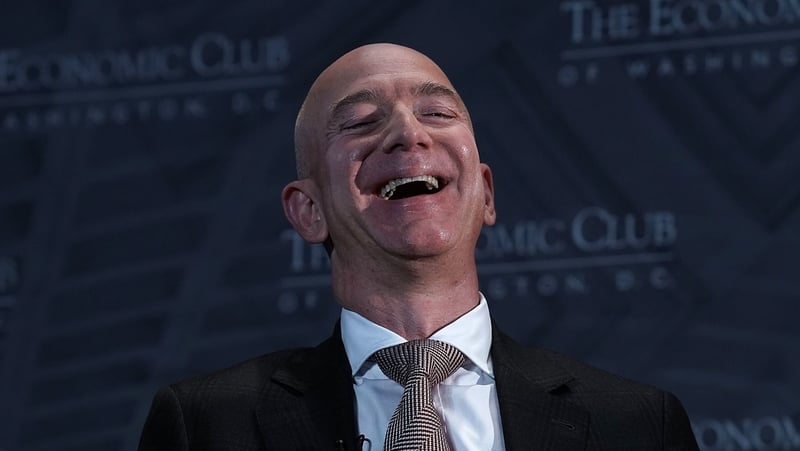
The headlines might have implied that we’re one step away from seeing the ‘Amazon Anfield Arena’ but while it is technically the case that Jeff Bezos is buying a stake in Liverpool FC, reality is a little bit more complicated.
What is happened is that a consortium called 1892 Holdings has agreed to buy a stake in the club from Fenway Sports Group, which took full control almost 16 years ago.
(Initial suggestions were that it would take 30% stake – but later reports indicated it would be closer to a 38% shareholding.)
The people behind 1892 Holdings are Amit Bhatia, who is son-in-law of Indian steel magnate Lakshmi Mittal, and founder of AyBe Capital Advisers. Bhatai was also, until recently, a co-owner of Queens Park Rangers,but agreed to transfer that stake last month.
His motivation for doing that is now obvious.
And along with Bhatai, the 1892 consortium also includes Facebook co-founder Eduardo Saverin, and Amazon.com founder Jeff Bezos.
So Bezos owns a part of the company that now owns a part of Liverpool FC.
What that means for the club is not entirely clear.
FSG says it retains operational control of LFC, and there won’t be any changes to the day-to-day management of the team.
However Bhatia is set to become the vice-chair of the club’s board, while the consortium will also have a few seats around the boardroom table. Given that, and the rumoured £1.9 billion+ investment, you can’t imagine these are going to be silent investors.
But exactly what input or say they have remains to be seen.
Moneyball

What is clear, though, is that Bezos is the latest in a long line of billionaires to take an interest in soccer clubs. And the reason for that probably isn’t much of a surprise.
Because, while a soccer club is a lot of things to its supporters – everything from entertainment, to social outlet, to a spiritual event = at the end of the day, it’s also a business.
And at the top level, it’s big business.
Real Madrid had revenues of almost $1.3 billion last year. Barcelona’s revenue was over $1 billion. Liverpool, Man City, PSG, Bayern Munich all took in more than $90m.
So clearly there’s huge money-making potential here.
At the same time, sports teams are also very different to most other types of investments.
There is a feeling that they are a somewhat future-proofed investment, because they’re one of the few forms of entertainment that still command a large, live audience.
They also tend to carry a level of fan devotion that’s not found in other big businesses. There are very few brands that can bank on thousands or even millions of customers who will stick with it, and keep handing over their hard-earned money, even when they know they’re going to be disappointed.
Sometimes the billionaire in question is one of those long-suffering fans, or at least passionate about the sport in general, and investing in a club can represent anything from the fulfilment of a childhood dream to a hobby or a passion project.
Being a tad cynical, in some cases it could also represent an attempt at reputation-washing. What better way to gain the respect of a large fandom than to use your enormous wealth to buy it via the club they love?
But in both regards – from the financial and reputational potential – buying into a soccer club is a high-risk move.
Many successful and well-respected businesspeople have had their reputations dented by their time in a club’s board, and many others have not enjoyed the financial gains they would have hoped for.
Glazer focus

In some cases, though, some billionaire owners have made a healthy return at the expense of public opinion.
The US Glazer family were not well known in the UK before they invested in Manchester United.
But as they grew their stake in the club there would have been a tentative hope that these deep-pocketed Americans would give the club the boost it needed.
But by the time they took full control in 2005 it had already become clear that that wasn’t to be, with the first clue being the way they structured the takeover.
The Glazers’ purchase of Man United was a leveraged buy-out, meaning they borrowed money to fund most of the deal. They then lumped those debts onto the club, leaving it with a hefty annual repayment to manage.
That burden, in turn, contributed to years of under-investment in the club and its facilities, which of course was eventually reflected on the pitch.
And so Man Utd fans quickly soured on the family, with cries of ‘Glazers Out’ being a regular feature at Old Trafford for many years now.
In the meantime, though, the Glazer family have enjoyed a healthy return on their investment.
According to BBC News analysis, they’ve been the biggest beneficiaries from the roughly £166m of dividends paid between 2005 and 2024. They’re also estimated to have gotten around £60m in director fees and £10m in consultancy fees.
But where they’ve made most of their money has been through share sales.
The Glazers bought Man Utd for around £800m in 2005, but only £273m of that was their own money.
Between 2012 and 2022 they sold around £555m worth of shares, and then got another £732m from Jimmy Rathcliffe as part of his arrival as a significant shareholder.
Altogether that’s a figure in the region of £1.5 billion, not a bad return for what was essentially a £273m outlay.
Like Mike

When it comes to profit-at-the-expense-of-reputation, perhaps there is no better example than Mike Ashley – the owner of retailers like House of Fraser, Sports Direct and Flannels.
He took control of Newcastle United in 2007 and, at first, was something of a hero to fans. He was the every-man who’d done good, who was now redirecting his fortune to help turn around a struggling club.
Sports Direct became the stadium sponsor, injecting much-needed capital into the team. He undertook some smart fan-service by bringing in club legends like Kevin Keegan and, later, Alan Shearer. In the early years he was even spotted drinking cans with fans in the stands as well as local pubs.
But the love-in between Ashley and Newcastle’s fanbase soured quite quickly, as it became apparent that the new boss didn’t really have proper structures in place to run the club.
Newcastle were relegated in 2009 and just months later Ashley started to look for a way out. But it wasn’t until 2020 that he actually managed to offload the club, with the fanbase’s animosity building as each year went by.
Fans bemoaned what they saw as underinvestment and mismanagement. While the club rebounded back to the Premier League in 2010, it spent most of the following years languishing in the bottom half of the table, before being relegated again in 2016.
And while it once again returned to the top flight in 2017, it continued to endure bottom-half finishes for almost all of the remainder of Ashley’s term.
Despite that, his bank balance didn’t suffer too much.
When he did sell the club, he managed to do it for around twice the price he bought it for in 2007. His holding company netted a £197m profit in the process.
After the new owners took the helm it was also claimed that the club hadn’t received sponsorship payments from Ashley’s Sports Direct for three seasons. That means his stores were getting free advertising from Newcastle United for years.
Roman’s Empire

Some owners have managed to walk away with their reputations intact – at least among the hardcore fans. But it hasn’t always come cheap.
Russian oligarch Roman Abramovic bought Chelsea in 2003 for £140m. He then pumped around £2 billion into it through interest-free loans, essentially to buy success in an era before Financial Fair Play rules made that a little bit harder to do.
And it worked – the club went from being regular top six challengers to either winning or running up in eight out of the nine seasons between 2003 and 2011.
And while those Financial Fair Play rules (and the arrival of other deep-pocketed backers like Sheik Mansour at Man City) brought that superiority to an end, Abramovich remained much-loved by Chelsea fans.
They didn’t seem to care too much about his links to the likes of Vladimir Putin, for example. To the extent that, when he was sanctioned in the UK following Russia’s full-scale invasion of Ukraine, fans had to be asked to stop chanting their support of him.
While he sold the club shortly after this, to this day many fans wish he was still the owner.
One thing that helped maintain his reputation among the Chelsea faithful is the fact that he did not saddle the club in debt upon his exit, he essentially wrote-off those interest-free loans he had given in the early years.
He also promised to give the £2.4 billion he got in the sale of the club to humanitarian causes related to Ukrainian war victims. Although that money has yet to materialise and in March the UK government threatened that it would take him to court over his missing of a deadline to transfer the money.
Fenway’s Way

Maintaining the fan’s respect while also taking home a healthy profit is a far harder feat in modern soccer.
Arguably Liverpool’s FSG has managed it, though.
It’s had massive financial success at Liverpool – their revenues are around three-and-a-half times what they were when the sports group took control. They bought the company for around £300m in 2011, its minority share sale to Bezos & Co has allowed them to take in more than six times that amount while still retaining control.
But, of course, that financial performance has been accompanied by significant success on the pitch, including ending the club’s 20 year wait for a league title.
And FSG were responsible for bringing in the likes of Mo Salah and Jurgen Klopp, who are now eternal club legends. So there’s a lot of goodwill amongst fans.
That being said, it is also fair to say that the honeymoon period is well and truly over now, with a feeling among some fans that there’s been creeping under-investment and penny pinching going on.
It will probably take a lot for the ‘FSG Out’ signs to become a common feature in The Kop, though it’s not impossible to imagine that happening if the team’s performance continues to drift.
If there is any modern example of a club that has been an out-and-out financial and reputational success, Wrexham FC is probably it.
Actors Ryan Reynolds and Rob McElhenney were clever enough to invest in a small, struggling club. That meant that both expectations – and the price tag – were low.
It cost them a whopping £1 to take a controlling interest, though they did need to invest £2m into the club as part of the deal.
And simply through their presence, the club’s fortunes began to turn around. Suddenly millions of people who didn’t care about Wrexham – or even soccer in general – were paying attention. And revenues began to pick up.
In fairness, though, they also pumped millions more into the club, often in the form of loans, beyond the takeover deal’s requirements.
That investment has helped to propel the club from the fifth tier to the second, just six years after the Hollywood pair came on board.
Wrexham’s revenue has also multiplied 28 times in that period.
So, needless to say, the fans love them, and it’s hard to imagine any situation where that would change.
But while it would be hard to argue that Reynolds and McElhenney invested with profit in mind, it hasn’t been a financial hardship for them either.
The club has now fully repaid the loans they put in to help it to grow, while they’ve benefitted from the likes of the hugely successful Disney+ documentary series.
Most importantly, though, the stake they own in the company is now worth far more than £1.
A few months ago Apollo Sports Capital invested almost £48m in Wrexham, taking a 10% stake in the process. That would give the club a valuation of around £480m today.
Fan service
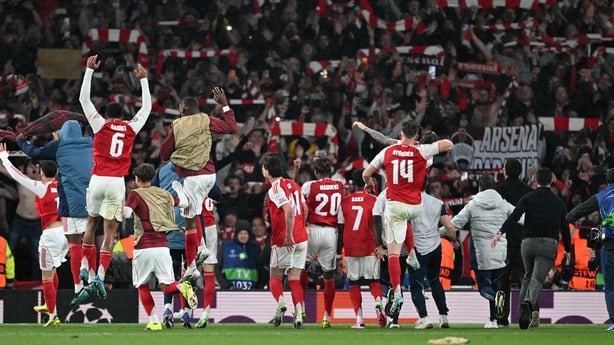
The Wrexham fanbase are likely quite happy to have some big names millionaires on the board. It also helps that they seem to be trying to bring success to the club in a sustainable and fan-focused way.
But for most fanbases, the arrival of the multi-millionaires and billionaires is bound to create some nerves.
Nowadays, and especially at the top level, you sadly need to have someone with deep-pockets in your corner.
There are examples of smaller, or even fan-owned clubs, having success, but they’re becoming a rarer and rarer event.
But this is ultimately a business for those owners, and they’ll want to make sure they’re getting a return on their investment.
Of course there are many ways to do that, like regularly winning big titles, having a smart transfer strategy, or drawing in a myriad of sponsors and brand partners.
But really one of the main levers a club can pull is to attract more fans and then squeeze more revenue out of the, be that through more expensive and more regular jersey and merch releases, or by charging even more for those going to matches.
And, of course, unlike owners of other businesses they know they’re dealing with a captive audience. With most other products, a customer will look to switch brands if their first choice is getting too expensive.
For most soccer fans, though, that’s akin to a cardinal sin.