
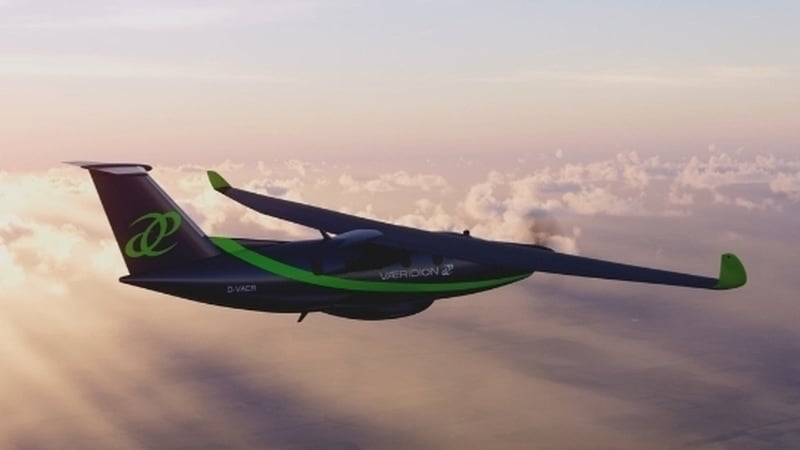
Innovators in aviation say real progress has been made in recent years in converting electric flight from science fiction to reality.
European start-ups are building electric planes that they say could be capable of flying as much as 500km as soon as 2030.
According to analysis by the EU Aviation Safety Agency (EASA), a quarter of all flights in Europe fall within 500km.
This raises the possibility of enabling electrification of routes between Ireland and the UK as many of them fall within this range.
Among the routes that fit the bill are the London to Dublin route, which is the busiest flight route in Europe, Dublin to Liverpool, Donegal to Glasgow and Cork to Cardiff.
It is estimated around half the world’s flights are under 800 kilometres so it is a big market that could be electrified but that will take some time, according to developers.

One of the electric planes start ups is Munich-based aerospace company Vaeridion, who have developed a nine seater Microliner and a freighter aircraft.
They are on a mission to transition a nine passenger aircraft into a 20, 30, 40, 50 seater aircraft – and they say that by itself will take five, 10 or even 15 years.
Vaeridion’s Chief Business Officer Otto Verhoeff said the nine seater passenger seat plane is based on a conventional concept.
“It’s just an airplane with the big novelty of having the batteries in the wing, which is what this is all about,” he said.
“It will be able to fly up to 400 kilometers if you have a full plane with the nine passengers and the two pilots, but the beautiful thing is that if you were to even have less passengers on it or configure the cabin in a way that you have maybe four or five seats on it, you can already fly 550 kilometers with it,” he explained.
We need your consent to load this rte-player contentWe use rte-player to manage extra content that can set cookies on your device and collect data about your activity. Please review their details and accept them to load the content.Manage Preferences
He said the possibility of turning this technology into a 180 seater passenger electric plane or similar to a Boeing 737 used by airlines like Ryanair will take some time, but that is not the mission they are on right now.
There are currently around 21,000 planes similar to these nine seater passenger planes currently in operation running on kerosene.
In Scandinavia, particularly Norway, there are a lot of small aircraft that are essential for connectivity among communities.
“There is an element of this that could also apply to Ireland where people live in remote areas and infrastructure is not ideal, smaller aircraft can be a good solution,” said Mr Verhoeff.
“In the current environment of high fuel cost, negative press around CO2 emissions, obviously rightfully so, impacting the climate, this (electric) aircraft can be a good alternative,” he added.
Electric planes are obviously less dependent on fuel, so will not be grounded by an oil crisis or fuel price spikes like we have seen this year.
They can potentially be powered using renewables, wind or solar, and their maintenance is simpler and more cost effective.
Senior Manager for Opportunity Green Ireland Sorcha Tunney says electric aviation has real potential to decarbonise short flights – especially between Ireland and the UK.
“These flight routes are really open for electric aviation and there will be flights by 2030 to cover these distances,” she said.
“Electric aviation offers us a real chance for flights to be cleaner, greener, less polluting and actually less noise polluting as well for local residents and opens up really regional growth for electric aviation across the country,” she added.
The technology may have progressed rapidly, but it could still be quite some time before you are getting on an electric plane to go on your summer holidays.