
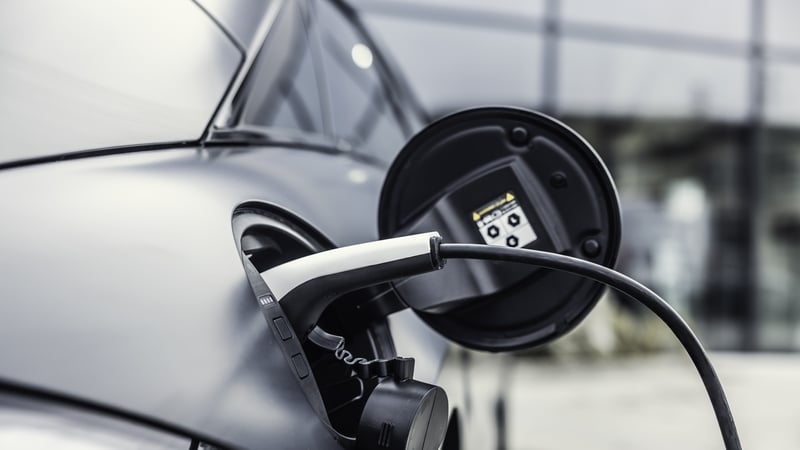
For the first time, fully electric vehicles have become the most popular choice for new car buyers, but they are still far from dominating the Irish roads.
Battery electric vehicles overtook hybrids in July and now account for 26% of new car registrations, which is a proxy for sales, according to the Society of the Irish Motor Industry.
In its own analysis, online marketplace DoneDeal Cars looked at how Ireland’s EV adoption compares to other European nations.
We are far ahead of several large car markets in Europe like Spain, where only 10% of new cars sold are electric, or Poland at 5%.
Ireland is also on par with the UK, where EVs account for a quarter of new car sales.
The Nordics, however, stand out.
Around 98% of all new cars sold in Norway are fully electric, while it is 80% in Denmark.
Scandinavian countries “were very strong in terms of taxation against regular petrol and diesel cars and heavily incentivised EVs”, DoneDeal Cars’ Head of Automotive Content Paddy Comyn told RTÉ News.
He added that “becoming an EV-first market is a genuine milestone for Ireland”, but in the wider European context “we’re still only getting started”.
While the numbers of new EVs sold in Ireland has been growing, their share in the entire existing fleet remains low – only 4%.
That is 16 years after Ireland’s first EV was sold in 2010.
For comparison, the number is similar in Germany and France.
We need your consent to load this rte-player contentWe use rte-player to manage extra content that can set cookies on your device and collect data about your activity. Please review their details and accept them to load the content.Manage Preferences
However, Ireland is behind northern Europe – 21% of all cars on Danish roads are fully electric, while it goes up to almost a third in Norway.
“Even if we started selling EVs in vast numbers, 85% or 90% of the new car market, it could take about 30 years to match Norway’s fleet. So we are still a long way off,” said Paddy Comyn.
He added that electric cars are becoming more attractive, both in terms of vehicle’s cost and charging fees when compared to the cost of petrol and diesel.
However, concerns remain about charging infrastructure.
Around 30% of Irish households do not have easy access to private home charging.
Public charging capacity will also need to expand.
Ireland currently has 4,000 charging stations, but would need about 13,000 to match EV adoption rates in comparable EU countries.
Charging costs in Ireland are also higher than in many other EU states.