
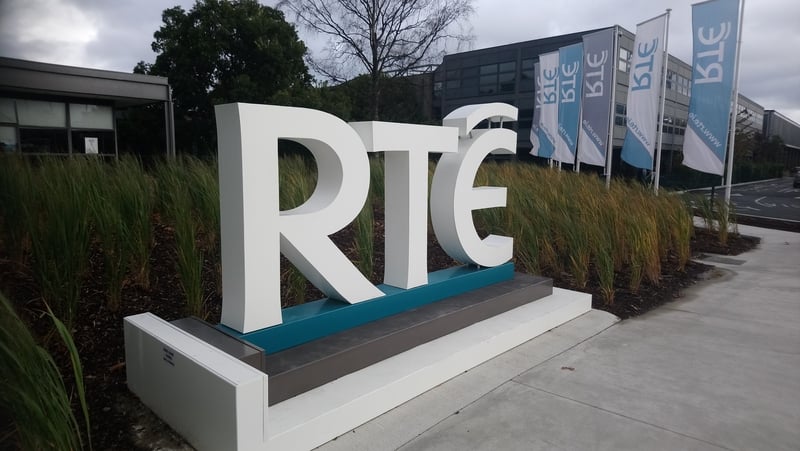
A proposal which involves significantly reducing the size of the RTÉ campus will be tabled in a matter of weeks, an Oireachtas committee has heard.
The Public Accounts Committee (PAC) also heard that RTÉ will need ongoing Exchequer support once the current three-year funding deal runs out at the end of next year, with a top-up of somewhere in the region of €65 million required in 2028.
In a wide-ranging discussion that at times grew heated, Director General Kevin Bakhurst stated that his proposed €20,000 pay increase, which is subject to ministerial approval, would raise the salary cap he has imposed at the broadcaster.
A bump would bring his salary to €270,000, on top of which he gets a car allowance of €25,000 – which is not included in the price cap – and also unlimited taxi usage, a measure which Mr Bakhurst said was justifiable if taxis are used for work.

Architects and consultants were used to ensure the plan for the Montrose campus “was properly priced”, he told the committee, and RTÉ has already been in touch with the Land Development Agency (LDA).
“We will be looking to sell a significant amount of the campus at Montrose in due course,” Mr Bakhurst said.
He said that a plan – which has been worked on for a year and a half – will be brought before the board of the broadcaster “in the coming weeks”.
‘No formal talks’ with Government on future funding, DG reveals
Deputies sought clarity on the financial needs of the national broadcaster, prompting the Mr Bakhurst to reveal that – while there has been contact between both sides – no formal talks have taken place with the Government on funding once the curent deal expires in 2027.
The committee heard that, this year, RTÉ’s estimated €405m expenditure will be covered by €185.21m from the licence fee, €158.2m from commercial revenue and a €57.49m top-up from Exchequer.
Mr Bakhurst said future top-up requirements would be in line with Consumer Price Index (CPI) inflation.
When Joe Neville Fine Gael TD suggested that this would mean RTÉ would need a top-up of around €65m in 2028, as a “best guess”, the RTÉ DG said: “Yes, it depends on what CPI is”.
Licence fee payment rates continue to fall, and there was a detailed discussion around what exactly a TV is, and who is obliged to pay the fee.
People Before Profit TD Paul Murphy claimed that RTÉ is trying to hide a “massive boycott” of the fee by understating payment rates and “mis-stating the law”, something the broadcaster roundly rejected.
Mr Bakhurst urged that the licence fee become “device neutral”, as he revealed that for some programming, more people – especially younger audiences – stream content on the RTÉ Player than tune in on traditional television sets.
‘Big decisions’ could mean more voluntary exits, DG says
RTÉ has committed to reducing its headcount by 400 by 2028.
Mr Bakhurst said that the business case for the next early exit scheme was submitted on 17 June, and is aiming for 40 – 60 voluntary exits, but later expressed the hope that those figures might be exceeded.
James Geoghegan Fine Gael TD noted that this figure is lower than the 67 who left last year on the scheme. He suggested that if there are around 60 early exits per year, that would only give 240 exits by 2028, far short of the 400 target.
Mr Bakhurst said that there would also be roughly 170 retirements, adding that big decisions would be taken along the way including on the future and possible outsourcing of Fair City, which could result in larger numbers leaving the organsiation via voluntary redundancy in a given year.

The broadcaster has commissioned reviews of operations and news in relation to early exits, with the former more likely to result in reduced headcount, as news is a “very lean operation”.
He accepted that some managers had failed to inform staff about the nature of the operations review, something which had caused some distress.
“There were probably one or two managers who should have done more to communicate the review and what it was about.”
No other broadcaster pays public money for the Champions League – Byrne
“I believe that you pay €3.5 million a year for a competition (UEFA Champions League) that no Irish team is part of?” asked Sinn Féin TD Joanna Byrne.
Mr Bakhurst replied that RTÉ had bid for the FAI rights but they had lost it.
“There is huge audience demand for it (Champions League) and we are the only country in Europe that gets free to air broadcast of the Champions League,” he said.
Deputy Byrne said that the “Irish football league had to move away from RTÉ as it would not show weekly matches”.
“No other broadcaster pays public money for [the] Champions League,” Ms Byrne said, adding that “it’s shameful”, the domestic football community is “being neglected by our national broadcaster, support the national game”.
If funding was removed, RTÉ would become ‘a bankrupt organisation’
Speaking on RTÉ’s News at One, Dr Roddy Flynn, Associate Professor at the School of Communications in Dublin City University said that he was surprised that the PAC was still talking about the TV licence fee “as if it has a future”.
“To quote the new DG of the BBC yesterday, the license fee is a ‘busted flush’ – it is a terrible way to fund a public service medium in the 21st century because it’s based on whether you own a 20th century television reception set,” he said.
He said that a previous Dáil committee had acknowledged that the licence fee is not the way to fund public broadcasting.
He said that suggestions that ministers would use direct Exchequer funding to supplement shortfalls in licence fee revenue should “terrify” people in RTÉ, and that if the package in funding were removed, RTÉ would become “a bankrupt organisation”.
“The larger issue is about the idea of public service media, which RTÉ is an institution of, but is not the sole occupant of that role,” he said.
“And that in turn, I would argue, is part of a much larger idea of a public sphere or a space where citizens can access crucial information about what’s going on in their society. And in an ideal world, would also have a space to make their own contributions to the debate.”
Dr Flynn said that there was a panic across the world around misinformation and disinformation, but that RTÉ and public service broadcasting is only one response to that concern.
He said that RTÉ is a victim of “acts of omission and commission on the part of the State” which has eroded the financial position of the organisation, and was practically a commercial entity until 2008, when it generated 70% of its income from commercial sources. This was unusual in a European broadcasting context.
“The license fee in Ireland at the moment is €160. It’s been that since 2008. A pint of Guinness in 2008 cost four quid on average. It’s now €6.35 on average.
“I looked it up. So that’s an increase of about 60%, whereas the licence fee has sat there. And that’s not something of an accident,” he said.
Dr Flynn also said that ministers had repeatedly refused to increase the licence fee despite recommendations and that RTÉ was still unusual in that 42% of its funding in 2024 was still commercial.