
Analysis: From food security to the importance of community, there are many issues on the minds of farmers who have contributed to a new book
We were told as children that the village was the ‘centre of the universe’. Re-connecting with my farming roots in West Offaly and the village of Cloghan in particular where I was born, I have spoken to a broad range of farmers for my new book, Farming in Ireland: Crisis and Climate, An Oral History from the Irish Midlands.
There were many issues to address; how do farmers address the challenges of achieving food security in an increasingly unstable world? What has happened to community engagement? Is meitheal still as prevalent across our rural communities?
Ireland’s food insecurity
The move towards exponential growth and specialisation has paradoxically been to the detriment of overall food security and fails to address intractable environmental problems around reducing the overall carbon output. The war in Iran, for example, has exposed our dependence on imports, and shows Ireland as being dangerously dependent on precarious global supply chains.
We need your consent to load this rte-player contentWe use rte-player to manage extra content that can set cookies on your device and collect data about your activity. Please review their details and accept them to load the content.Manage Preferences
From RTÉ Radio 1’s CountryWide, what does food security look like?
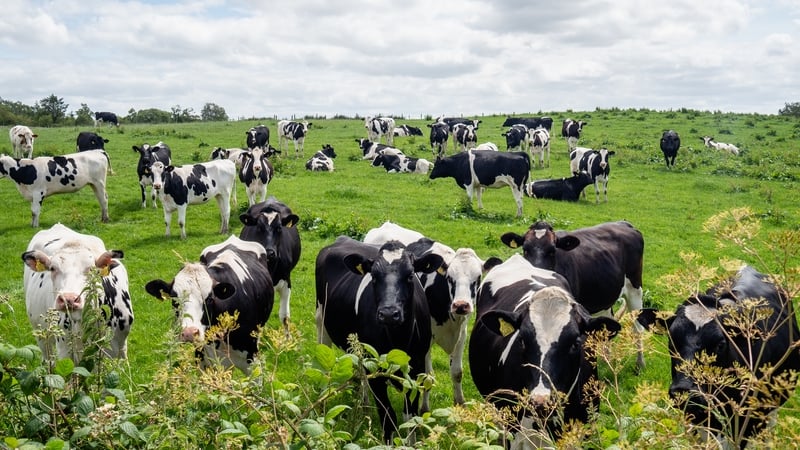
I asked farmers about produce in Ireland being produced for export and its effects on our food security, while recalling how farmers are often characterised as despoilers rather than nurturers of the land. As one farmer responded: ‘Yes, the dairy industry has become very big; if you look in a field and see so many cows, it does not look right.’ But, he said, you ‘can’t blame the farmer for this’, recalling Food Vision 2030, which promoted the slogan in tillage ‘get big or get out’.
While some farmers suggested we will have to get back to more mixed farming, most of those I interviewed affirmed that this will not happen because this type of farming is simply no longer economically viable. I asked farmers to look forward 20 or 30 years and think about their legacy, especially with regard to climate and food security. Many said that farming will change a lot in the next 10 or 15 years and managing change will become essential, especially while striving to address the challenges of climate change.
Some talked of more controls and more detailed records being put in place, but several warned against expecting this transformation immediately as all transformational change will take time. One farmer spoke of when he was doing his farming courses, they were told to keep field books. ‘I write down everything; now of course many use phones and computers to remind them’ As one of my interviewees said, ‘managing change will become essential. Farming will have to change to suit what has to be done for climate change. In particular, more records will be kept. Everything will change a lot.’
From RTÉ News, what are the issues facing young farmers in Ireland?
Are the days of the meitheal over?
Many older farmers remembered the importance of meitheal, when farmers would come together to do the harvesting and then return the favour with their neighbours. They recalled the time given to neighbours in simply chatting and mentioned organisations like Muintir na Tíre which helped to build up much needed community spirit.
‘Coring or Meitheal as it was called was all the rage at the time’, said one farmer, ‘with neighbours helping each other at busy times especially during threshing. In my father’s case, he hired himself out with the thrashing machine for other farmers. The same helpers would be at all the thrashings in the area.’
Several emphasised that farming can be a lonely, even isolating profession and most welcomed the introduction of mechanisation and using big machinery to do all the hard work. But often this left less time for talking to one’s neighbours. Farming is now so much run on a tight schedule and unlike the old days, it is very hard to get anyone to help out on the land.
We need your consent to load this rte-player contentWe use rte-player to manage extra content that can set cookies on your device and collect data about your activity. Please review their details and accept them to load the content.Manage Preferences
From RTÉ Radio 1’s CountryWide, Keith Brennan from Hawthorn Hill Farm in Co Roscommon on the power of meitheal
Many farmers cited succession as a major concern for the future. They find it very difficult to get family members to take on a profession that is literally 24/7 with not enough security or financial return compared to a 9-to-5 job. Surprisingly, some younger farmers I interviewed affirmed that they did not realise the importance of community, until they got older.
One farmer spoke of how the village of Cloghan was changing: ‘there are a lot of new people living here.’ It suggested that there is more of a community spirit being developed with the local village hall becoming more important than ever with many activities and services. Small rural communities can remain vibrant and engaging for new generations, while hopefully promoting more environmentally sustainable farmers into the future.
Why ‘giving out about farmers’ doesn’t work
Farmers are often represented as either despoilers of the land or stewards of a more environmentally sustainable mode of agricultural management. When interviewing farmers, I always asked about the challenges ahead for farming with a very high carbon footprint and the move from a mixed economy to a more intensive type of farming.
We need your consent to load this rte-player contentWe use rte-player to manage extra content that can set cookies on your device and collect data about your activity. Please review their details and accept them to load the content.Manage Preferences
From RTÉ Radio 1’s Morning Ireland, general public underestimate farmers’ concern about climate change
The mantra often expressed by farmers is that they are ‘feeding the world’. At the same time, we are seeing an increasing level of water pollution, something exacerbated by excessive use of nitrogen and other fertilisers, and the ongoing catastrophe of biodiversity loss.
But as an environmental communications scholar, I would argue that ‘pointing the finger’ does not work. We need to co-create solutions through dialogue and clear long term policy management. I believe, and it is clear from speaking to farmers on the ground, that they can provide appropriate solutions and need to be actively engaged with at all stages of the transition which is needed to meet our carbon targets and secure a more environmentally sustainable type of agriculture.
Follow RTÉ Brainstorm on WhatsApp and Instagram for more stories and updates
The views expressed here are those of the author and do not represent or reflect the views of RTÉ