
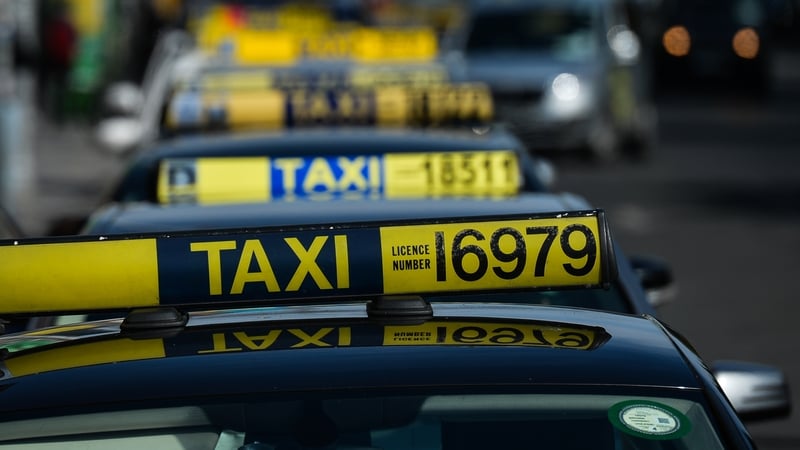
Analysis: The Irish taxi market doesn’t need a free-for-all, but it does need competition, flexibility and a serious conversation about value for money
By Catarina Marvão, UCD
I recently paid close to €90 for a taxi from Dublin Airport to Dublin 18. That may have been unusually expensive, but it captures a broader frustration: taxis in Ireland can feel less like an everyday transport option and more like a luxury purchase.
However, the issue is not just price, but also availability. The Competition and Consumer Protection Commission’s recent research found that many people struggle to get taxis, especially at peak times, late at night, during bad weather or outside Dublin. The CCPC has therefore called for Ireland to consider opening the market to more ride-hailing services. The Minister for Transport has pushed back, saying there is no intention of allowing a model where anyone with a private car and an app can provide taxi services.
We need your consent to load this rte-player contentWe use rte-player to manage extra content that can set cookies on your device and collect data about your activity. Please review their details and accept them to load the content.Manage Preferences
From RTÉ Rado 1, should the entry test for taxi drivers to be updated because of online maps?
But this framing is too binary. The real question is whether Ireland can design a better regulated market: one with more competition, more availability, better price transparency and strong safety rules.
Pros and cons
The case for reform is straightforward. Taxi demand is uneven and rises sharply after events, at weekends, during holidays and when public transport is limited. If supply cannot respond, passengers face long waits, cancelled bookings and high prices. Some may take less safe alternatives, such as walking home late at night.
A more open system could increase supply when it is most needed. App-based ride-hailing can also match passengers and drivers more efficiently, reducing waiting time for passengers and idle time for drivers.
We need your consent to load this rte-player contentWe use rte-player to manage extra content that can set cookies on your device and collect data about your activity. Please review their details and accept them to load the content.Manage Preferences
From RTÉ Radio 1’s Today with David McCullagh, the Competition and Consumer Protection Commission is calling for the Irish taxi market to be opened up to ride-hailing platforms
But there are risks. Any reform must preserve driver vetting, vehicle checks, insurance, tax compliance and complaint systems. Platform competition can certainly benefit consumers, but if poorly regulated it can put pressure on driver earnings and shift risk onto workers. The answer is not simply “more Uber”, but better market design.
The price problem
Ireland’s taxi fares are high by everyday consumer standards. Of course, fares reflect real costs: insurance, fuel, vehicle maintenance, regulation and the cost of living. Drivers also need to earn a fair income. But high prices combined with poor availability suggest that the market may not be competitive enough, flexible enough or responsive enough to demand.
A simple comparison is revealing. Looking at similar 12km trips in Dublin and in Lisbon at the same time, Irish app quotes are several times higher than Portuguese ride-hailing quotes (even when discounting the difference in the cost of living).

This is not a scientific study, but it illustrates what many consumers experience. In Portugal, passengers can compare prices and waiting times across Uber, Bolt and other options. In Ireland, consumer choice is narrower. Competition is not only about lowering prices. It is also about making firms work harder to offer availability, reliability and convenience.
What Portugal does differently
Portugal is a useful comparison because it has not simply deregulated the market. Ride-hailing services operate under a TVDE legal system: individual paid passenger transport in unmarked vehicles through a platform. Drivers and operators must meet regulatory requirements, and vehicles cannot pick up passengers on the street like taxis. The service must be booked through a platform.
The Portuguese model is not perfect. Ride-hailing drivers have raised concerns about earnings, commissions and working conditions. However, it shows that Ireland does not have to choose between the current system and no regulation at all.
We need your consent to load this rte-player contentWe use rte-player to manage extra content that can set cookies on your device and collect data about your activity. Please review their details and accept them to load the content.Manage Preferences
From RTÉ Radio 1’s Drivetime, should the Irish taxi market be opened to ride-hailing platforms?
Is the current system really safer?
Passenger safety matters. Ireland’s current taxi system is more regulated, but app-based systems offer better traceability. If someone gets into a taxi from a rank or on the street, there is limited immediate evidence of which car they entered, which route was taken or who the driver was. By contrast, app-based systems usually create a digital record of the journey: driver, vehicle, registration, route, time, price and payment. Passengers can also share their trip in real time and complain through the platform.
This does not mean app-based systems are automatically safer, but traceability is valuable. A well-designed system could combine formal licensing and vetting with digital accountability.
The middle route
Ireland could allow regulated ride-hailing platforms without allowing an unregulated free-for-all. Platforms could be licensed; drivers vetted; vehicles checked; insurance and tax compliance made mandatory. Platforms could also share anonymised data with regulators on fares, waiting times, cancellations and geographic coverage.
From Euronews, London’s iconic black cabs face competition as Waymo’s robotaxis prepare to hit the streets
A pilot scheme could be a sensible start. Ireland could test regulated ride-hailing in areas with persistent shortages or during peak-time windows, measuring whether additional supply reduces waiting times and prices while monitoring driver earnings, safety complaints, congestion and accessibility.
When passengers struggle to find taxis and face very high fares when they do, that is also a regulatory failure. Ireland should learn from countries where platform competition exists within regulation. The challenge is to give consumers more availability and better value, while keeping high standards for drivers, vehicles and passenger protection.
The taxi sector does not need a free-for-all. But it does need more competition, more flexibility and a more serious conversation about value for money. With companies such as Waymo already preparing robotaxi services in cities like London, Ireland should modernise taxi regulation before the debate moves from app-based drivers to driverless vehicles.
Follow RTÉ Brainstorm on WhatsApp and Instagram for more stories and updates
Dr. Catarina Marvão is an Assistant Professor in the School of Business at UCD, affiliated Faculty at the Stockholm School of Economics and a Research Affiliate at the Central Bank of Ireland.
The views expressed here are those of the author and do not represent or reflect the views of RTÉ