Tesla is hoping to roll out its “full self-driving” software in the EU as early as this summer, with talks under way with the Irish Government among other nations.
The company has said FSD [full self-driving] approval in Europe is crucial to increasing sales in the region, which fell 27% last year.
This week in Brussels, Dutch authorities were making their case to other European regulators to green‑light the technology.
The Netherlands became the first EU nation to grant preliminary approval, following 18 months of “extensive research and testing on public roads”.
What is Tesla’s full self-driving software?
Despite the name, the Dutch road authority RDW stressed that Tesla’s “full self-driving” software is not “self-driving but a driver-assistance system”.
Driver-assistance systems are usually classified as Level 2 autonomous driving.
This means the system can control braking, acceleration and steering, but the driver must keep their eyes on the road at all times and remains fully responsible.
Tesla says FSD “will drive you almost anywhere with your active supervision, requiring minimal intervention” but does not make the car self-driving.
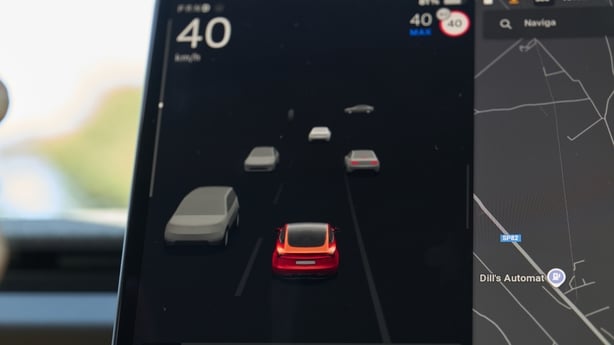
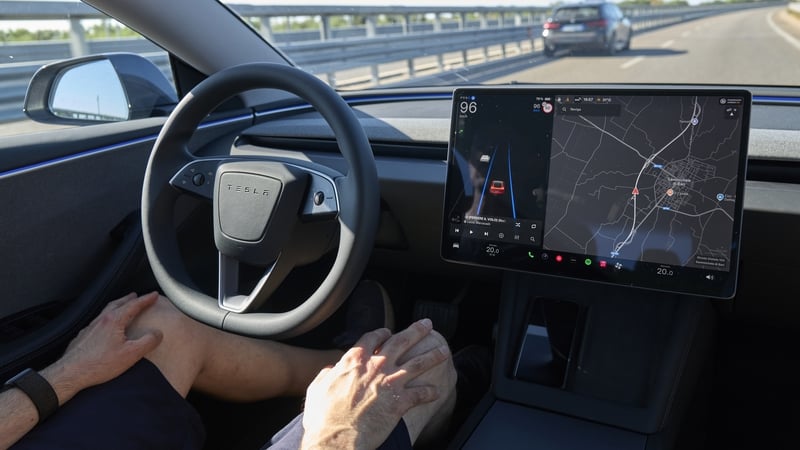
While Level 2 systems are already used on European roads, Tesla’s FSD (Supervised) is considered Level 2+, with the ability to remove hands from the steering wheel as an additional feature.
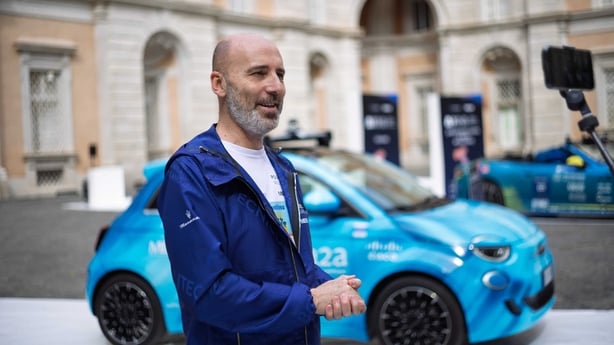
“In a Level 2 vehicle, the driver must be able to react and take control instantaneously – not within two-three seconds. This is why all the other carmakers providing the L2 technology simply do not allow to take the hands off,” said Professor Sergio Savaresi, head of the Department of Electronics at the Polytechnic University of Milan.
“What time does it take to put your hands back on the wheel – half a second, one second, one and a half second?”
That reaction time “is a grey area and a subject of ongoing debate”, he added.
Nevertheless, a more advanced Level 3 version is already commercially available in Europe.
It’s Mercedes-Benz’s Drive Pilot software, launched in 2023, is currently permitted on limited German autobahns with the speed up to 95km/h.
Level 3 allows the driver to take their eyes off the road – for example, to read or check their phone.
Is Ireland close to approving Tesla’s FSD?
In a statement to RTÉ News, the Department of Transport said that “Tesla are currently engaging with the Irish authorities including the Irish approval body, the NSAI, regarding their FSD system”.
The department added that negotiations will continue on both national and EU levels, but “at this stage it is not possible to provide timelines for any EU approval”.
“If the technology is to be approved at EU level, it would then be possible for it to be allowed in Ireland.”
A national strategy for connected and autonomous vehicles has been under development by the Department of Transport since 2018.
While this document hasn’t yet been finalised, the latest amendment to the Road Traffic and Roads Act 2023 in March paved the way for Level 2 software to be lawfully used in Ireland.
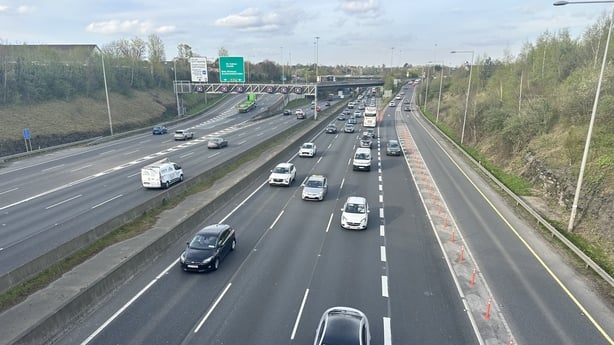
However, no such systems are currently in operation on public roads.
“There are cars on sale in Ireland that would have the capability of doing it, but the manufacturers haven’t fitted it based on the legislation that exists here”, said Paddy Comyn, the Head of Automotive Content at Done Deal.
On Tesla’s website, the feature called enhanced autopilot can be purchased for €3,800, which will become a subscription-only feature from May 21.
While current regulation bans the use of such systems, according to the 2023 court case a 37-year-old mechanical engineer was driving a Tesla car “no hands” on the M50.
The man, who worked for a company developing autonomous vehicles, testified that he was monitoring the car’s autopilot driver assistant system and was acquitted of dangerous driving.
In practice, assisted driving here extends little beyond features like lane‑keeping assistance and adaptive cruise control.
“It’s not a case that you can take your hands off the wheel, but a lot of the cars that we have on sale would in theory have capabilities to adjust steering”, Paddy Comyn said.
Concerns over Tesla’s FSD
According to Reuters, regulators from Sweden, Norway and Finland have raised concerns about the Tesla’s “full self-driving” software, citing its “tendency to speed” and questioning its performance on icy roads.
Last year, the US traffic safety authority launched an investigation into 2.9 million Tesla cars over reports of crashes involving FSD.
According to some complaints, the software failed to detect parked vehicles or gave users “too little reaction time to avoid a crash”.
“In practice, you could use Tesla’s FSD at Level 3, and this is where most accidents have occurred – because users became overconfident and trusted the technology so much that they would, for example, read emails. But that is not allowed,” Prof Savaresi said.
The company argues that “FSD (Supervised) improves US road safety by over 80%, reducing the likelihood of collisions caused by human error,” with its “advanced driver-assistance safety systems” like collision warning and emergency braking “setting the standard for vehicle safety worldwide.”
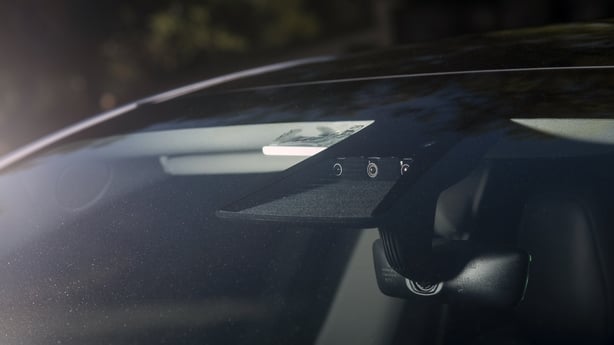
Tesla’s decision to rely solely on cameras, rather than combining different sensors, has also been questioned.
Radars, cameras, and Lidars (which use laser pulses to create 3D maps of the environment) are the most common sensing technologies in automated systems.
“With a standard camera, you might see a black road and a black tyre and you wouldn’t notice a difference”, Dr Martin Glavin, Professor at the School of Engineering at the University of Galway, explained.
“But with a hyperspectral sensor, the material properties of the rubber would differ from the road.”
As part of the Connacht Automotive Research Group, Dr Glavin and colleagues test different types of sensors in extreme weather environments “that you might find in Ireland”.
What’s next for autonomous vehicles?
Despite concerns, researchers are optimistic about the future of autonomous vehicles.
“A good autonomous system is better than a distracted driver or a very tired driver,” Dr Glavin says.
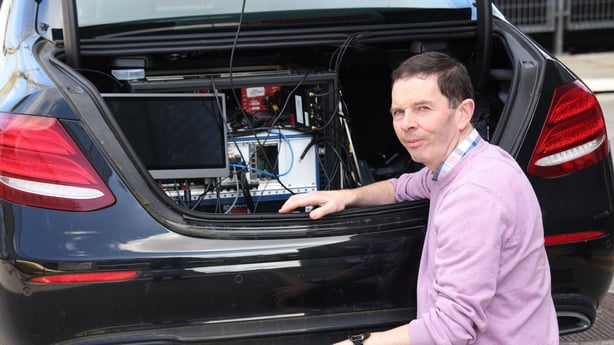
He called for more government oversight over the implementation of the software, rather than letting individual companies “making decisions about what is safe and what is not safe”.
In Milan, Professor Savaresi and his research team are skipping Level 2 and 3 of assisted driving – their focus is on driverless cars and how they can change our cities.
“The real breakthrough and transformational technology are on Level 4,” Prof Savaresi said.
This is when cars are able to drive independently in most or all conditions without a driver. Robotaxis are already used in Chines and US cities, operated by companies like Baidu and Waymo.
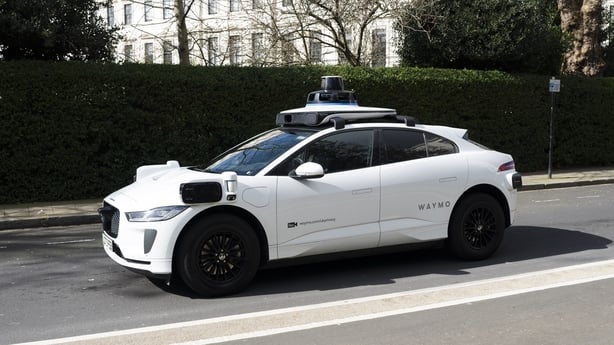
With the US and China clearly dominating the self-driving innovation, the research team in Milan is aiming to deliver one of Europe’s first own autonomous solutions.
“The European market is very special, due to its rules and the topology of the European cities with narrow roads and complicated traffic.”
Lack of its own artificial intelligence to power autonomous driving and humanoid robots is “critical for national security”, Professor Savaresi added.
“Europe is interrogating itself on what to do with AI, both digital and physical.”
“We need to catch up.”