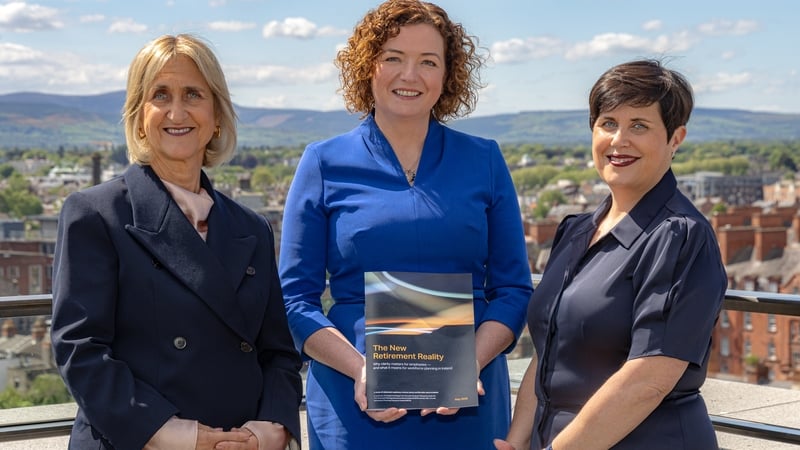
A new report has exposed a serious gap between financial confidence and actual retirement readiness, with could result in significant business and economic implications.
The “New Retirement Reality Report” found that while 74% of people say they manage their day-to-day finances well, 79% say they do not feel prepared for retirement.
52% of those surveyed also worry that their savings will not last.
The research was conducted by Amárach Research on behalf of the Financial Planning Standards Board Ireland (FPSB Ireland), the Institute of Banking (IOB), the LIA and the Retirement Planning Council of Ireland (RPCI).
It surveyed 1,200 employees and 500 employers across private, public and not‑for‑profit organisations.
Today’s report reveals that a key issue is not participation in pensions, but understanding with 45% of respondents stating that they do not understand retirement planning, while 35% say they do not fully understand their pension scheme.
It also highlights a widespread misunderstanding of what retirement actually means in financial terms. Many people continue to focus on their pension “pot”, rather than the income it will generate.
On average, respondents expect their retirement income to replace just 42% of their salary, below the 50-55% typically required to maintain living standards.
Confidence also declines rather than improves as people approach retirement. Among those aged 55-64, only 10% say they are financially prepared, while confidence in managing money in retirement drops sharply.
The research also points to broader implications for employers and HR leaders, from workforce planning and productivity to wellbeing and retention. Only 31% of employers believe their workforce is financially ready to retire, the report states.
According to today’s report, while employees would like to retire at around 60, most expect they will retire closer to 65, and many anticipate working until 70.
Half expect to work part‑time in retirement for income reasons, while 51% say they wish they had started planning earlier. More than half worry their money will not last through retirement, it also shows.
The research also highlights a strong appetite for help, but a gap in provision of support.
72% of workers believe employers should support the transition to retirement, and 60% would welcome working with a professional to help plan.
Meanwhile, 63% of employers say they would welcome external specialist support, but only 32% currently offer a structured retirement‑planning programme.
Emer Kirk, CEO of Financial Planning Standards Board Ireland, said that Ireland has made significant progress in encouraging pension participation.
“But this research shows clearly that participation is not the same as preparedness. The real gap now is understanding – and being able to picture not just the money, but the life you want after work,” Ms Kirk said.
“Employees are saving, but many do not know what those savings will deliver as income in retirement – or how prepared they are for the lifestyle change, from routine and social connection to purpose and identity,” she said.
“Without that clarity, people delay decisions about contributions, careers and retirement timing. Financial uncertainty is no longer just a personal issue; it has become a workforce planning issue for employers,” she cautions.
Laura Farrell, CEO of the Retirement Planning Council of Ireland, said that retirement readiness is not a single moment late in a career, but it is a process.
“Strengthening understanding earlier, particularly in mid career, helps people make informed, confident decisions and allows organisations to manage progression, succession and retirement more sustainably,” she said.
Mary O’Dea, the CEO of IOB, concluded that knowledge is empowering.
“With the right support and guidance, individuals gain the clarity and confidence to plan and prepare for their future. Sometimes, a single conversation can be the first step toward long‑term financial wellbeing,” she added.