London’s FTSE 100 rose on Monday as falling oil prices lifted sentiment across stock markets, with investors also keeping a close eye on the Bank of England’s rate decision due later this week.
The blue-chip FTSE 100 finished 0.6% higher after starting the session on a steady note.
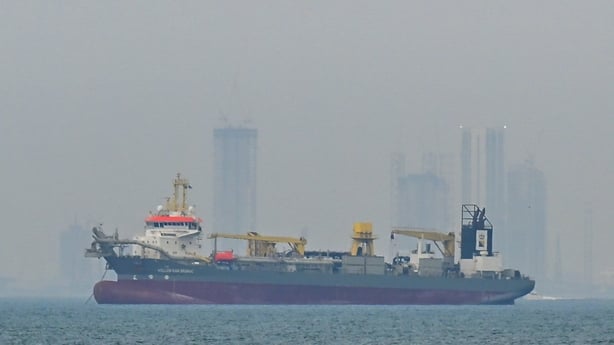
Sentiment improved after oil prices turned negative for the day, easing around 1% after the U.S. said it would allow some Iranian, Indian and Chinese ships to pass through the Strait of Hormuz.
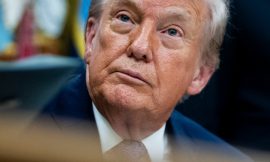
Oil prices fell today amid attacks on Gulf oil production and US President Donald Trump’s call for global efforts to secure the Strait of Hormuz.
Brent crude went down at $101.25 a barrel around 5pm while US West Texas Intermediate crude was to $95.04.
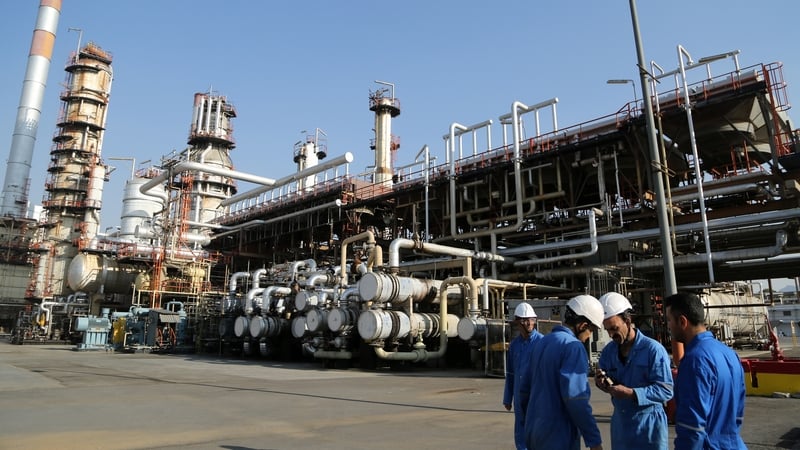
Both contracts have surged more than 40% this month to their highest since 2022, after the US-Israeli attacks on Iran prompted Tehran to halt shipping through the Strait of Hormuz, a critical waterway for a fifth of global oil and LNG supplies.
Talk of possible additional releases from emergency oil reserves by member countries of the International Energy Agency, as part of global efforts to bring down consumer energy prices also helped ease concerns.
The U.S.-Israeli war on Iran, now in its third week,continues to stoke turmoil across the Middle East and weigh on global energy markets.
Energy sector rose 1.3%, despite the weakness in oil prices. Oil major BP and Shell up more than 1%.
Investors’ focus this week will be on interest rate decisions in the UK, the US, and Europe, with central banks holding their first full meetings since the start of the war and widely expected to pause further rate cuts for now.
In an early sign of the potential impact of the conflict on the economy, data showed that the British consumers have turned their least confident since the start of last year following the outbreak of the Middle East war.
Strait of Hormuz
President Donald Trump is speaking with European allies and many other nations about opening the Strait of Hormuz, White House Press Secretary Karoline Leavitt said during an interview with Fox News today.
British Prime Minister said today that Britain would work with allies on a “viable” plan to reopen the Strait of Hormuz.
US Treasury Secretary Scott Bessent told CNBC the Treasury had not intervened in oil markets, and any US action to mitigate higher prices would depend on the duration of the war.
The war in the Middle East is creating the biggest oil supply disruption in history, the International Energy Agency said last week, as major oil producers such as Saudi Arabia, Iraq and the UAE cut production.
PVM analyst Tamas Varga said investors recognised that consequences of a prolonged conflict would be severe, especially as inventories are steadily depleted, with so much damage already to production, exports and refining from just two weeks of disruption at the Strait of Hormuz.
Over the weekend, Trump threatened further strikes on Iran’s Kharg Island, which handles about 90% of its exports, after hitting military targets there and spurring further retaliation from Tehran.
The US is in contact with Iran, Trump said, though he doubted Tehran was prepared for serious talks to end the conflict.
The International Energy Agency said yesterday that more than 400 million barrels of oil reserves will begin flowing to the market soon, a record draw aimed at combating price spikes caused by the Middle East war.
Stocks from countries in Asia and Oceania will be released immediately, while those from Europe and the Americas would be available at the end of March, the agency said.
“As the conflict enters its third week, the lack of a clear denouement has left global markets increasingly worried about an uncontrollable escalatory spiral,” SEB’s Meyersson said.
Still, US Energy Secretary Chris Wright said on Sunday he expected an end to the war within “the next few weeks,” with oil supplies rebounding and energy costs falling afterwards.