
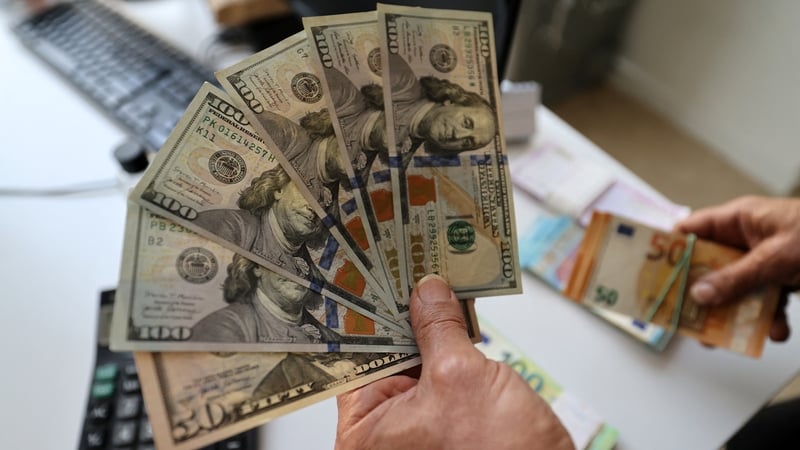
The US dollar remains the world’s most dominant currency, but it is being challenged more and more.
Gold is up 65%, silver is up 110%, so there is total evidence of the dollar losing its status as the global currency, according to Peter Brown, Managing Director of Baggot Investment Partners.
Speaking on RTÉ’s Morning Ireland, Mr Brown highlighted three factors that are making the dollar fall.
The first is US President Donald Trump and uncertainty around potential interference with the Federal Reserve which is not good for confidence in the US.
The second issue is the huge level of debt the US is continuously trying to fund.
“US debt was always a safe haven, but when they confiscated Russian assets, which were held in US bonds, non-friendly US countries decided maybe holding US debt’s not a good idea, and gold and silver might be better, so there’s not as many people turning up for the auctions,” he explained
“The worry is that the Federal Reserve will have to buy their own debt, which is quantitative easing, which is very negative for the dollar,” he added.
The third concern is over concentration of investment in the US.
The MSCI World index is reflective of a world portfolio, the US currently has 26% of global growth but the US element of that portfolio now stands at 75%.
We need your consent to load this rte-player contentWe use rte-player to manage extra content that can set cookies on your device and collect data about your activity. Please review their details and accept them to load the content.Manage Preferences
“Its massively overvalued because we’ve all been investing in tech for 15 years. That’s unwinding, and that unwinding is the main reason the dollar is falling,” said Mr Brown.
A weaking dollar comes with pros and cons for Irish consumers, they include cheaper holidays if you want to visit the US or buy American goods.
However it is more expensive for Irish exporters, although Mr Brown believes this has not been a major issue.
“On top of the 15% tariffs, they’ve had a 15% devaluation in the dollar, which makes goods 30%, in theory, more expensive in America,” he said.
“Now, we haven’t heard any complaints about that, so obviously, the margin on exports to the US is very positive,” said Mr Brown.
The big issue for Irish consumers is for people whose pensions are invested in the US stock market.
“People really need to look at where they’re going to see their returns for the next five years, and it’s not in the US,” he advised.