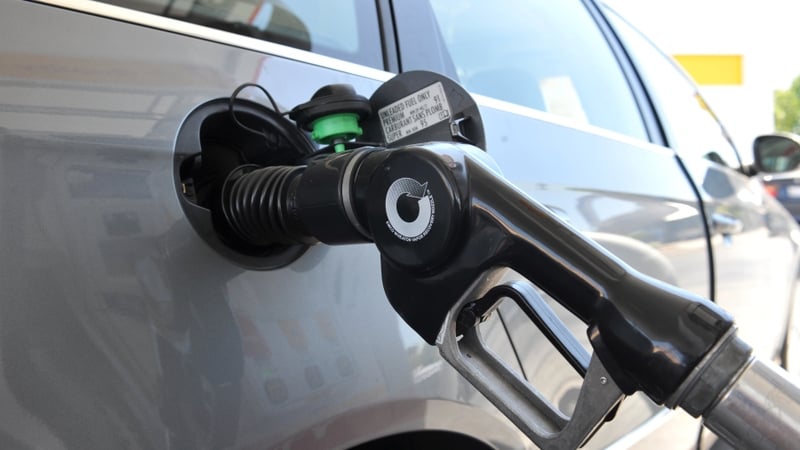
The CEO of Fuels for Ireland has called on the Government to review Ireland’s fuel-taxation framework as motorists face another price hike at the pumps.
The industry group has warned that petrol and diesel prices are set to rise by 4 to 6 cent per litre as a result of a number of measures which came into effect from 1 January.
According to Fuels for Ireland, changes to the Renewable Transport Fuel Obligation (RTFO) will add four cent to the cost per litre while an increase to the Better Energy Levy on petrol and diesel plus VAT will add another one cent per litre.
“These price hikes are not the result of commercial activity or global market forces,” said Kevin McPartlan, CEO of Fuels for Ireland. “They are the direct consequence of a fragmented policy approach. The Government is layering one cost after another without a coherent plan, and consumers will pay the price.”
Fuels for Ireland claims that recent tax and regulatory changes have pushed Ireland’s fuel prices to among the highest in Europe, adding pressure on families, hauliers, and small businesses already grappling with record living costs.
According to the organisation, a series of policy decisions over the past five years have added around €19 to the cost of filling a typical 60-litre tank over that period, including the latest increase of about 5 cents per litre at the start of 2026.
These include annual increases in carbon tax, rising obligations under the Renewable Transport Fuel Obligation (RTFO), and higher targets under the Energy Efficiency Obligation Scheme, which have inflated the Better Energy Levy. The group stresses that VAT is applied on top of all these charges, meaning motorists are paying tax on tax.
“These price hikes are not the result of commercial activity or global market forces,” said Kevin McPartlan, CEO of Fuels for Ireland. “They are the direct consequence of a fragmented policy approach. The Government is layering one cost after another without a coherent plan, and consumers will pay the price.”
In response a spokesperson for the Department of Finance stated that while taxation affects the final retail price of fuels, amendments to tax rates cannot fully absorb price shocks given the larger impacts of energy markets, embedded costs, as well as pricing policy at wholesale and retail level. In a statement the department also said that the Government is conscious of the implications of fuel costs for all sectors of society and is committed to a carbon tax regime that is progressive.
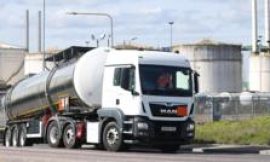
The Irish Road Haulage Association (IRHA) has also voiced serious concerns about the impact on its members. Speaking to the News at One, Ger Hyland, President of IRHA, said:
“We got another 2 cent a litre of a carbon tax in the budget plus that. This morning we have between the renewable transport fuel obligation, the better energy levy, we have 4 cents plus that. The impact of all these changes is that the margin we have left to work with is minuscule at the present time. A lot of our members are saying they just cannot make a living from transport. I would not be one bit surprised if there is protest afoot.”
When asked if he was threatening protest, Hyland replied:
“I will be led by our members. If the feeling across our members is that there is need for protest, well then certainly I am up for the challenge, and I will lead that protest if needs be.”
Fuels for Ireland stated that it supports the transition to cleaner energy but warns that “ambition without strategy is chaos.”
It is calling on the Government to establish an independent expert review of Ireland’s fuel-taxation framework to ensure climate goals are met in a fair, transparent, and economically sustainable way.