
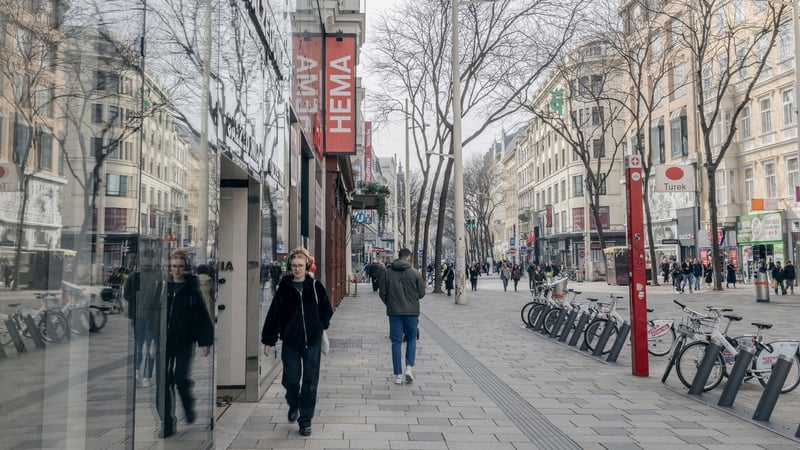
Rents in Dublin are among the highest in Europe, surpassed only by financial hubs like London and Zurich.
How does the Irish capital compare to other European cities? RTÉ News looked at average rents in Vienna, Paris and Helsinki – the capitals comparable to Dublin in population and standard of living.
Renting a newly listed two-bedroom apartment (about 73 square metres) in Dublin cost an average of €2,241 in the last three months of 2025, according to the Residential Tenancies Board. Existing tenants paid around €1,892 on average.
Renting an apartment of a similar size in Paris cost roughly €2,120 in early 2025, according to OLAP, an NGO that monitors rents in the city.
In most central districts, rents are capped at around €27-29 per square metre, though independent reports show that roughly a third of rentals in the French capital did not comply with the regulation.
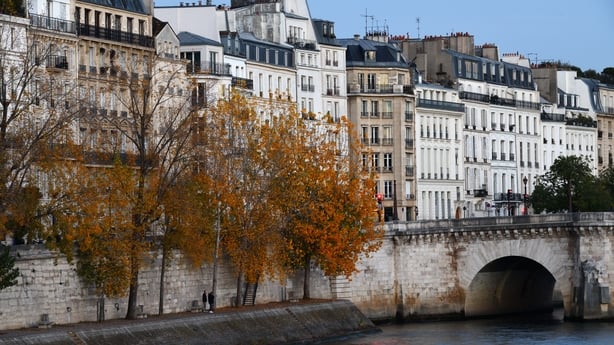
According to the official city portal, 71% of Parisians are eligible for housing provided by social landlords.
While social housing is more accessible to essential workers like teachers and healthcare workers, affordable housing is becoming increasingly scarce in Paris. The French media have been reporting on long queues for viewings of apartments (akin to those seen in Dublin) as many Parisians consider leaving the world’s most popular capital and relocate to the suburbs or other cities.
Rent controls also play a key role in Vienna’s rental landscape.
Famous for its opera and leafy parks, the Austrian capital has a unique system, hailed as “renters’ utopia” by The New York Times.
Around 73% of Vienna’s population rent rather than own their home.
Social and affordable housing accounts for around a half of Vienna’s rental dwellings, “which has a price-dampening effect on the overall housing market in the capital”, the city’s officials argue.
Back in the 1920s, Vienna’s socialist government set out on a mission to create affordable housing for a broad strata of the population. In an ambitious architectural endeavour, complexes like the Karl-Marx-Hof community building emerged.
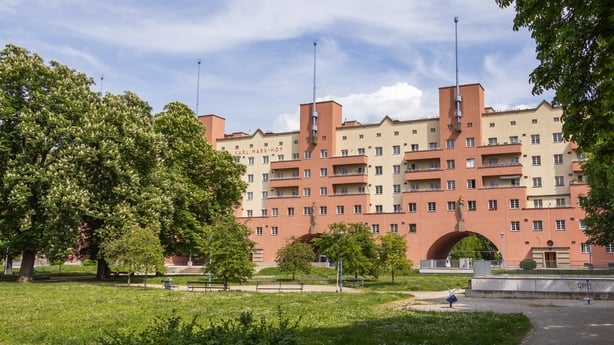
Today the majority of residents qualify for some form of social housing in Vienna – either in 220,000 municipal units owned by the city, or in co-operative flats built with government subsidies).
Vienna’s relatively low eligibility threshold for social housing means it is not limited to low-income groups and is widely seen as the norm across diverse segments of society.
According to Statistik Austria, average rent per square metre stood at around €10 in the last quarter of 2025, bringing a monthly cost of a two-bed dwelling to roughly €700.
However, newcomers will likely have to pay closer to €1,400-€1,600 for a two-bed, as one must be Vienna’s resident for at least two years to qualify for social housing.
The “Vienna model” also allows tenants to pass on their rental conditions to family members and gives the right to rent indefinitely.
Critics of the system argue that such protections create problems and even add to inequality.
According to the American Enterprise Institute, a Washington-based conservative think tank, there is a significant difference between old and new rents in Vienna, with new entrants into the rental market facing significant challenges and higher rents than long-term tenants.
“This creates a system where single doctors or lawyers with large earnings, who live in handed down units, may pay lower rents and live in larger units than families with children, who just moved in,” said AEI’s Tobias Peter.
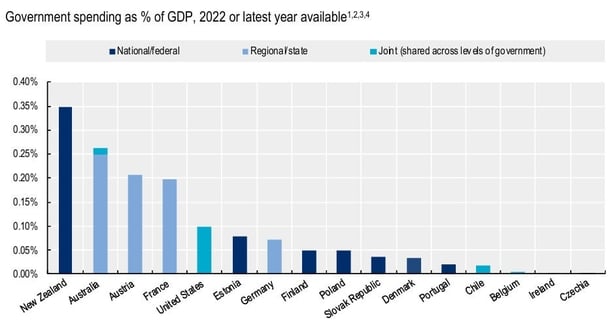
The cost of it all for the country’s budget has also been questioned. Austria’s spending on social rental housing is among the highest in the world at 0.21% of its GDP, according to the Organisation for Economic Co-operation and Development.
That compares to less than 0.1% here, though Ireland’s GDP is widely considered artificially inflated by US multinationals.
Renting an apartment in Helsinki is arguably the easiest among all the capitals mentioned, at least on the private market.
Private rents in the capital region dropped 1.3% last year compared to 2024, amid an oversupply of rental homes, though the cost of state-supported housing increased by 3%.
Helsinki’s rental market includes both non-subsidised and subsidised dwellings, with the latter accounting for around 15% of all listings according to official sources.
Tenants for social housing (known as ARA) are selected from a waiting list based on their need for housing and their income.
According to Statistic Finland, in the last three months of 2025, a square metre in Helsinki cost €20, or €15 in a subsidised rental.
That means an average two-bed would rent for €1,460, or €1,095 if subsidised.
Affordability of rents
When it comes to the affordability of rents in relation to incomes, Irish consumers benefit from wages above the EU average.
According to Eurostat, the average gross salary here was €61,051 in 2024. That compares to €58,600 in Austria, €49,428 in Finland and €43,790 in France.
Households in Ireland do not generally have to spend a higher proportion of their income on housing than those in other parts of Europe, according to the 2023 study by Dr Rachel Slaymaker and Wendy Disch.
However, the analysis found that middle-to-higher income renters in Ireland face greater affordability pressures than similar households in Europe.
“We have a gap in the middle, where the middle-income households, who are above social housing thresholds, find market rents very challenging, particularly in places like Dublin,” Dr Slaymaker told RTÉ News.
The concept of social housing is also implemented in a different way here compared to some other EU nations, where cost-rental systems are “more established,” like in Vienna.
“One of the things that we would see in Ireland is a so-called dualist system. There’s quite a distinction between the private market and the social housing sector, which caters specifically for lower-income households,” the ESRI researcher said.
While higher-than-average wages do give an advantage to the Irish renters, the limited implementation of cost-rental practices and short supply are placing Dublin’s rental market among the toughest in Europe.
And the demand will only continue to grow – along with the country’s population, which is expected to reach 6.45 million people by 2057 under moderate projections.