
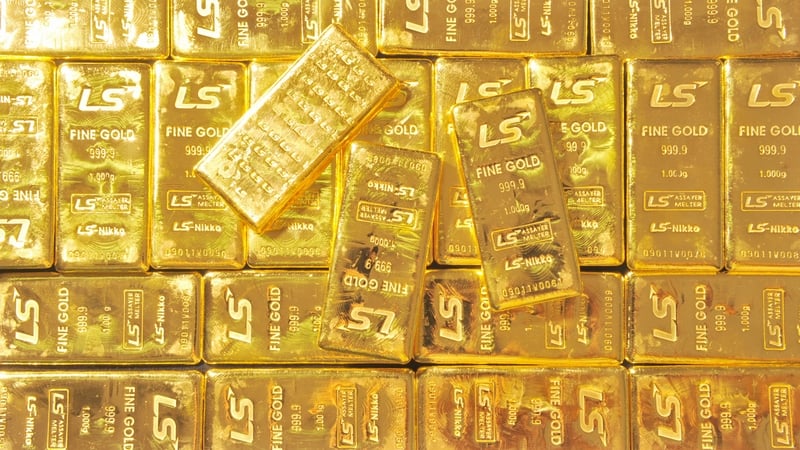
It’s been a bit of a rollercoaster few months for gold – and a particularly volatile week.
Just over a year ago, spot gold – which is the market price of an ounce of gold in US dollars – was $2,660.
Towards the end of 2025 it broke through the $4,500 threshold for the first time ever – before falling back slightly, to end the year at $4,325. That’s a near 63% increase in 12 months.
But as if that wasn’t enough, it then spent most of January making more gains – particularly in the second half of the month.
On the 26th of January it broke through the $5,000 per ounce threshold; later that same day it burst through the $5,100 mark. Two days after that it went beyond $5,200, then $5,300, then $5,400… all in the same day.
Then on the 29th it got as high as $5,594.80 per ounce – before falling back.
Quite dramatically, actually.
By Friday last it had slipped back below the $5,000 mark – so more than 10% of its value disappeared in a matter of hours.
That continued into this week when it the price went as low as $4,660 on Monday… but it has bounced back since then, and in recent days has levelled off in or around the $5,000 mark.
Why have we seen its price move so sharply in the past year?
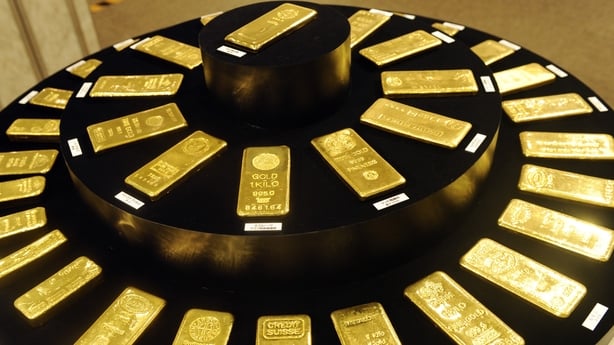
As tends to be the case with commodities, equities, and bonds, there are a lot of factors and moving parts in all of this.
One thing to remember about gold is that it’s priced in dollar, and the value of the dollar has fallen steadily over the past year.
Back when US President Donald Trump started his second term, we were talking about euro-dollar parity… around a year ago one euro was buying you $1.02.
Now, though, one euro is buy you around $1.18. It actually broke through the $1.20 mark at the end of January, the first time it had done so since mid-2021.
And that reflects a general weakening in the dollar, rather than a strengthening in the euro. So while the price of gold has risen quite a lot, in real terms it’s not quite as dramatic as it appears on paper.
It also means that, if you’re a euro buyer, you’re also getting a bit more bang for your buck when buying dollar-priced assets like gold, which helps somewhat in pushing up demand.
Another factor that’s impacting things – and we’re seeing this across all types of investments – is the rise of the so-called retail investor. That’s the regular consumer who is dabbling in trading through an app, rather than just saving their money or giving it to an investment manager.
Individually, retail investors are often just taking a bit of a punt with a relatively small bit of money, but cumulatively that adds up to a sizable amount of cash in the market. And because they may be making bets or following a trend they’re seeing online, they can make price swings even more dramatic and less predictable than might have been the case before.
Other market trends are also playing a part.
Larger investors have become nervous about their over-dependence on big US tech stocks – which some argue are overvalued. That’s led them to seek out other types of investment to mitigate the risk.
Meanwhile falling interest rates in most major economies mean alternatives – like precious metals – become slightly more attractive.
But really the overriding factor behind gold’s movement is the US President (and it’s not because he’s creating a surge in demand by gilding everything in the Oval Office).
As we know, Donald Trump’s economic policies have created a lot of uncertainty for the American and global economies. Investors hate uncertainty, and when things get uncertain they tend to shift their money towards so-called safe havens – gold being one of them.
When you look at a chart tracking the price of gold over the past year or so, you can see it steadily rising – with a spike in the price coinciding with Trump’s Liberation Day tariffs announcement in April.
It then went back into a fairly steady rise until it spiked again in September – this time coinciding with Trump’s attempt to fire a member of the US Federal Reserve, Lisa Cook, as well as the release of some economic data suggesting the US economy was slowing.
The most recent spike then came late last month, on the back of Trump’s attack on Venezuela, his threats around wanting to take over Greenland and suggestions he would attack Iran. The fact that he kept making threats around raising tariffs on European countries as well as Canada also bolstered gold.
And, perhaps even more significantly to the price, his Department of Justice launched a criminal investigation into Federal Reserve chair Jerome Powell – who Trump has repeatedly attacked for not cutting interest rates as quickly and as sharply as he would like.
Explain the importance of that…
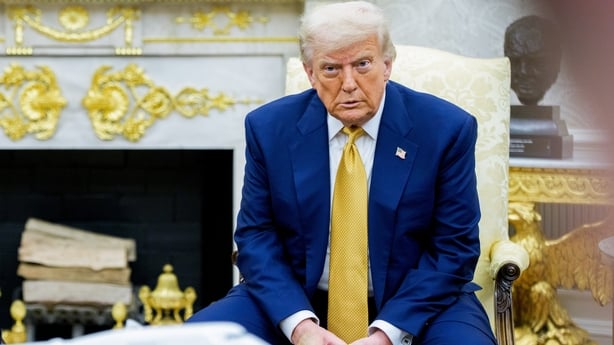
This is linked to his attempt to fire Lisa Cook, because it’s seen as part of a concerted effort by Trump to gain influence over the US Federal Reserve.
He wants them to cut interest rates as low as possible in order to boost growth in the American economy – but there are concerns that, if you cut rates too low, it will lead to inflation spiking again. That’s especially true if sharp cuts come alongside tariffs being applied to many imported goods – because they ultimately end up as a cost to the importing business or the end consumer.
And what inflation ultimately means is that the money in your pocket has less buying power than it did a year ago. In the face of that risk, investors often turn to gold – because it’s outside of central bank control, and there’s a perception that it holds its value in a way a currency does not.
But concern about the Federal Reserve losing independence, and Trump’s economic policies damaging the US economy, benefitted gold in another way.
Because traditionally large investors and entire countries will hold reserves of things that are felt to be reliable and predictable. Traditionally US government debt (or Treasury Bonds) and the US dollar have been central to these reserves, because they were seen as rock-solid assets.
But because of the uncertainty created by Trump’s policies, questions about the US economy and its mounting debt pile, some are shifting away from those assets – and that’s leading them to put more of their money into gold instead.
By the way, this fear of uncertainty and inflation is also why we saw the price of gold fall back quite sharply when Trump named Kevin Warsh as his pick to be the next chair of the Fed. Warsh has been quite hawkish on interest rates in the past, so there’s a feeling that he won’t be in a rush to push for rate cuts simply in order to please the president.
And because markets feel he won’t be as beholden to Trump, they’re not less worried about a loss of independence at the Fed.
But when things are uncertain, why is gold considered a ‘safe haven’?
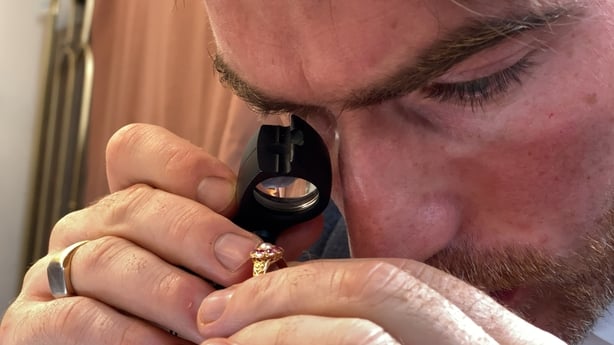
Because it’s shiny…
That is a slightly glib answer, but really a huge amount of gold’s value does boil down to the fact that it looks nice and is eye-catching.
It also doesn’t tarnish or rust like many other metals do, it doesn’t degrade over time and it’s relatively easy to work with.
And for a long, long time gold has been seen as an attractive metal in many cultures around the world – whether it’s because it was easy to work with, or was a shorthand for wealth and taste.
But crucially, that global appeal meant it could be used as a basis for commerce beyond one region or country.
And advocates of gold say that this enduring, global appeal helps it to hold its value in the long term.
The fact that its availability and supply is relatively easy to predict is also seen as a benefit – despite the attempts of many alchemists over the years, gold isn’t something we can just create a whole new supply of.
That’s also one of the reasons why there are still many so-called goldbugs out there – people who support the concept of the gold standard, where a currency’s value is linked to the value of gold.
Their argument is that because a central bank can just print lots more money, they can immediately undermine the value of the cash that you have. But they can’t just create a load of new gold, so it’s a better basis for a reliable monetary system.
However, as we’ve seen in the past few weeks, the reality is that gold is just as susceptible to short (and even medium-term) market shocks as anything other kind of asset or commodity.
Gold also consistently underperforms other investment options over the medium to long term when it comes to the return it offers.
All that being said, gold does also have practical purposes – especially in modern electronics. It’s a good conductor of electricity and the fact that it doesn’t rust or tarnish means it’s an ideal coating for circuits and connections that need to keep working over an extended period of time.
Your smartphone probably has somewhere in the region of three milligrams of gold inside it – so a couple of dollar’s worth.
But really the majority of gold’s applications are still in jewellery and decoration… and in being an asset that people and banks hold onto.
So if so much gold is held by governments – where do they keep it?
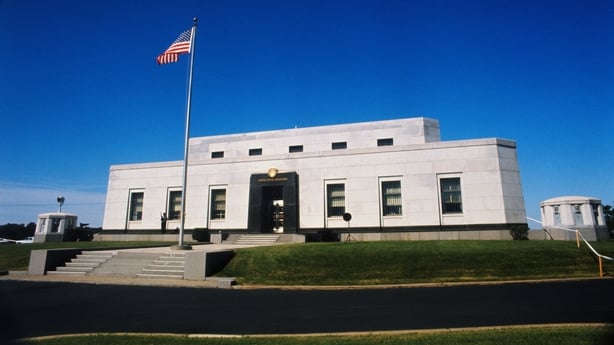
Based on the latest figures from the World Gold Council, around a quarter of all the gold that has ever been mined is sitting in various national reserves around the world.
Based on recent World Gold Council figures, the US has more than 8.1 metric tonnes of gold across its total reserve, making it the biggest national stockpile in the world.
More than half of that is held in Fort Knox in Kentucky, which is a heavily fortified US Army vault that contains a huge amount of gold.
It was built in the 1930s in order to shift the US’s gold away from the likes of New York and San Francisco, because coastal cities were seen to be more vulnerable to foreign invasion.
Beyond Fort Knox, a sizable portion of the US reserve is held in the likes of the Federal Reserve Bank in New York, the West Point Mint and the Denver Mint.
But not all of the gold held at the likes of the New York Fed and Fort Knox is American – some of it belongs to other countries.
In fact it’s quite common for countries to keep part of all of their gold overseas. Ireland’s Central Bank owns around 12 tonnes of gold, for example, and it is deposited with the Bank of England and the French Central Bank.
Part of the appeal of doing this is that you can outsource the massive security requirements that go with having hundreds of millions or even billions of euro worth of gold in one place.
And it isn’t just small countries like Ireland that do this – even Germany, which has second biggest reserve of gold in the world, has a lot of its stockpile entrusted to the US.
But doing this has created a bit of headache for Germany in recent times – with some leading economists there suggesting that Trump’s growing hostility towards European countries should prompt them to repatriate their gold as soon as possible .
And there are even some who question whether the gold is there at all…
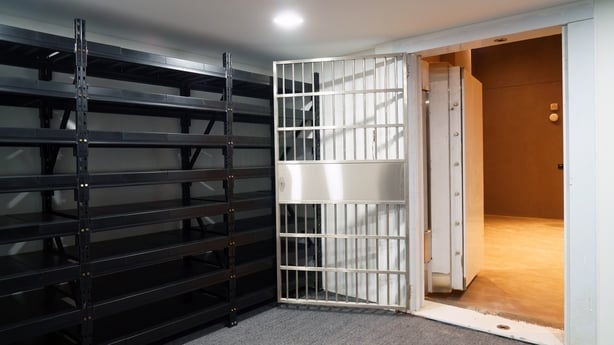
This is a long-running conspiracy theory – that Fort Knox doesn’t have as much gold as the US government claims.
But it was catapulted into the mainstream last year when Donald Trump himself – following on from a tweet by Elon Musk – said his administration would check the facility to “make sure the gold is there”.
US Treasury Secretary Scott Bessent did quickly come out and say that the gold was all there and accounted for.
But part of what fuels this conspiracy theory is the fact that Fort Knox hasn’t been publicly audited since the 1970s. They say they do internal audits every year but – perhaps understandably – they don’t tend to let others in to check their maths.
And this points to a broader issue around gold reserves – because a lot of the official data is based on the word of governments rather than any official studies or audits.
For example China’s declared reserve is relatively small given its size and economic power. It has less than what Italy has in its reserve.
But unofficial estimates suggest it could actually have twice its declared amount – which would make it the second biggest stockpiler in the world.
And there are other complicating factors at play when trying to get an accurate picture of how much gold is held in reserves, public or private, and how much is in use in the real world.
In some cases, gold can be both in a reserve and in use at the same time.
That’s because of the practice of gold leasing – where real gold is effectively loaned out to jewellery makers, who pay a fee for its use.
It’s seen as a way of getting a revenue stream from a stockpile of gold rather than just having it sit in a vault. But it means an investor could have a certain amount of gold on paper, but only some of that is physically sitting in their vault.
It also means that, potentially, the gold in your wedding ring, necklace or watch is technically owned by an investor on the other side of the world.