
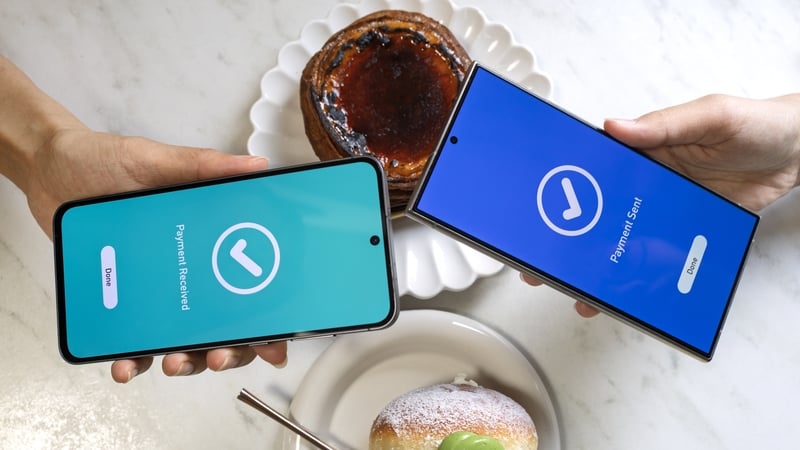
With Zippay on the way, 2026 is already shaping up to be an interesting year for Irish banking.
AIB, Bank of Ireland and PTSB are teaming up to launch the service right inside their existing apps, aiming to give customers an easy way to send, request and split money without needing anything new.
It might start off as a simple payment tool, but the move signals something bigger.
The banks are finally gearing up to challenge the convenience and polish of Revolut.
If Zippay delivers what it promises, 2026 could be the year the home-grown banking giants step up and seriously take on the fintech favourite.
“2026 could mark a real turning point in how Irish consumers interact with their banks,” said Nick Charalambous, Managing Director of Alpha Wealth.
But is Zippay likely to replace Revolut altogether?
“Zippay has the potential to challenge Revolut but it’s unlikely to replace it, certainly not in the short-term,” he said.
“Its biggest advantage is trust and scale – Ireland’s main banks already serve more than five million customers, and many people still prefer having their payments tied to a traditional bank,” he said.
However, he pointed out that Revolut has become deeply embedded in people’s day-to-day lives.
“Features like multi-currency accounts, competitive FX rates, travel friendly tools, saving vaults and digital cards give it a breadth that Zippay isn’t aiming to replicate,” he added.

Will Revolut join Zippay?
Revolut and other digital banks certainly have the option to join Zippay.
However, when contacted, Revolut declined to comment on whether or not the company will be joining.
Another popular digital bank in Ireland N26 said they have no plans at the moment to join Zippay, but didn’t rule out joining in the future.
The company currently offers instant money transfers through MoneyBeam.
“We remain open to initiatives with similar goals and will gladly inform you if we have news to share in this regard in the future,” an N26 spokesperson said.
How will Zippay work?
When Zippay launches – sending, requesting or splitting money should be much easier.
Instead of digging out an IBAN or setting up a new payee, you’ll just use a mobile number, much like sending a text.
If you’re with AIB, Bank of Ireland or PTSB, you won’t need to download anything new either. Zippay will live inside your existing banking app and come with the same security and protections you already have.
Most customers will be enrolled automatically when the service goes live, so it should just appear in your app one day. But if it’s not for you, opting out will be straightforward.
That ease of use means Zippay is likely to impact Revolut’s grip on person-to-person payments. But Revolut isn’t going anywhere – it still offers a much broader set of features beyond quick transfers.
“It’s now a full bank offering loans, savings, investments, access to cryptocurrency, and a feature-rich current account with brilliant spending insights,” said Daragh Cassidy of comparison website Bonkers.ie.
“And from 2026, it’s likely to start offering mortgages as well,” he pointed out.
“So while Zippay might chip away at Revolut’s payments business, it’s not going to encroach on Revolut’s much broader suite of services.”
What happened to Yippay?
If Zippay rings a bell, you might be thinking of Yippay – a payments app that was talked about but never actually launched.
Ireland’s main retail banks had plans to roll out a new mobile payments system, but in 2023 those plans were ultimately shelved.
The project was being developed by Synch Payments and was widely seen as a potential challenger to apps like Revolut and N26.
At the time, Synch said it had made the difficult decision to shut down operations after reviewing its business plan.
A mix of delays and other challenges meant the launch timeline kept slipping, and in the end, the original idea was no longer considered viable.
But why is it taking the banks so long to get their own service launched?
According to Mr Charalambous, there are three main reasons.
“Firstly, It has taken the banks so long primarily because Zippay is a joint venture between three major banks, and when multiple financial institutions collaborate, everything slows down from agreeing technology standards to decisions around governance, funding, branding and security,” he explained.
“Secondly, Irish banks have historically been slow to innovate unless the market forces them to. For years they faced limited competitive pressure, low levels of customer switching and no urgency to introduce instant mobile payments until Revolut reshaped expectations.
“Thirdly, banks operate under far heavier regulatory and compliance requirements than fintechs,” he added.
Is Zippay too little, too late?
There are essentially two contending camps.
According to Mr Charalambous, many people will stay with Revolut out of habit, convenience and inertia to change.
“Revolut has become part of daily financial behaviour for millions, offering far more than quick payments budgeting tools, multi-currency accounts, travel perks and saving features.
“It is also used by thousands of social and sporting group payment circles, and those routines won’t shift overnight,” he said.
But there is also a sizeable camp who may switch.
“A lot of people only use Revolut for instant transfers rather than full banking, and if their own bank can now offer the same frictionless experience, many will prefer to keep everything under one roof.
“Zippay will also appeal to people who never adopted Revolut in the first place, especially users who are less tech-confident and prefer the familiarity of their bank,” he added.
Will Zippay impress?
We know very little about how slick or otherwise Zippay will be.
Daragh Cassidy of Bonkers.ie has many questions about the service ahead of its rollout.
“Will it look modern, work smoothly and provide rich, colourful analytics?
“Will sending money be seamless? Or will it feel clunky, take too many steps, and suffer outages?,” he asks.
If it’s the latter, that will obviously have a big impact on adoption.
“Let’s be honest, the Irish banks aren’t exactly known for groundbreaking, beautifully designed digital services,” Mr Cassidy said.
“So it’ll be interesting to see how polished Zippay actually is at launch.”
For Mr Cassidy, the jury is still out on whether Zippay will be a major success.
“But more choice is always good for consumers,” he believes.
Zipp-yay or Zipp-nay?
So will Zippay get the yay or nay from consumers?
With its launch planned for early 2026, the service represents a significant step by Ireland’s banks to reclaim ground in the digital payments space.
The ambition is clear, but adoption will ultimately depend on how well the app meets everyday needs and competes with established rivals.
Whether Zippay becomes a fixture of daily payments in Ireland, or simply another short-lived experiment, is something only time will tell.